
Home Technology IBM Are Tech Executives Being Set ...
CIO Bulletin
,
09 June, 2026
Author:
Sambhrant Das
A global IBM study warns that information officers struggle to manage autonomous software networks independently deployed by individual business units
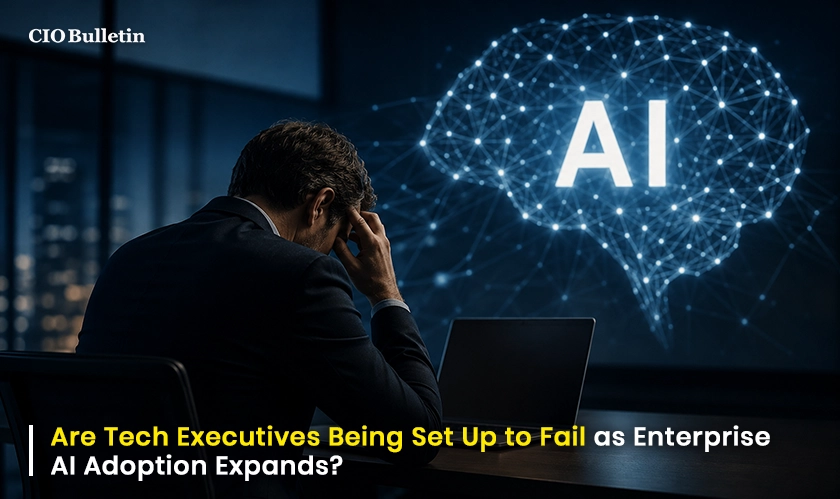
The rapid transition from isolated pilot projects to massive, cross-departmental operations is fundamentally fracturing traditional corporate management frameworks. While corporate boards aggressively push for swift Enterprise AI adoption, the actual infrastructure required to track these automated setups is falling drastically behind. According to a comprehensive global research study conducted by the IBM Institute for Business Value, an overwhelming two-thirds of surveyed chief information and technology officers report being legally and operationally responsible for autonomous software systems they do not manage or fully oversee.
This critical oversight deficit stems directly from business units bypassing centralized IT channels to implement their own automated workflows. Because line-of-business managers can easily license advanced software tools independently, technical leaders are completely losing visibility into where corporate data travels. The global survey of 2,000 technology executives highlights several stark, systemic challenges that are currently outpacing traditional corporate governance models:
The Tracking Disconnect: A staggering 70% of technology chiefs admit that independent internal teams are deploying automated solutions far quicker than central IT departments can actively log or evaluate them.
The Readiness Deficit: Although 80% of organizations face top-down, CEO-driven automation mandates, an elusive 11% feel completely prepared to handle the incoming wave of autonomous agent deployments.
The Security Backlash: Out-of-control system expansions led to severe consequences last year, with average organizations experiencing dozens of automated system incidents—many resulting in direct data leaks and compliance failures.
The structural friction is causing severe anxiety across corporate boardrooms because traditional risk management blueprints were engineered for static, predictable application rollouts. Expecting an ancient IT framework to regulate continuous, self-correcting machine logic is proving to be a dangerous corporate vulnerability.
"For CIOs and CTOs, the challenge now is scaling AI systems that operate continuously and autonomously, often within governance models and architectures designed for a far slower, more predictable environment." - Matt Lyteson, Chief Information Officer at IBM
Compounding this governance emergency is a massive lack of fiscal visibility, as corporate spending on advanced computing platforms climbs toward a quarter of total IT allocations. Because companies are rushing deployments to satisfy market hype, they are completely failing to implement proper financial guardrails or monitor computational resource consumption in real time. Organizations that intentionally avoid manual auditing procedures by building automated tracking loops straight into their codebases achieve far healthier bottom lines, dropping their experimental overhead costs significantly while processing massive operational margins.
Ultimately, surviving this computational transition requires technical leaders to stop treating automation as a simple software add-on and start designing for absolute model flexibility. True operational stability belongs exclusively to enterprises that configure portable workloads, allowing them to swap underlying data engines instantly when safety boundaries or regulatory mandates inevitably shift. Moving forward, the businesses that succeed will be those that prioritize architectural command over blind deployment speed. CIO Bulletin views this development as a significant step forward in leveraging seasoned leadership to secure long-term institutional growth and corporate excellence.


















































 consultants ltd.jpg)


