
In medical genetics today, the real work begins after the sequence is complete. Millions of variations appear in every genome, yet only a few hold the key to understanding disease. Finding them demands more than raw computing power; it requires judgment refined by years of clinical insight and tools built with that insight in mind.
Genomnis answers that need. Founded in 2017 and headquartered in Marseille, France, the company is a focused team of four founders and a small group of specialists who set out to give genetics professionals clearer answers, faster. Through a close partnership with Aix-Marseille University and Inserm, Genomnis has created practical systems that predict the pathogenicity of mutations with high accuracy and real-world usefulness.
Its flagship tools include Human Splicing Finder Pro, which identifies splicing signals and assesses how mutations affect them; UMD-Predictor Pro, which evaluates single-nucleotide substitutions across the human genome; and ExoSplice, which helps design and prioritize antisense oligonucleotides. At the center sits CANDICE, a collaborative platform that gathers genetic and phenotypic data, applies semi-automated classification according to established guidelines, and supports analysis of index cases, trios, families, and cohorts.
Recognized by CIO Bulletin as one of the “Innovators of the Year 2026,” Genomnis continues to turn the complexity of genomic data into clearer clinical understanding. Its purpose remains straightforward: to place the strength of bioinformatics alongside the experience of genetics experts so that every analysis moves closer to the answers patients need.
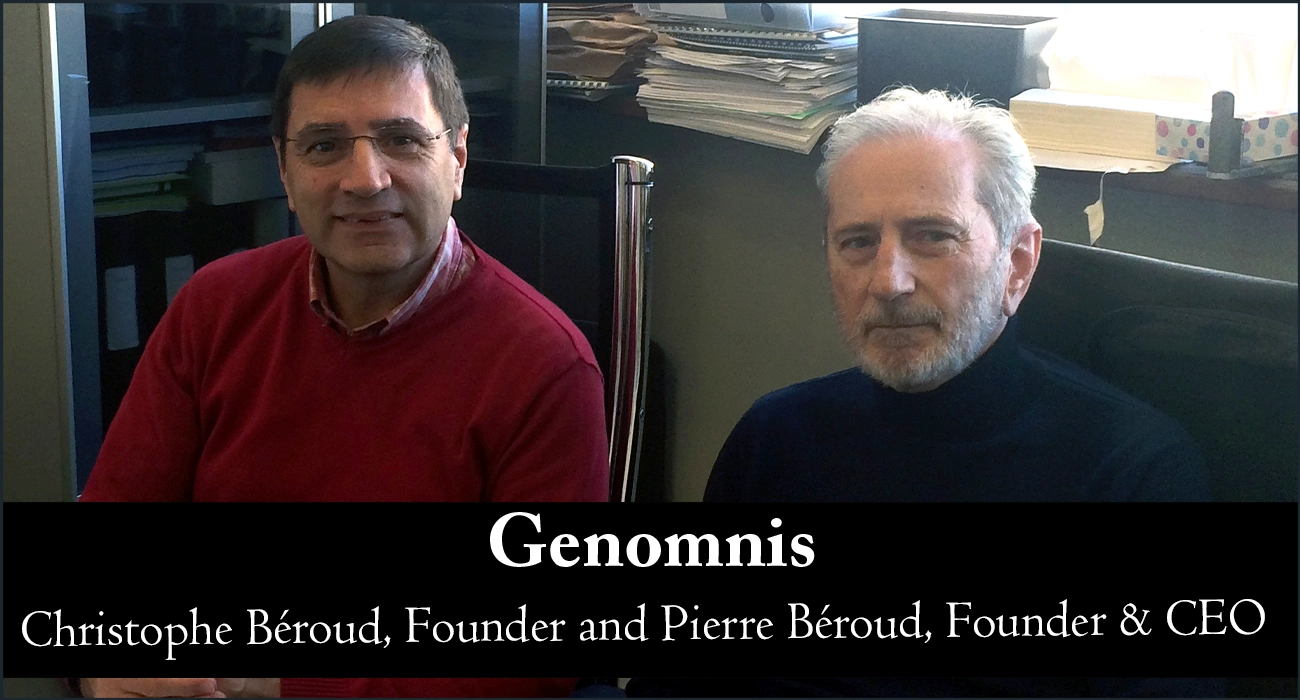
CIO Bulletin had the distinct honor of interviewing Christophe Béroud, Founder, and Pierre Béroud, Founder and CEO of Genomnis, to explore the company's scientific vision, pioneering innovations, and contributions to advancing medical genomics.
Interview Highlights
What was the founding vision behind Genomnis, and how did your journey evolve from academic genetics research to commercializing groundbreaking bioinformatics tools for genetic variant interpretation?
The “Genetics and Bioinformatics” research team led by Professor Christophe Béroud at Aix-Marseille University was contacted by the faculty’s commercialization unit (SATT Sud-Est) because various stakeholders from industry wished to gain access to the UMD-Predictor and HSF tools that we had developed at the university. After discussing the various options for transitioning to the commercial use of this software, it quickly became clear that setting up a startup was the simplest solution for everyone. This led to the creation of Genomnis, which acquired an exclusive sublicense for these two academic tools to ensure their development and global commercialization. We founded Genomnis not only for this purpose but, more broadly, to develop innovative tools in the field of human genetics. At the same time, the company was also able to provide employment for developers who were unable to find positions at the university.
Can you brief us on your product ecosystem, and what core algorithmic innovations make your diagnostic software tools stand apart in the genomics and bioinformatics market?
Genomnis draws on the in-house expertise of its founding members and staff in the fields of rare diseases and oncogenetics. The aim is to meet the ever-growing needs for the analysis of NGS data. The HSF Pro and UMD-Predictor Pro tools were therefore developed to process massive amounts of data in record time. The objective is to improve the combinatorial prediction approaches for UMD-Predictor Pro by utilizing new scientific data. As for HSF Pro, the aim is to maintain it as a benchmark tool by enabling the identification of all sequences involved in splicing and by predicting, as effectively as possible, the impact of all types of mutations on these signals. These tools are widely used in both academia and industry. At the same time, we have developed new tools to meet other objectives: CANDICE to process the entire dataset of a genetics laboratory using NGS; ExoSplice to develop therapeutic approaches using antisense oligonucleotides; Sequence Engineering to facilitate the cloning and production of proteins of interest; and OISO for the management of oncogenetics consultations at the patient’s bedside.
With your flagship Human Splicing Finder (HSF Pro) system combining 12 distinct algorithms, how does it empower molecular geneticists to accurately predict mutation impacts on pre-mRNA splicing?
HSF Pro is presented as a ‘one-stop-shop system’ comprising various algorithms dedicated to different types of splicing signals. For canonical sites and branching points, it uses improved position-weight matrices that enable wild-type and mutant sequences to be scored, thereby predicting whether the change exceeds a defined threshold based on the vast amount of available data. For certain positions, contextual matrices are used to refine the results. For auxiliary sequences, specific algorithms have been developed to utilize the available raw datasets, whether in the form of raw tables, motif lists, or even position-weight matrices developed specifically for this purpose. The developers’ scientific expertise has enabled them to assign specific weights to the various elements, thereby achieving very high-quality predictions: over 98% for the most common mutations (splicing donor and acceptor sites); close to 100% for branching points; and over 85% for auxiliary splicing sequences. These data make it the most effective system available for predicting the impact of mutations on splicing.
What distinctive leadership philosophy and organizational culture have enabled your team to comprehend complex genomic data frameworks while continuously delivering high-precision diagnostic tools for clinical researchers?
Genomnis’ engineers are true bioinformaticians who possess a deep understanding of both biological concepts and computer science. As such, they find it easy to conceptualize problems and devise suitable algorithmic solutions. This is the result of many years of academic training and experience. Genomnis’ philosophy is to provide career opportunities for the best and brightest from the faculty while maintaining close ties with the original ‘genetics and bioinformatics’ team. We aim to provide them with a friendly, stimulating working environment, with access to the necessary equipment, while maintaining close links with end-users in the field, namely scientists and geneticists. This synergy enables the company to maintain high standards of performance, aiming to retain its leading position in its traditional areas of expertise while also striving to achieve leadership in new developments.
In an era where clinical data security and variant classification accuracy are paramount, how do you build clinician trust around automated bioinformatics outputs without disrupting established diagnostic laboratory workflows?
This trust is based on the reputation established in the academic sphere. As mentioned previously, the HSF and UMD-Predictor tools were already well-regarded in both academic and industrial circles prior to the creation of Genomnis. The Pro versions developed by Genomnis have further improved the performance of these tools. Users, who were often seeking access to these benchmark tools, naturally adopted the new systems, which were developed building on the expertise gained with HSF and UMD-Predictor. The decades of experience in the field of genetic disease diagnosis and oncogenetics possessed by Genomnis’ founding members have enabled the company to instill the scientific rigor necessary to produce results of the highest possible quality, the only ones suitable for use in diagnostic support. The tools were designed to integrate seamlessly into the computational pipelines used in laboratories, thereby facilitating their use in a wide variety of settings.
How does your integrated software suite deliver a multi-faceted win by enhancing diagnostic accuracy, streamlining variant prioritization, reducing manual literature curation, and accelerating patient access to personalized genetic insights?
The CANDICE system aims to automate the annotation of variants using the best prediction tools, such as UMD-Predictor and HSF (available exclusively via this system), to provide fully customizable filtering tools in order to avoid the ‘black boxes’ of AI systems, to take into account the various possible scenarios (isolated cases, duos, trios, cohorts), modes of transmission, and the different types of mutations (SNVs, CNVs and SVs). The use of the most effective prediction systems and robust filtering tools makes it possible to quickly identify a shortlist of potentially pathogenic mutations linked to the patient’s phenotype. Links to numerous external databases then enable this causal link to be assessed. Finally, CANDICE facilitates users’ work by offering a pre-classification of variants using the ACMG/AMP guidelines for SNVs and the ACMG/ClinGen guidelines for CNVs. All these elements make it possible to rapidly identify one or more pathogenic variants where possible. It should be noted that currently, only 40% of NGS analyses worldwide lead to a diagnosis.
Being recognized among the “Innovators of the Year 2026” is a major achievement. What key technological breakthroughs and operational milestones positioned Genomnis at the forefront of genetic variant interpretation?
For all the tools developed by Genomnis, our aim has always been excellence. Being recognized as ‘Innovators of the Year 2026’ is a tribute to our day-to-day efforts and encourages us to continue along this path, which is the only one compatible with the demands of human health and the diagnosis of genetic diseases.
Looking ahead, what strategic product enhancements, expansion into large-scale Next-Generation Sequencing (NGS) data processing, or international clinical market penetrations are on your immediate roadmap?
The future is already within reach. Our ambition is to provide all laboratories involved in processing NGS data for diagnostic or research purposes with the best tools at the best price. This enables us to operate in both developed and emerging countries. The cost of data processing is currently the bottleneck in molecular diagnostics, particularly in the era of whole-genome sequencing (WGS), where several million variants are identified in each individual. Our aim is to process this data in record time, while ensuring the quality of the results at highly competitive prices.
As artificial intelligence and high-throughput genomic data reshape personalized medicine, how is Genomnis positioned to lead this paradigm shift and adapt to evolving clinical diagnostics standards?
It is indeed a topical issue. We could spend hours defining what AI is before answering your question. As you can imagine, we are certainly aware of these new approaches and have always compared the results of our algorithms with those obtained using AI approaches (for example, HSF Pro vs. SpliceAI). When the latter prove to be uncompetitive, we disregard them but focus on those that could help improve our tools. We are gradually integrating these approaches, particularly for phenotypes that can be extracted from medical records.
A Pioneering Force Advancing the Frontiers of Human Genetics
Christophe Béroud has been a professor of human genetics at the University of Aix-Marseille for around fifteen years. For over 40 years, he has been involved in research and the diagnosis of genetic diseases and cancers. He developed the first Locus Specific Databases (LSDBs), which made it possible to compile all the mutations in various genes and, above all, to derive knowledge from them. This led to the creation of UMD-Predictor and HSF. He has always been fascinated by the power of bioinformatics, which is now the only way to process big data. Formulating scientific questions and developing the algorithms to answer them are all challenges to be tackled. Every new development raises new questions that he aims to resolve, at least in part!











































 consultants ltd.jpg)


