
Some of the most meaningful advances in business technology come from people who refuse to accept that powerful tools must also create heavy new burdens. True innovators in this space focus on making complex capabilities practical, secure, and directly tied to results. Their work matters because it determines whether organizations can adopt transformative technology with confidence or remain held back by cost, risk, and operational weight. Celebrating those who bridge this gap is essential, for they shape how enterprises turn ambition into lasting advantage.
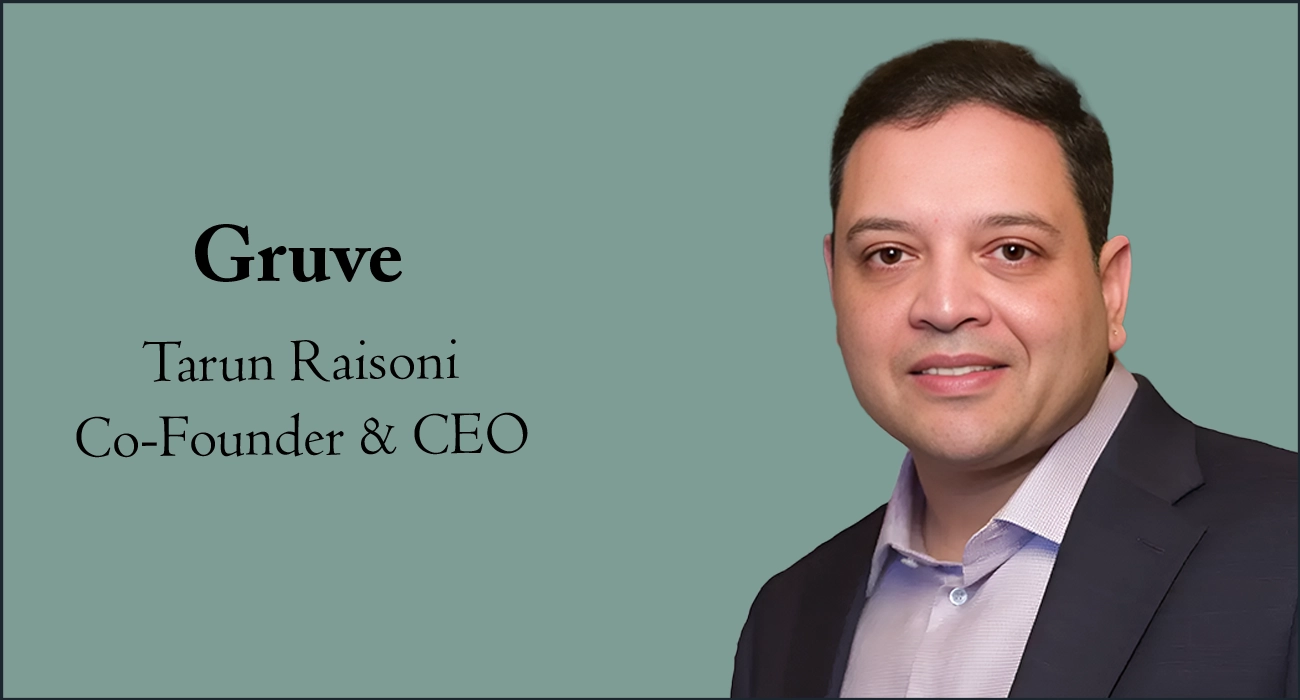
One company steadily earning that recognition is Gruve. Founded on a clear conviction that artificial intelligence should create outcomes rather than overhead, Gruve helps enterprises design and run complete AI solutions that stretch from infrastructure through to intelligent agents. Co-founder and chief executive Tarun Raisoni has framed the mission simply: the goal is to deliver technical performance and business return in the same system. Backed by respected investors including Mayfield Fund and Cisco Investments, and supported by more than five hundred people across two continents and five nations, Gruve builds platforms that keep data secure and sovereign while removing the usual barriers to scale.
Building Infrastructure That Serves Business Goals
At the centre of Gruve’s work sits PulseAI, an agent-to-silicon platform created so organizations can run advanced AI without surrendering control or absorbing unnecessary complexity. The foundation is proven AI compute. Enterprises receive right-sized GPU infrastructure that has already been validated for real workloads, eliminating the long procurement cycles and integration risks that normally accompany building such systems from scratch. Clusters can start small and expand to more than two thousand GPUs, with compute, storage and security pre-integrated from the first day. Both operational and capital expenditure models are available, giving leadership teams the flexibility to begin quickly and grow without rebuilding the entire stack.
This approach supports a wide range of needs. Teams piloting conversational tools, document intelligence or coding assistants can begin with focused configurations. Organizations running production inference across text, images and customer-facing agent workflows move into larger enterprise setups. Those training custom models or serving multiple business units gain multi-tenant isolation, supervised fine-tuning and the ability to test models side by side. In every case the emphasis remains the same: infrastructure that matches the work rather than forcing the work to fit the infrastructure.
Keeping Intelligence Inside the Organization’s Walls
PulseAI’s software layer acts as a private AI control centre. Usage, cost and productivity remain visible to the teams that need them. Model governance, quota management and scheduling are built in rather than added later. Security and agent frameworks arrive already integrated. Every interaction, every workflow and every insight stays inside the organizations’ own perimeter. This design addresses one of the central concerns facing enterprises today: the risk of losing ownership of institutional intelligence even as they invest heavily in creating it.
The result is an environment in which data, models and agent processes remain under clear organizational control. Leaders gain the ability to innovate at speed while retaining the visibility and policy enforcement that regulated and security-conscious industries require. The platform does not ask companies to choose between progress and protection. It is engineered so both can advance together.
Removing Operational Weight So Value Can Surface
Gruve takes full responsibility for the day-to-day running of the stack. A dedicated operations team manages the environment around the clock, delivering cloud-like reliability without requiring the customer to add headcount for infrastructure management. Production readiness for new AI workloads can be achieved in under two weeks. Organizations retain complete control over how AI is used across business units while the underlying systems remain the concern of specialists.
This model frees internal teams to concentrate on extracting intelligence from their own data rather than maintaining the machinery beneath it. The difference is practical and immediate. Instead of diverting scarce talent toward system upkeep, companies can direct that talent toward the outcomes that justify the investment in the first place.
Security That Matches the Speed of Innovation
Through its partnership with Cisco, Gruve embeds advanced security and governance directly into the platform. The approach responds to well-documented realities: a large share of AI systems show exposure to prompt-injection risks, many organizations have already experienced internal data leaks through generative tools, and breaches involving ungoverned AI carry significantly higher average costs. Gruve’s services help close these gaps through continuous assessment, real-time protection and clear visibility across the AI attack surface.
Implementation follows a structured path from discovery of existing assets through design of controls, deployment of protective measures and ongoing optimization. The outcome is an environment in which AI teams can move quickly while security and compliance requirements remain satisfied. Measured results include faster detection of issues, lower operational cost than building equivalent internal capabilities, and significantly shorter time from decision to production value.
Gruve’s contribution lies in making advanced AI practical for the enterprises that need it most. By aligning infrastructure, control, operations and security around measurable business results, the company removes many of the traditional obstacles that slow adoption or dilute return. In doing so it offers a clear path for organizations determined to turn artificial intelligence into institutional strength rather than another source of complexity. That combination of technical depth and business clarity continues to define its work.
About | Tarun Raisoni
Tarun Raisoni is the Co-Founder and CEO of Gruve, driving enterprise AI innovation through outcome-focused solutions. A visionary entrepreneur with over 20 years of experience, he previously founded Rahi Systems, scaling it into a global enterprise with over $500 million in run-rate revenue before its $225 million acquisition by Wesco in 2022.
A former Cisco leader and active startup investor, Tarun is passionate about building transformative businesses, empowering innovation, and shaping the future of technology. He holds an MS in Electrical Engineering from the University of Southern California.














































 consultants ltd.jpg)


