
Every meaningful agricultural breakthrough begins with a question that challenges what people have always believed possible. As the demand for food grows and natural resources face increasing pressure, the future of farming depends on finding smarter ways to produce more while using less. Sometimes, the inspiration for such progress comes from nature itself, in processes that have existed for millions of years but whose potential is only beginning to be understood. One such possibility lies in the extraordinary interaction between lightning, water, and life.
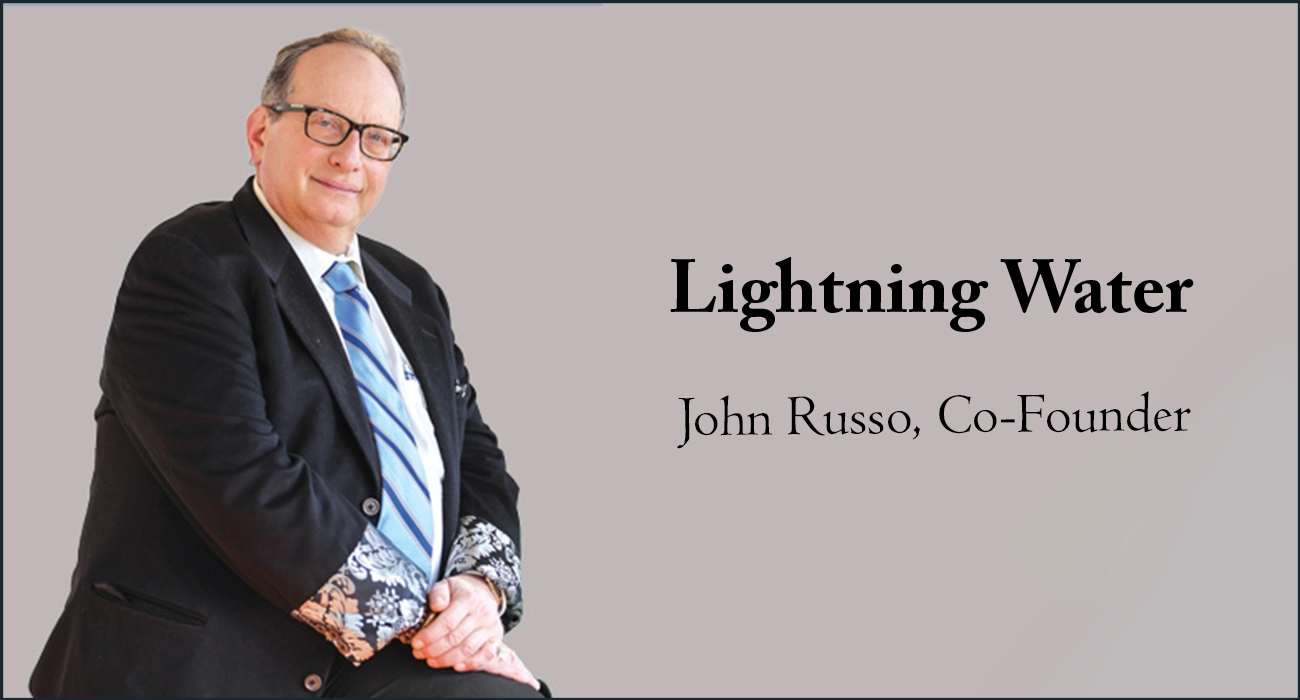
Recognized by CIO Bulletin as one of the “Innovators of the Year 2026,” Lightning Water is exploring how this natural phenomenon can inspire a new approach to agriculture. Co-founded by entrepreneur John Russo, the company harnesses the science of plasma-activated water to investigate how water treated through controlled electrical energy can better support plant growth and resource efficiency. By bringing together scientific research, engineering, and agricultural applications, Lightning Water is developing an approach designed to complement existing growing practices with the potential to reduce reliance on certain conventional agricultural treatments.
With a focus on hydroponics, indoor farming, and other controlled growing environments, the company seeks to help growers make better use of water and available nutrients without adding unnecessary complexity to their systems. Its reported growing trials indicate promising potential for improved harvest yields and shorter growing cycles, while continued research remains essential to understanding performance across different crops and conditions. At its heart, Lightning Water represents a compelling meeting of nature and scientific curiosity, pursuing a simple yet powerful idea: sometimes, the next breakthrough in feeding humanity begins by discovering more of what water can do.
CIO Bulletin uncovers how John Russo is bringing plasma science, entrepreneurial imagination, and one of nature's most extraordinary processes together to explore a new future for food, water, and humanity.
What If Water Could Do More?
Some of the most remarkable innovations begin by looking at something familiar and discovering possibilities the world has yet to fully recognize. For John Russo and Lightning Water, that discovery centers on one of life's most essential resources—and the extraordinary science that could transform how we use it.
Every day, billions of people depend on something they rarely stop to think about: water. It nourishes our bodies, sustains agriculture, supports ecosystems, and makes life as we know it possible. Yet despite its fundamental importance, scientists continue discovering new ways water can interact with energy, chemistry, and living systems.

Consider a thunderstorm. For millions of years, lightning has illuminated the skies, releasing tremendous electrical energy into the atmosphere. But beyond the spectacle lies something remarkable. Lightning also initiates chemical reactions involving nitrogen and oxygen, contributing to natural processes that support life on Earth. What if we could harness aspects of those processes and make them useful for modern agriculture?
That question sits at the heart of Lightning Water, an agricultural technology company established in 2019 and co-founded by entrepreneur John Russo.
Through the science of plasma-activated water, Lightning Water is exploring how ambient air, water, and electrical energy can be brought together to enhance water's properties, potentially increasing its efficacy in supporting plant growth, improving resource utilization, and introducing new possibilities for agricultural production. For Russo, the opportunity is about more than developing a technology. It is about reconsidering our relationship with nature and recognizing that some of tomorrow's most important innovations may emerge from processes that have existed around us all along.
Nature's Lightning, Reimagined Through Science
To understand Lightning Water, it helps to understand plasma. Often described as the fourth state of matter, plasma is an energized gas containing charged particles and other reactive components. It occurs naturally in lightning, the sun, and numerous other environments.
Scientists have also developed ways to generate plasma under controlled conditions, allowing them to investigate its interactions with different materials, including water. When plasma interacts with water, it can generate reactive oxygen and nitrogen species. The resulting liquid is known as plasma-activated water, or PAW.
These chemical species can influence the characteristics of treated water, creating opportunities for applications in agriculture, environmental systems, and microbial management. For growers, the concept introduces an intriguing possibility.
Instead of treating water solely as a delivery mechanism for nutrients, could water itself contribute additional functionality to the growing environment? Lightning Water is generating positive results through applications involving plant development, nutrient-use efficiency, water treatment, and controlled-environment agriculture.
The technology does not eliminate the biological requirements of plants or automatically replace conventional fertilizers. Rather, it opens an avenue for studying how water chemistry may complement existing agricultural practices. The science is complex. The underlying inspiration is remarkably simple. Nature has been demonstrating the relationship between electricity, air, and water for millions of years.
The Numbers That Demand Attention
Agriculture is under growing pressure to produce more while managing the costs of water, energy, nutrients, and other essential resources. For indoor farms, hydroponic operations, greenhouses, and vertical growing facilities, efficiency is particularly important. Growing cycles, crop yields, water use, and operational consistency can influence the viability of an entire operation.
Lightning Water reports results from controlled growing applications showing up to 30% greater harvest yield and a 35% shorter harvest cycle. These are significant figures. Greater yield suggests the possibility of producing more food from an existing growing operation. A shorter harvest cycle suggests crops may reach harvest sooner, potentially allowing growers to improve production scheduling and the use of available facilities.
The results are company-reported and require continued evaluation across different crops, treatment conditions, and growing environments. Nevertheless, they illustrate the profound significance of investigating how plasma-activated water interacts with living plants. Lightning Water's exploration efforts are part of a larger scientific conversation. Research at Penn State University involving plasma-activated water and pea microgreens has reported substantial improvements under specific experimental conditions.1
In a study involving researcher Sanchita Saha and Dr. Francesco Di Gioia, a treatment using plasma-activated water stored for 72 hours produced approximately 19.7% greater yield and 21.5% higher water-use efficiency compared with tap water. The findings also demonstrated that activation duration and storage conditions can influence outcomes.
How the water is prepared, stored, and applied matters. The Penn State findings are independent scientific evidence concerning plasma-activated water; they should not be confused with Lightning Water's own reported performance figures or treated as validation of its specific equipment. Together, however, these findings help explain why the field is attracting attention.
Plants Are More Than Passive Recipients
There is another dimension to this science that particularly interests Russo. Plants are not passive containers waiting to absorb whatever humans place into their growing environment. They are sophisticated living organisms with biological systems that regulate nutrient uptake, growth, and responses to environmental conditions.
Modern agriculture provides plants with essential nutrients through synthetic fertilizers and growing solutions. But not everything introduced into an agricultural system is necessarily absorbed by the crop. Depending on the environment, nutrients can be lost through runoff, leaching, or other processes. Lightning Water is exploring whether changes in water chemistry can influence how efficiently plants use available resources.
That possibility encourages a different agricultural conversation. Rather than focusing exclusively on how much material can be added to a growing system, perhaps greater attention can be directed toward the plant's willingness and biological ability to receive and utilize what is being provided. It is a question that connects chemistry with biology—and agricultural productivity with environmental responsibility. Thus producing a healthier, cleaner, more robust, and vital version of the plant, a trifecta of good fortune.
Connecting Vision With Scientific Expertise
John Russo's journey into plasma science did not begin in a conventional agricultural career. Raised in a family with three generations in the fish business, he developed an early understanding of entrepreneurship, commerce, and the importance of relationships. He later co-founded Russo/Grantham Productions with composer Marshall Grantham, helping build a commercial music production enterprise associated with Back Pocket Studios in Manhattan. The operation worked within the advertising industry, bringing together creative talent, production technology, studio infrastructure, and intellectual property.
Although commercial music and agricultural technology appear worlds apart, Russo sees innovation as an exercise in connecting disciplines, people, and ideas. That philosophy informs his work with Lightning Water. Among his close scientific relationships is Dr. Alexander Fridman, John A. Nyheim Chair Professor and Director of the C. & J. Nyheim Plasma Institute at Drexel University.
An internationally recognized plasma scientist, Dr. Fridman's work encompasses applications involving energy, biology, environmental control, agriculture, and food processing. Russo regards him as a scientific ally and mentor. Lightning Water has also pursued agricultural research connections involving Dr. Francesco Di Gioia and Penn State's College of Agricultural Sciences, particularly around microgreens and hydroponic growing systems.
The company has participated in Penn State's Ag Progress Days, engaging with agricultural professionals, researchers, and industry representatives. These connections reflect an essential principle: ambitious ideas become meaningful innovations when scientific understanding is connected to practical applications and measurable results.
Beyond Agriculture: Why This Matters to Everyone
The immediate opportunities for plasma-activated water may be found in indoor farms, greenhouses, and hydroponic facilities. But the implications extend well beyond the people operating those systems. Everyone eats. Everyone depends on water. And everyone is connected, directly or indirectly, to the environmental and economic systems that make food production possible.
If agricultural technologies can improve productivity, use resources more efficiently and responsibly, and strengthen growing-system resilience, their potential benefits can reach consumers and communities far removed from the original research. There are additional scientific possibilities. Research involving plasma-activated water and related plasma systems has investigated antimicrobial activity against microorganisms such as E. coli, Salmonella, and Listeria under defined conditions.
These investigations point toward potential applications involving water treatment, agricultural hygiene, and food handling. They do not establish that Lightning Water's specific technology has been validated for these uses, but they demonstrate the breadth of questions being explored in plasma science.
For everyday people, the significance is not that a particular technology has already solved the world's food challenges. It is that scientific discoveries may give us new tools for addressing problems we have long accepted as unavoidable.
The Philosophy Behind the Possibility
Russo has a phrase that captures his approach to innovation: “PIGS CAN FLY.” To him, the impossible invites a different interpretation: “I'm possible.” It is not a rejection of science or a belief that imagination alone produces results. It is a willingness to investigate what others might dismiss before the evidence has been examined.
Russo also speaks about the need for a broader rediscovery of how we understand the natural systems around us. We become accustomed to doing things a certain way, often without questioning whether those methods remain the best available options. Lightning Water reflects his interest in looking beyond that familiarity, rediscovering what nature has been demonstrating all along, and exploring how that knowledge can be applied in new ways. The company's guiding idea is that nature may offer processes we have not yet learned to use to their fullest potential.
An Innovation Still Unfolding
The future of Lightning Water extends beyond a single crop, growing method, or agricultural application. Its potential lies in a fundamental shift in how we understand and use one of Earth's most essential resources. From hydroponics and vertical farming to greenhouses and specialty agriculture, plasma-activated water presents opportunities to improve productivity, use resources more efficiently, and develop more resilient food-production systems.
The early findings offer reasons for optimism. But the greater opportunity lies in what continued research, scientific collaboration, and practical application may reveal. For John Russo, this journey has always been about more than water. It is about challenging assumptions, connecting disciplines, and recognizing possibilities that conventional thinking may overlook. His belief that the seemingly impossible deserves investigation is not simply a personal philosophy. It is the foundation of the work Lightning Water is pursuing.
And perhaps that is where the story becomes relevant to all of us.
We have learned to harness sunlight, wind, and flowing water. We have transformed natural forces into technologies that power our communities and shape our lives. Yet nature continues to reveal processes whose potential we are only beginning to understand.
Lightning has illuminated our skies for millions of years. Today, science is exploring how the chemistry it inspires might contribute to the way we grow food, manage resources, and sustain future generations.
For Lightning Water, the significance is not simply that water may behave differently. It is that understanding water differently could change what becomes possible for the world that depends on it.
What if water could do more?
For John Russo and Lightning Water, that question is more than the beginning of an innovation. It is an invitation to imagine—and investigate—what comes next.
Scientific Reference: 1Saha and Di Gioia, “Plasma-activated water processing and storage time impacts pea microgreens yield and quality,” Journal of the Science of Food and Agriculture (2026). DOI: 10.1002/jsfa.71124.
















































 consultants ltd.jpg)


