
Every executive knows the quiet power of a well-placed screen. It can turn a lobby into a welcome, a wall into a sales floor, a waiting area into a source of calm information. Yet the same screens often become a source of frustration, locked behind monthly fees, limited by rigid software, or scattered across locations with no clear way to control them.
Zoney Digital Signage changes that equation. Recognized by CIO Bulletin as one of the “Innovators of the Year 2026,” the company delivers Zoney+, a complete digital signage platform that combines commercial-grade media player hardware with full software access under a simple lifetime model. No monthly contracts. No recurring fees. Businesses receive unlimited zones, layouts, and graphics, plus the ability to manage every screen across multiple sites from one control center.
Built for restaurants, fitness centers, retail, healthcare, hotels, corporate environments, automotive dealerships, and events, Zoney gives teams the freedom to design menus, promotions, announcements, and schedules with a simple drag-and-drop interface and more than 150 apps and widgets. Content can be tailored to any screen size or purpose, published instantly, and updated from anywhere. Role-based access, emergency alerts, multi-location organization, and clear performance analytics put practical control in the hands of the people who need it. From a single display to thousands, Zoney Digital Signage turns screens into reliable, flexible assets that work as hard as the businesses they serve, simple to start, easy to own, and built to last.
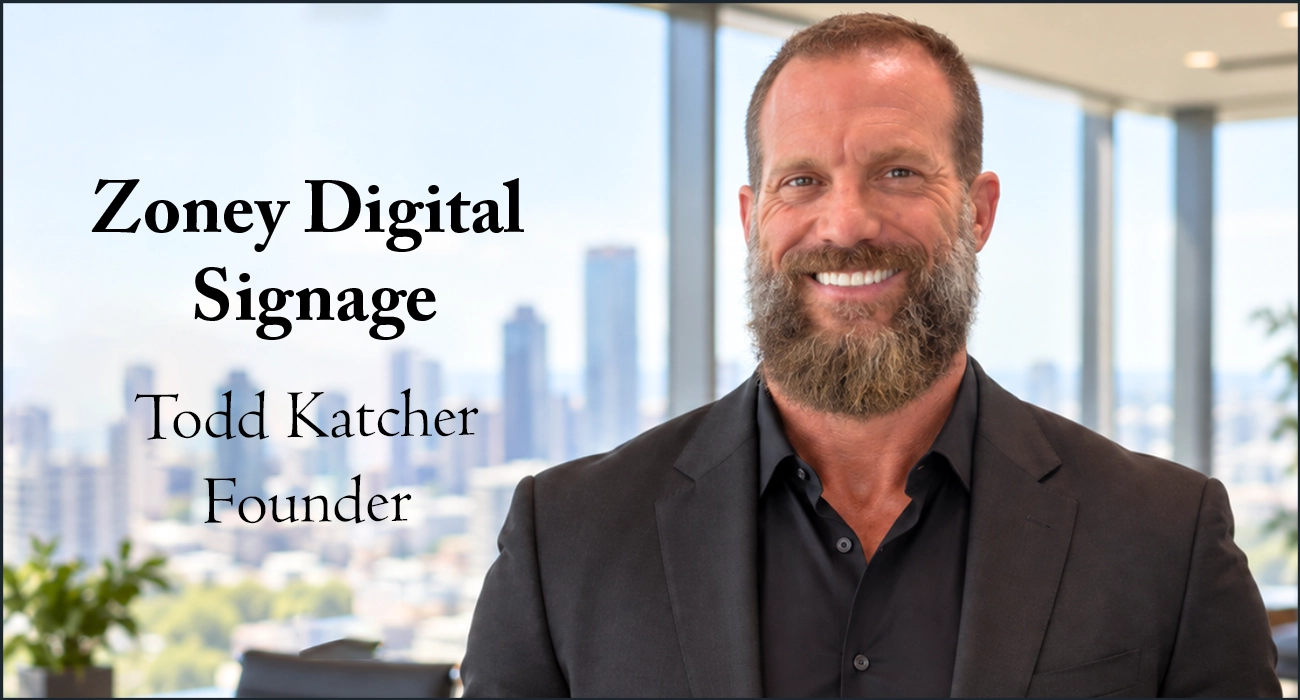
At CIO Bulletin, we had the distinct honor of interviewing Todd Katcher, Founder of Zoney Digital Signage.
He shared valuable insights into how he and his team take a practical approach to innovation, combining affordability, flexibility, and ease of use to help businesses make more effective use of every screen.
Interview Highlights
What was the original spark that led to the founding of Zoney Digital Signage, and how did that early vision shape the company you lead today?
Zoney grew out of a practical need within our sister company, Digital Dealership System. Digital Dealership System provides automotive dealerships with customer-facing digital signage and automated employee performance leaderboards. As our installation base expanded, we needed a platform that was easier to use, easier to scale, and more accessible to our customers.
The digital signage software we were using previously depended on separate programs and plugins to handle essential functions. Playing locally stored videos, synchronizing content, and displaying web content required different plug-ins and software working together. We wanted those capabilities built into one system.
We developed the platform, used it internally across more than a thousand installations, and then expanded it for businesses beyond automotive.
That experience still shapes Zoney. We build around actual operating requirements. A small business should be able to manage its screens easily, while an enterprise or signage provider should have the controls to build its own branded service on the same platform. Zoney supports both extremes and everything in between.
Could you walk us through Zoney’s core products, and how they help businesses create, manage, and deliver more engaging digital experiences?
At its core, Zoney is software that helps businesses create and manage the content appearing on TVs throughout their locations. It brings content, layouts, templates, applications, and screen management into one platform, with 150 apps and integrations that help businesses display useful information.
Zoney+ is our turnkey offering. It includes a configured media player and lifetime software access, giving businesses a straightforward way to get started without separately sourcing hardware, installing software, and arranging a subscription.
Businesses that already have compatible hardware can use our subscription offering instead.
We also support companies building their own digital signage services. They can customize branding, templates, tutorials, content, and user permissions. Digital Dealership System is an example: its customers experience a platform and a set of tutorial videos fully branded for Digital Dealership System, while Zoney provides the underlying technology.
The platform also supports layouts that combine multiple videos, web content, tickers, weather, and other information on one screen. That flexibility is behind our approach to digital signage with no limits: giving businesses room to design the screen experience their operation needs, with hardware capable of supporting it.
Zoney+ takes a distinctive subscription-free approach to digital signage. What led to this model, and how does it change the way businesses think about the long-term value of their signage infrastructure?
We wanted to simplify the process of getting digital signage into a business. Someone starting from scratch needs both a media player and software. Traditionally, that means researching hardware, configuring it, installing the software, and then paying a recurring fee.
Zoney+ brings those pieces together in one purchase. The customer receives a media player configured for the platform, along with lifetime software access.
That gives businesses a clearer starting point when considering their investment. They can evaluate a complete system rather than assemble separate components and subscriptions.
We also recognize that businesses have different preferences. Some already own hardware and prefer a monthly subscription. We offer both approaches so customers can choose the arrangement that fits their operation.
Professional services form a key part of the Zoney experience. How do these offerings complement the self-serve software model without diluting its simplicity?
The software gives customers the tools to manage their own screens. Professional services give them access to people who can help with the work around those tools.
That can include content creation, layout and template design, network management, and media player support. Depending on the service agreement, it can also include replacement players to minimize downtime.
We have more than 20 years of experience in digital signage. Some of that knowledge can be shared through tutorials, but some situations benefit from someone working directly with the customer.
Professional services are an optional premium addition to Zoney+ or our subscription offering, with pricing based on the systems being supported. Customers can manage things themselves or bring us in where they need help. Both avenues provide access to the same platform, with the flexibility to choose how much of the day-to-day work they want to handle.
The platform already supports a wide array of existing media players and operating systems. How intentional was that flexibility in the product roadmap, and what does it reveal about how you listen to customers?
It was intentional from the beginning. Customers come to us with different equipment, budgets, and technical preferences. We wanted to accommodate those situations.
Zoney+ includes a Linux-based media player selected for the demands of our platform, including local storage and the processing capacity to handle complex layouts.
Other customers already have players or displays they want to use. Supporting different operating systems and devices gives them more ways to work with us.
Our approach is to understand what the customer has and what they need the screens to accomplish. Hardware flexibility helps us meet those requirements. When operating systems change, we have to maintain compatibility so customers can continue using their systems reliably.
As businesses increasingly rely on screens for communication, engagement, and revenue generation, how is Zoney helping clients move from simply displaying content to creating smarter, more purposeful screen experiences?
A lot of businesses still communicate with customers through a printed sheet of paper taped to a wall. Digital signage gives them a way to keep that information current and present it more effectively and interactively.
The purpose starts with what the business needs to communicate. A restaurant might need an updated menu. Another business might need promotions, customer information, or operational updates.
Zoney lets customers make changes quickly, including on mobile devices, with built-in tutorials to guide them.
Our integrations also help information move from the systems businesses already use onto their screens. When content can be updated from a familiar source, it becomes easier to maintain. That is what makes a screen useful over time: relevant information that the business can realistically keep up to date.
As an Innovator of the Year 2026 honoree, what single product decision or technical breakthrough over the past year best illustrates Zoney’s commitment to practical innovation rather than feature inflation?
One important decision has been how we build our apps. We want to bring information into the platform and give customers control over how it appears.
Google Sheets is a prime example. A spreadsheet is a familiar way to maintain information, but displaying the spreadsheet itself may not create the best customer experience. Our approach allows that information to appear in a designed screen layout with images and more appealing formatting, while the business continues updating its spreadsheet.
Point-of-sale integrations follow the same principle. Menu information and pricing maintained in the source system can feed professionally designed digital menus.
The practical benefit is reducing duplicate work. Customers can maintain information in one place and present it appropriately on their screens. That solves an everyday operating problem and makes the platform more useful.
What is next for Zoney? Are there new services, product enhancements, or capabilities currently in the pipeline that clients should be particularly excited about in the coming year?
Our immediate focus is on optimizing the platform as more customers use it.
We spent several years developing Zoney for a broader market. Now we are improving how the system handles growing volumes of content, distribution, and updates.
Digital Dealership System’s large network of screens helps us test and improve how Zoney delivers content and handles updates at scale. Content must reach a large network of locations, remain available locally, and update consistently. This experience helps us identify improvements that benefit the wider platform.
We are also maintaining the software components behind the system and adapting to operating system updates across supported devices.
For customers, the value is a platform that continues to become more reliable and efficient as their network grows. We want to strengthen the experience they already depend on and let real user feedback guide future development.
What does Zoney’s “No Limits” tagline mean in practice, and how do your software and hardware deliver on that promise?
“No Limits” comes directly from the software and hardware restrictions we encountered while shopping for a digital signage solution for Digital Dealership System.
Some platforms limit how many zones—separate sections of a screen—you can use. Others allow multiple zones, but restrict what can run in them. You might be able to play video in one section, but every other section has to show a static image. Some restrict you to one website at a time, one scrolling ticker, or a fixed layout where each zone is assigned a specific type of content. We also encountered offerings that required customers to purchase a higher-tier player to move from two zones to four or six.
Hardware creates another set of limitations. A low-powered Android stick may handle a basic slideshow, but that does not mean it can run multiple videos, web pages, and live information simultaneously. If the processor cannot handle the workload, adding more zones in the software will not solve the problem. An inexpensive or included player can become a restriction on what the customer can actually display.
We built Zoney around more demanding requirements. Our dealership lounge systems can manage libraries of hundreds of videos, receive remote content updates, and display additional information in various formats alongside that content. A user can display a video, a service-status web page, news feeds, weather, or a cycling PSA — all on the same screen.
With Zoney+, we pair the software with a Linux-based media player selected to support those demands, with local storage, processing power, and connectivity suited to the application. Customers have the flexibility to combine content across multiple zones without the arbitrary zone restrictions we encountered elsewhere.
That is what “No Limits” means to us: the software gives customers the freedom to build the screen experience they need, and the hardware can support it.
The Entrepreneur Who Built What the Market Was Missing
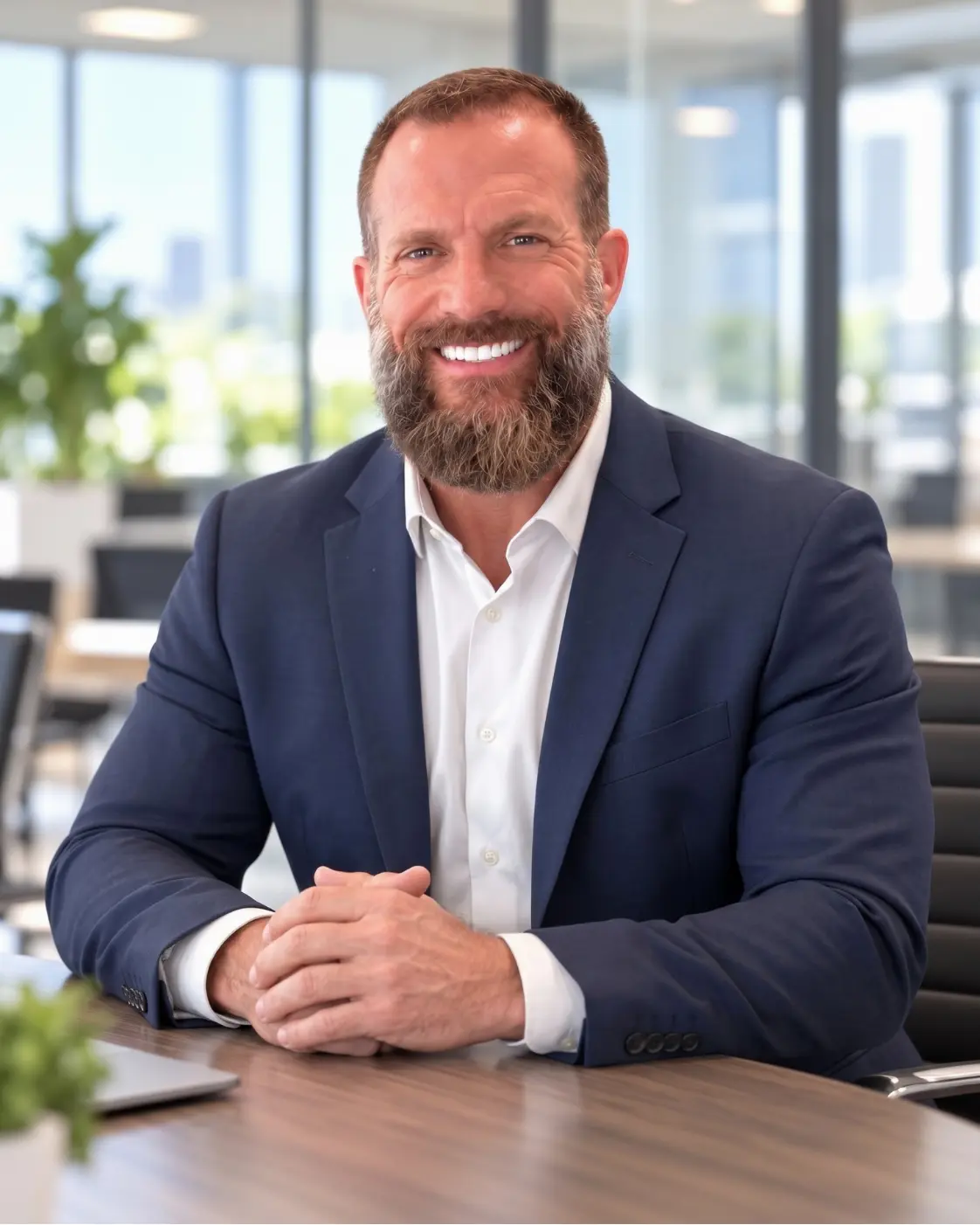
Todd Katcher is the Founder of a portfolio of companies spanning digital signage, automotive technology, sports nutrition, and other ventures, including Zoney Digital Signage, Digital Dealership System, Essential Sports Nutrition, and Matching Paws.
His path into technology was unplanned. While owning bars in Nashville, Todd was approached by a car dealer who saw the digital signs in his bar and asked if he could build something similar for the dealership. That request introduced Todd to the automotive industry, which he knew nothing about at the time. He said yes, asked questions, and kept building. That opportunity grew into Digital Dealership System and eventually led to Zoney, developed to address the needs his team encountered as the business expanded.
Over nearly two decades of building businesses, Todd has approached unfamiliar challenges as opportunities to learn and treated failure as part of making progress. As a lifelong fitness enthusiast, he applies the concepts of bodybuilding as a way of life, bringing discipline, consistency, and continuous improvement to business and personal growth. His work remains driven by a straightforward philosophy: identify problems and build solutions.







































 consultants ltd.jpg)


