
Home Industry Automobile Fecon Highlights Shift Toward ...
CIO Bulletin
,
04 May, 2026
Author:
Guest
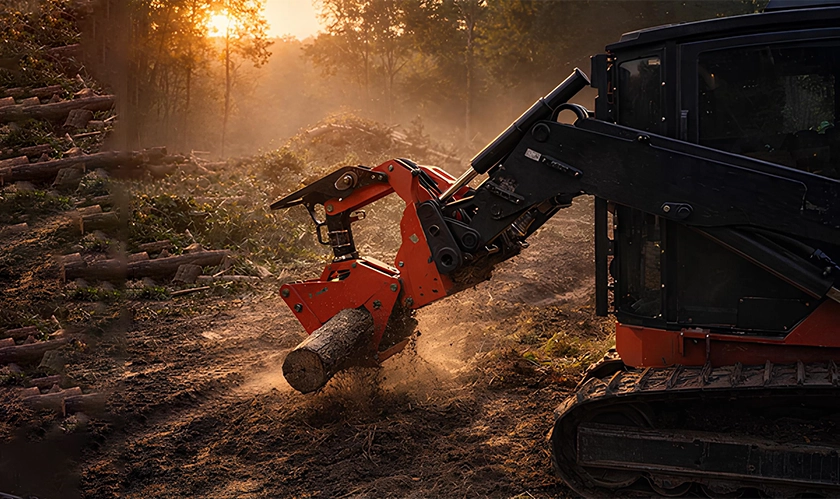
You will notice it once you step onto any active job site early in the morning; the real work begins long before construction. How the rest of the project will go highly depends on clearing the land, managing debris, and getting the ground ready. Hence, cutting trees or removing brush is not the only thing anymore. It is about how smoothly everything flows from that point on.
That’s why many contractors start paying attention to how they handle material from day one. Tools like a skid steer grapple are often part of that thinking, helping crews move loose debris without slowing things down or adding extra steps.
Across different sectors, things are moving faster than before.
All of these start with one thing, cleared land.
If you’ve ever been around a project timeline, you know delays at the beginning don’t stay small. A slow start in land clearing can affect everything that follows (and no one wants that). Crews are expected to work faster, but the conditions on-site are not always easy to deal with.
Even with better machines, some problems still show up again and again.
And here’s the thing, clearing is only half the job. Moving what’s been cleared is where time really gets lost.
You might cut everything down quickly, but if the debris just sits there, the site doesn’t move forward. That’s where many teams feel the pressure.
Contractors are looking at smarter ways to use what they already have, in place of adding more machines. That is where specialized attachments come in.
Grabbing, lifting, sorting, or clearing these kinds of tasks are done with specialized tools. Operators can handle more in one go, in place of switching equipment or making multiple passes.
It sounds simple, but on-site, this kind of change matters. Less switching means:
Think about what happens after vegetation is cut. You’re left with branches, logs, and loose material spread across the site. Moving all of that manually or with basic tools can take longer than expected. This is where attachments make a visible difference.
With something like a skid steer grapple, operators can pick up uneven loads, move them where needed, and keep the area clear as they go. It reduces repeated handling and keeps the workflow steady. And on larger sites, those small time savings start adding up.
There’s also a shift happening beyond the job site.
Manufacturers are paying closer attention to how equipment performs in real conditions, not just in testing environments. Feedback from operators plays a big role here (sometimes it’s just quick conversations at a site, nothing formal).
Crews who deal with vegetation management daily have their own experiences, and companies like Fecon stay in touch with them to understand their needs and problems. How attachments are designed, what holds up, what doesn’t, and what needs to be simpler, this kind of exposure shapes the operation over time.
It’s less about adding features and more about making sure the equipment actually works the way people need it to.
If you speak with contractors today, you’ll notice something interesting. The focus has shifted.
It’s not just:
It’s more like:
Buying decisions are more thought-out now. People compare options, ask around, and take their time before investing. And that makes sense, equipment is not a short-term decision anymore.
There is no chance that land development is slowing down anytime soon. With tighter deadlines and more expectations, projects are becoming more demanding, if anything else. Because of that, the tools used on-site are also changing.
Instead of relying on general solutions, there’s a clear move toward equipment that does specific jobs well. Attachments are becoming more important, not less. It’s a quiet shift, but you can see it happening across different types of projects.
Land clearing might not always get the spotlight, but it quietly shapes everything that follows. A smoother start often leads to fewer problems later, and that’s something every crew values.
As work demands continue to grow, the way contractors approach equipment is also changing, step by step, decision by decision. With insights gathered from real job sites, companies like Fecon continue to support this shift by focusing on practical, field-driven solutions.




















































 consultants ltd.jpg)


