
Home Industry Automobile Global Auto Sector Faces Produ...
CIO Bulletin,
11 March, 2026
Author:
CIO Bulletin Team
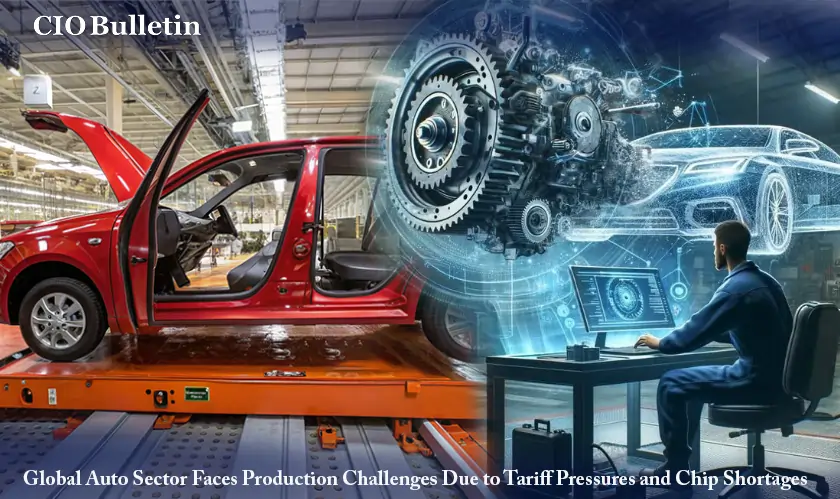
Elara Capital Highlights a Muted 2026 for Global Auto Giants as Tariff Pressures, Chip Shortages, and Expiring EV Subsidies Stifle Production."
Brokerage firm Elara Capital recently released a report on the challenges faced by the global automobile industry. The report acknowledges the structural difficulties that manufacturers have to come to terms with, including tariff-related pressures, increased raw material costs, and frequent supply chain disruptions. Additionally, production has also faced the impact of memory chips being in short supply in recent times. Apart from these negative microeconomic factors, the prevailing macroeconomic environment since the start of 2026 also does not inspire confidence in investors, with growth remaining stagnant compared to the previous year.
Furthermore, Elara Capital identifies three particular concerns for the industry, namely, slowing global passenger vehicle (PV) growth, shrinking profit margins for global OEMs in China, and pressures on legacy Original Equipment Manufacturers (OEMs) in Europe. These stifle any organic potential for growth. Its report remains optimistic on the commercial vehicle (CV) segment, making a recovery, with potentially increasing demand generated by upgrades from companies like the Volvo Group. The start to 2026 for PVs has been muted in comparison to an increase of 4.5 per cent on year-on-year sales in 2025. January 2026 saw provisional global growth decline by 1.2%, with key markets like China, the US, and Europe reporting reduced vehicular sales by 6.8%, 0.8%, and 3.9%, respectively.
Analyzing the reasons behind the declining sales figures reveals the primary reasons as withdrawal of subsidies in China that had incentivized pre-buying activity in the fourth quarter of 2025, along with rising prices and affordability concerns in the US. Further pressure on demand occurred due to the $7500 federal electric vehicle (EV) tax credit expiring. This also led to the Battery Electric Vehicle (BEV) market increasing by 30-40% in the country. Elara’s report concludes its observations by concurring with S&P Mobility’s February 2026 forecast of 0.2% decline in Global PV production, an indication of the current downturn in the automobile industry.




















 consultants ltd.jpg)


