
Home Technology Chatbots Why British Gas AI Chatbots ar...
CIO Bulletin
,
25 July, 2026
Author:
Gayathri Sr
Unpacking the controversial digital shift behind Centrica's latest mass job cuts and rising retail profits
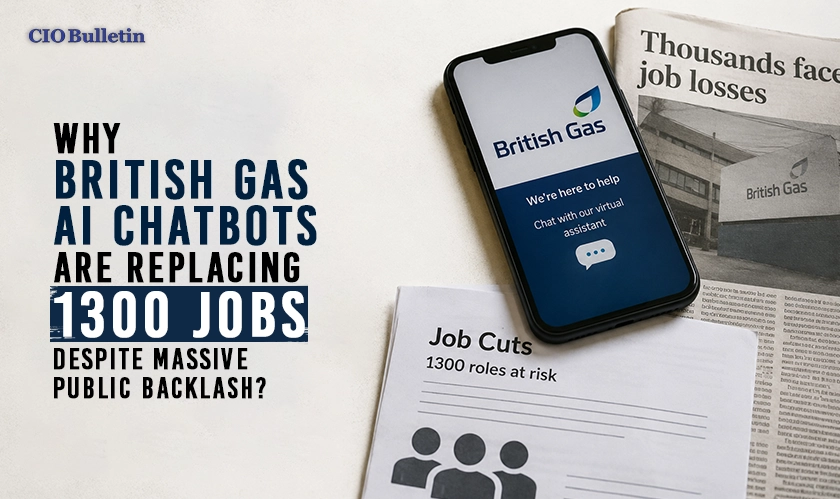
Do households genuinely prefer chatting with a machine instead of a real human being when their energy supply is on the line? According to Centrica, the parent company of British Gas, the answer is a resounding yes. Reporting for CIO Bulletin reveals that the energy giant is defending plans to cut 1,300 call centre and back-office jobs, claiming that the heavy deployment of British Gas AI chatbots simply matches modern consumer habits.
The company insists that over 90% of its customers now lean toward digital channels first, leading to a notable 20% drop in traditional phone calls. Despite facing a slight dip in domestic customer numbers down to 7.45 million, Centrica’s retail profits still climbed to £346 million during the first half of the year. This financial success comes even as the supplier navigates a massive compensation payout for past prepayment meter controversies.
While leadership maintains that changing behavior dictates the shift, critics and trade unions argue that automation is actively replacing hundreds of human workers.
The Scale of Cuts: A total of 1,300 roles across cities like Glasgow, Edinburgh, Cardiff, and Leeds are being reduced over a two-year period.
Profit Focus: Management emphasizes prioritizing stable, higher-margin fixed tariffs rather than chasing unprofitable business models.
The Digital Pivot: The corporation expects to cultivate more technology-focused roles around its digital interfaces while dialing back traditional phone support.
“AI isn’t driving these particular job reductions; that’s mainly due to changing customer behaviour.” — Chris O’Shea, Chief Executive of Centrica
As companies worldwide race to balance automation with customer satisfaction, this high-profile transition raises critical questions about the future of service-based employment. Will digital assistants permanently redefine how utility providers interact with everyday households, or will customers eventually demand the return of a human touch?
Everything you need to know about this news
The company is reducing call centre and back-office roles by 14% over a two-year period, citing a 20% decline in phone calls and a massive shift toward digital self-service channels.
Chief Executive Chris O'Shea maintains that the workforce adjustments reflect natural consumer preferences rather than a forced technology-driven agenda, noting that over 90% of users utilize digital options first.
Centrica's retail profits actually rose to £346 million in the first half of the year because the firm shifted its strategic focus toward high-margin fixed tariffs instead of chasing unprofitable customer accounts.
The cuts impact customer service and back-office operations located across major UK hubs, including Glasgow, Edinburgh, Cardiff, Leicester, Stockport, and Leeds.
While traditional phone support positions are shrinking, the energy provider plans to expand digital interface and technology roles to support its evolving online infrastructure.




















































 consultants ltd.jpg)


Comments