
Home Industry Healthcare Why Healthcare Denial Manageme...
CIO Bulletin
,
06 October, 2026
Author:
Guest
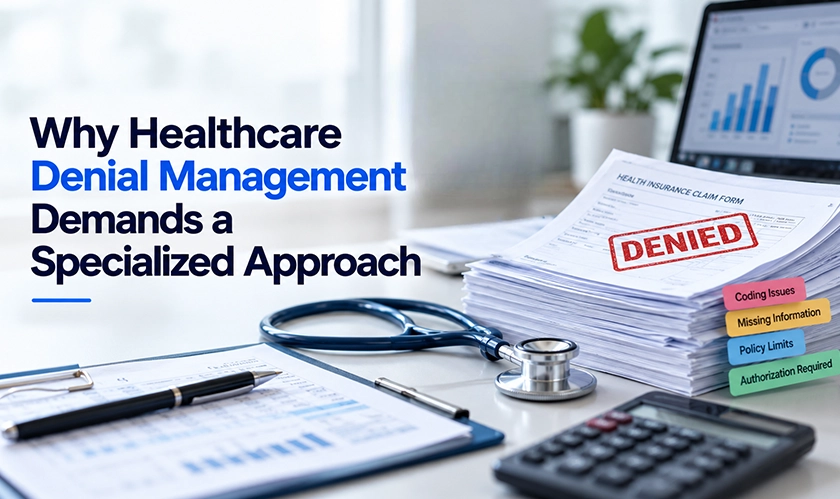
Healthcare claim denials rarely stem from a single isolated mistake. They often reflect gaps in documentation, coding, authorization, medical necessity review, payer rules, or billing workflows. High denial volume delays payment, consumes staff time, and obscures where revenue leakage begins. Routine follow-up cannot address every cause with equal precision. Healthcare organizations need a specialized process that connects claim recovery with prevention, measurement, and clinical expertise throughout the revenue cycle.
Denial work requires more than checking claim status. Staff must read payer explanations, compare billed services with clinical records, identify missing or conflicting evidence, and choose the correct appeal path. Focused denials management in healthcare connects these tasks, so each case receives an appropriate response instead of a routine resubmission. Clinical and technical denials require different evidence, deadlines, and ownership.
Healthcare claims contain clinical, financial, and administrative details that affect one another. A missing authorization can invalidate an accurate claim, while a DRG downgrade can require clinical documentation and coding review. Specialists separate these causes before choosing a response, which prevents staff from treating every denial as a simple billing error.
Denial prevention begins during scheduling, registration, authorization, and clinical documentation. Staff who verify coverage, confirm requirements, and capture complete information reduce avoidable errors before claims reach the payer.
Coding teams also affect denial volume through diagnosis selection, procedure assignment, and documentation queries. A specialized process connects coding findings with denial data, allowing leaders to correct repeated issues instead of reviewing each claim in isolation.
Clinical denials require a clear connection between the patient’s condition, the services provided, and the documented medical necessity. An effective appeal addresses the payer’s stated reason with relevant records, physician support, and precise language.
Appeal writers must also follow payer deadlines and submission rules. A complete argument submitted after the deadline does not recover revenue, even when the underlying care was appropriate.
Recovering one claim does not explain why the denial occurred. A specialized review tracks denial codes, payer patterns, service lines, authorization gaps, coding errors, and documentation weaknesses.
That analysis gives revenue cycle leaders a practical basis for correction. Teams can revise front-end workflows, clarify clinical documentation requirements, or target education to departments that repeat errors.
Denial performance needs measures that connect activity with financial results. Impactful measures include the initial denial rate, appeal rate, overturn rate, days to resolution, write-offs, and net recovery. Each measure answers a different operational question. A higher appeal rate means little if appeals lack evidence, while a high overturn rate can hide a small number of pursued claims.
Reporting should separate clinical denials from technical denials and show trends by payer, department, and reason. That detail helps leaders assign ownership and determine whether corrective action works.
Every denial requires the same level of effort. High-value claims, time-sensitive appeals, clinical cases, and recurring payer issues need early review because delays increase the risk of lost revenue.
A structured work queue helps staff focus on recoverable claims while preserving deadlines. It also gives managers a clear view of aging inventory, unresolved barriers, and workload by denial category.
Healthcare organizations often lack enough staff with clinical, coding, and payer-specific experience. Denial backlogs then compete with clean claim work, follow-up, and patient financial communication.
An external denial team can support targeted follow-up, clinical appeal writing, audits, and reporting without forcing one generalist group to manage every denial type. The operating model should preserve clear ownership, documented workflows, and regular performance review.
A defensible appeal uses records that directly answer the denial reason. Relevant clinical notes, orders, test results, treatment history, and physician explanations create a clear connection between care delivered and payment requested.
Documentation review also reveals process weaknesses. If appeals repeatedly depend on missing details, the organization can address those gaps through education, templates, documentation queries, or earlier review.
Specialized denial management protects revenue by matching each claim problem with the right evidence, workflow, and owner. Clinical appeals need clinical reasoning, while technical denials need precise correction and recurring patterns need operational action. Organizations should begin with a denial inventory, segment causes by payer and service line, then track appeal outcomes and write-offs monthly. This process turns denial data into decisions that reduce avoidable rework and improve payment reliability throughout the revenue cycle.




















































 consultants ltd.jpg)


Comments