
The most enduring healthcare organizations are not defined solely by the treatments they provide, but by their ability to create trust, inspire confidence, and continually adapt to the evolving needs of patients and physicians alike. As healthcare enters a new era shaped by technology, data, and rising patient expectations, the organizations poised to lead are those that understand a fundamental truth: innovation delivers its greatest value when it strengthens human connection rather than replaces it.
This philosophy lies at the heart of Altivera Vision, a company built with a clear vision for the future of eye care and a firm respect for the people who make it possible. Guided by decades of industry expertise and a deep understanding of how exceptional practices are built, Altivera Vision is bringing together the best of medicine, intelligence, and operational excellence to help redefine what sustainable growth in healthcare can achieve.
Altivera Vision is building a distinguished network of premier vision care practices united by a shared commitment to clinical excellence, patient trust, and long-term value creation. The company partners with exceptional physicians and established practices, preserving the reputation, relationships, and community trust they have spent years cultivating while strengthening the systems that support their continued success.
Through advanced AI-driven intelligence, strategic expertise, and a culture of shared learning, Altivera Vision empowers practices to better understand patient needs, elevate the patient care journey, and unlock new opportunities for growth. As its network expands, every insight, experience, and best practice contributes to a collective advantage that benefits physicians, practices, and patients alike.
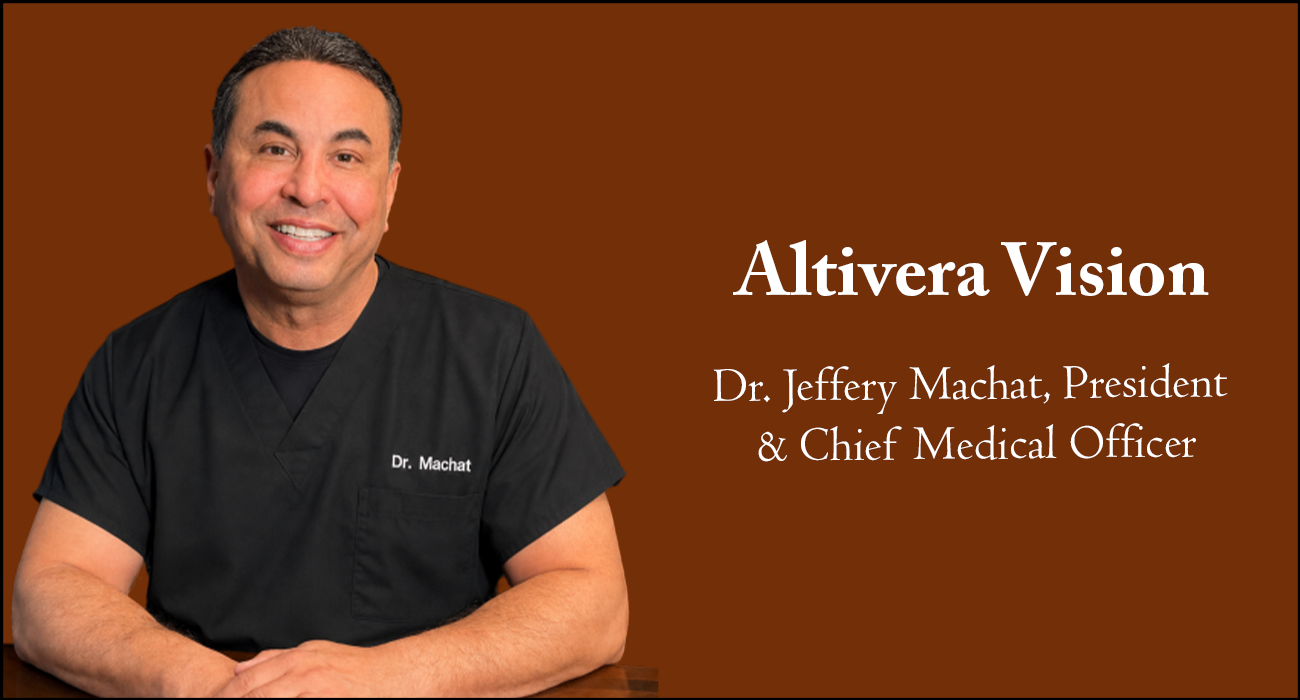
At CIO Bulletin, we had the distinct privilege of interviewing Dr. Jeffery Machat, President and Chief Medical Officer of Altivera Vision. He shared valuable insights into how he and his team of accomplished physicians are redefining the future of vision care through a powerful blend of technological innovation, clinical excellence, and a deeply human approach to healthcare.
Interview Highlights
You have already helped shape modern refractive surgery and built one of the category's best-known platforms. Why build Altivera Vision now?
I've been very fortunate. I entered refractive surgery early, built TLC Laser Eye Centers, performed more than 110,000 procedures, trained more than 3,000 surgeons, and helped build clinics in several countries.
So I've had the chance to watch this industry evolve from almost every angle. The clinical technology has advanced tremendously, while many of the systems surrounding the physicians haven't kept pace.
I can walk into an exceptional practice with a wonderful surgeon and still see patients getting lost between an online inquiry and a consultation. I can see unused surgical capacity while the practice is spending more money trying to generate additional leads.
After 35-plus years, you recognize that even excellent medicine can be held back by the systems around it. That's why Altivera Vision made sense to me.
What are you trying to build?
A group of exceptional vision practices with a much stronger growth system around them. The doctor and their unbelievable team stay at the center. That's very important to me. A physician may have spent 20 or 30 years building trust in a community. The team knows the patients. The reputation is personal. We should protect those things.
Around that, we can bring better patient intelligence, marketing, technology, education, and shared learning. The goal is to help practices understand who they can help, what those patients need to know, and where people are getting lost along the way. If we do that well, more high-value, high-intent patients reach the physician, and the practice grows around the strengths it already has.
How has the way patients choose vision care changed?
Completely. Years ago, a referral from an optometrist, family doctor, or friend might have driven most of the decision. Today, by the time a patient calls you, they may already have spent weeks researching.
They've read reviews. They've watched videos. They've compared surgeons. They've searched the procedure and probably looked at several different practices.
The relationship begins before you ever know who the patient is. That changes marketing enormously. You have to understand the questions people are asking and the things that are making them hesitate.
I've sat across from tens of thousands of patients. People want to feel informed, know what’s
going to happen, and know whether they can trust the person who may operate on their eyes. A practice has to start building that trust before the consultation.
What role does AI play in that?
AI lets us collect and understand patient intelligence at a scale that would have been impossible when I was building TLC.
A practice can have thousands of patient inquiries, marketing interactions, consultations, and outcomes. Those experiences contain an enormous amount of learning.
Why are patients hesitating? Which questions keep coming up? What information helps someone arrive better prepared? What patient messaging is most effective to make patients feel comfortable enough to overcome their fears and concerns? Which types of patients are actually moving forward? Where does the practice have capacity? AI can help us connect those pieces much faster. But I'm very clear about where technology belongs.
I don't want technology getting between the physician and the patient. I want it to make the surrounding system smarter, so the doctor has more time and better-prepared patients when that human conversation happens.
Why isn't this simply another marketing agency or software platform?
Most practices already have plenty of vendors. There may be a marketing agency, a scheduling system, a CRM, analytics software, and several other tools. Every one of them may be doing its job, but together they shape a single patient experience with the practice.
If marketing generates a lead, I want to know what happened to that lead. I want to know if and how the practice interacted with that patient. Did they schedule? What questions did they have? How were those questions answered? Did they come in? If they did not move forward, what happened? No one comes into a practice to waste their time or yours. Every person who comes in has a vision problem and wants a vision solution. If they don't book, it's because the practice dropped the ball in some way.
The average practice schedules only 70% of consultations for surgery, while the best practices schedule over 90%. That difference has a huge impact on the bottom line. The worst-performing practices schedule less than 50%.
Understanding what drives those differences should inform what the practice does with the next patient who comes in, so it isn't starting over each time.
You've helped build approximately 150 clinics. What did that experience teach you about scaling medicine?
You have to know what should be consistent and what should remain deeply personal.
There are certain things every patient deserves. First and foremost, every patient needs empathy and needs to feel important. Their questions should be answered well. They should understand their options. The team should know how to guide them through a consultation.
But the physician-patient relationship is different. Doctors build trust over decades. Their personalities are different. Their communities are different. Patients choose them for different reasons.
When you build a network, you have to respect that. Our job at Altivera Vision is to bring consistency to the systems that benefit from consistency while protecting what makes each practice and physician successful.
What have more than 110,000 procedures taught you about patients?
Patients want to know they matter. We can make medicine very technical. We talk about lasers, measurements, lenses, outcomes, and technology. All of that is important.
It's hard to imagine just how safe, effective, and miraculous our vision correction procedures are today, but each patient still has an immense amount of fear to overcome. They want and need to know that you're going to take care of them.
I've always believed in telling patients what to expect, answering the difficult questions, and being honest about risk. You build trust by helping someone understand what is happening and showing them that you care about the outcome as much as they do. Technology should give us more room for that kind of care, never less.
What becomes possible as Altivera Vision adds more practices?
This is where things become very different from when I was building clinics earlier in my career. When we built TLC, we shared best practices, trained people, and created systems across the organization. But a lot of learning still moved manually.
AI changes that. If one practice learns that patients repeatedly misunderstand something about cataract surgery, the rest of the network should benefit. If another finds a better way to prepare patients before a consultation, that lesson shouldn't stay in one city.
Each practice can contribute learning back into the system. By the time we reach the tenth practice, it should benefit from everything the nine practices before it have learned. We're building on that collective knowledge as the network grows. That's very exciting to me.
What do you want Altivera Vision to represent several years from now?
I want physicians to look at Altivera Vision and feel that this is a group they would be proud to join. And I want patients to feel that an Altivera Vision practice is a clinic they can trust. We have ambitious growth plans. I enjoy building organizations, and I've spent much of my career doing it. But healthcare has a very simple test at the end of the day.
Did we help the patient? And did we help the physician?
Our AI intelligence platform should help patients access the right care, understand their options, and connect with physicians who can offer advanced technology that improves safety, precision, and quality of life.
At the same time, surgeons should be able to focus on what they do best: operating and helping people. They shouldn't have to spend their time worrying about marketing, messaging, or the rising overhead of running a surgical practice. If we can help physicians reach more patients, fill their waiting rooms, and spend more of their time in the OR, we've done our job.
If we can acquire exceptional centers, keep great physicians at the center, modernize the systems around them, and allow every practice to benefit from what the network learns, I think we can build something very meaningful. Growth should make the system better for both patients and physicians.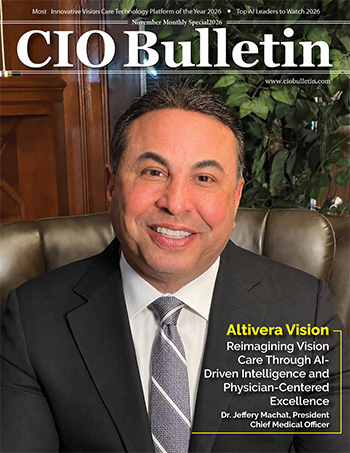
The Visionary Leader Shaping Altivera Vision’s Future
Dr. Jeffery Machat is the President and Chief Medical Officer of Altivera Vision and one of the pioneers of modern laser vision correction. He founded TLC Laser Eye Centers, has performed more than 110,000 LASIK procedures, trained more than 3,000 surgeons worldwide, and helped develop and scale approximately 150 clinics across Canada, the United States, and Europe.
His career has combined clinical innovation with a long-standing focus on patient communication, training physicians, optometrists, and patient counselors, and the systems required to build exceptional medical practices at scale.
At Altivera Vision, Dr. Machat brings that experience to the next generation of vision care, helping shape a physician-centered platform supported by AI-driven growth intelligence, modern patient acquisition, and shared learning across the network.











































 consultants ltd.jpg)


