
A wound rarely tells its full story at first glance. Its size, tissue condition, surrounding skin, healing progress, and the patient’s wider clinical picture can all influence the care it requires. Yet, for years, wound documentation has often depended on manual measurements, handwritten notes, conventional photographs, and disconnected systems. As healthcare providers look for better ways to make care faster, more consistent, and easier to coordinate, digital wound care technology is becoming an increasingly important part of the clinical journey. The most meaningful solutions are not those that simply add another layer of technology, but those that make everyday care simpler for the people delivering it.
This is where imito is making its mark, bringing intuitive digital tools, intelligent wound assessment, and seamless clinical collaboration closer to the bedside. imito was founded on a straightforward observation: hospital software should be as intuitive as the digital applications people already use every day. The company set out to remove the complexity surrounding medical photography and wound documentation, replacing cumbersome processes with simple mobile solutions designed around the needs of healthcare professionals.
The company’s first major product, imitoCam, was developed in collaboration with University Hospital Basel and launched in 2016. Designed as an intuitive medical photography platform, it gave doctors and nurses a secure way to capture, categorize, share, and store clinical images while integrating them directly into hospital systems.
What began as an app idea has since grown into a healthcare technology platform used across more than 70 hospitals. More than eight million photos have been captured through its solutions, while over 100,000 users rely on its wound analysis capabilities. These numbers reflect more than adoption. They demonstrate how a carefully designed digital workflow can solve a very practical clinical problem.
imitoCam: Making Medical Photography Secure, Simple, and Connected
Medical photography has an important role in modern healthcare. Images can help clinicians monitor skin conditions, surgical wounds, injuries, and other visible medical conditions. Yet taking a photograph is only the beginning. The image must be correctly associated with the patient, stored securely, accessible to the right professionals, and integrated into the wider clinical record.
imitoCam was developed to make that entire process easier. The application allows healthcare professionals to capture clinical photographs directly at the bedside without relying on a personal camera roll or insecure sharing channels. Images can be categorized using hashtags and body charts, measured when necessary, and shared with colleagues for second opinions. The solution can also support research and teaching, extending the value of clinical images beyond a single patient encounter.
Its strength lies in its simplicity. imito aims to make medical photography feel as natural as taking a photograph on a familiar consumer application while maintaining the security and standards required in healthcare.
The technology is also designed to fit into existing hospital infrastructure. With standards-based integration across EMR and PACS/VNA environments using technologies such as FHIR, HL7, LDAP, SAML, and DICOM, imito helps organizations introduce digital documentation without creating another isolated system.
This practical approach has supported deployments across numerous hospital departments, including vascular surgery, neurology, emergency medicine, urology, and other specialties.
imitoWound: Turning 20-Minute Documentation into Five
As imito became increasingly recognized for clinical photography, the company identified another important opportunity: wound care required a dedicated digital workflow. In 2019, it introduced imitoWound, a specialized solution designed for interprofessional wound management.
The purpose was clear: simplify wound documentation while helping clinicians capture the information needed for consistent assessment.
imitoWound enables healthcare professionals to photograph, measure, and document wounds directly from a mobile device. A process that could traditionally take around 20 minutes can be completed in approximately five minutes, helping clinicians spend less time on documentation and more time on patient care.
The application is built around standardised wound documentation and intuitive workflows, making it accessible even for users who are not highly technical. Clinicians can measure wounds, record relevant characteristics, create structured documentation, and manage unfinished assessments through a to-do list. Importantly, imitoWound is not designed to operate separately from the hospital environment. Like imitoCam, it can integrate with existing healthcare IT systems, supporting a more connected clinical workflow.
WoundGenius: Bringing AI into the Wound Assessment Journey
The next step in imito’s evolution is WoundGenius, its AI-powered wound measurement and assessment solution. It represents the company’s move from simply digitizing documentation toward helping clinicians gain deeper clinical insight from wound data.
WoundGenius allows clinicians to measure, assess, and document wounds from a single photograph. Instead of relying entirely on a ruler and manual calculations, users can obtain wound measurements digitally, choosing between standard rulers and calibration markers depending on their workflow and precision requirements.
The solution also looks beyond the wound bed itself. Clinicians can document details such as periwound skin, wound edges, and underlying structures, helping create a more complete clinical picture. This broader view can support better treatment planning and communication among care teams.
Its guided assessment workflow is designed to reduce unnecessary typing. Clinicians can select standardized wound characteristics and add specific notes only when needed, making documentation faster while maintaining useful clinical detail.
Collaboration is another important part of the platform. WoundGenius can generate standardized reports that can be shared with colleagues, specialists, and other caregivers, allowing everyone involved in the patient’s care to understand the wound status more quickly. The platform also supports EMR and EHR integration, reducing duplicate data entry and allowing structured wound information to move directly into existing clinical systems.
A Simpler Future for Better Wound Care
imito’s story is ultimately about removing friction from healthcare. Its technology addresses problems that clinicians encounter every day: how to capture a medical image securely, how to measure a wound accurately, how to document it consistently, and how to make important information available to everyone involved in care.
That focus becomes especially significant as healthcare systems face growing demands, limited specialist resources, and the need for more efficient patient management. Digital tools that save time while improving consistency can make a meaningful difference.
With proven experience across more than 70 hospitals, millions of clinical images, and a growing user base, imito has demonstrated that digital transformation does not always require complexity. Sometimes, the most valuable innovation is technology that feels remarkably simple to use.
From imitoCam’s secure clinical photography to imitoWound’s streamlined documentation and WoundGenius’ intelligent assessment capabilities, the company continues to build a connected approach to wound care. Its vision is not simply to digitize an old process, but to help healthcare professionals see more clearly, document more confidently, collaborate more easily, and ultimately make better decisions.
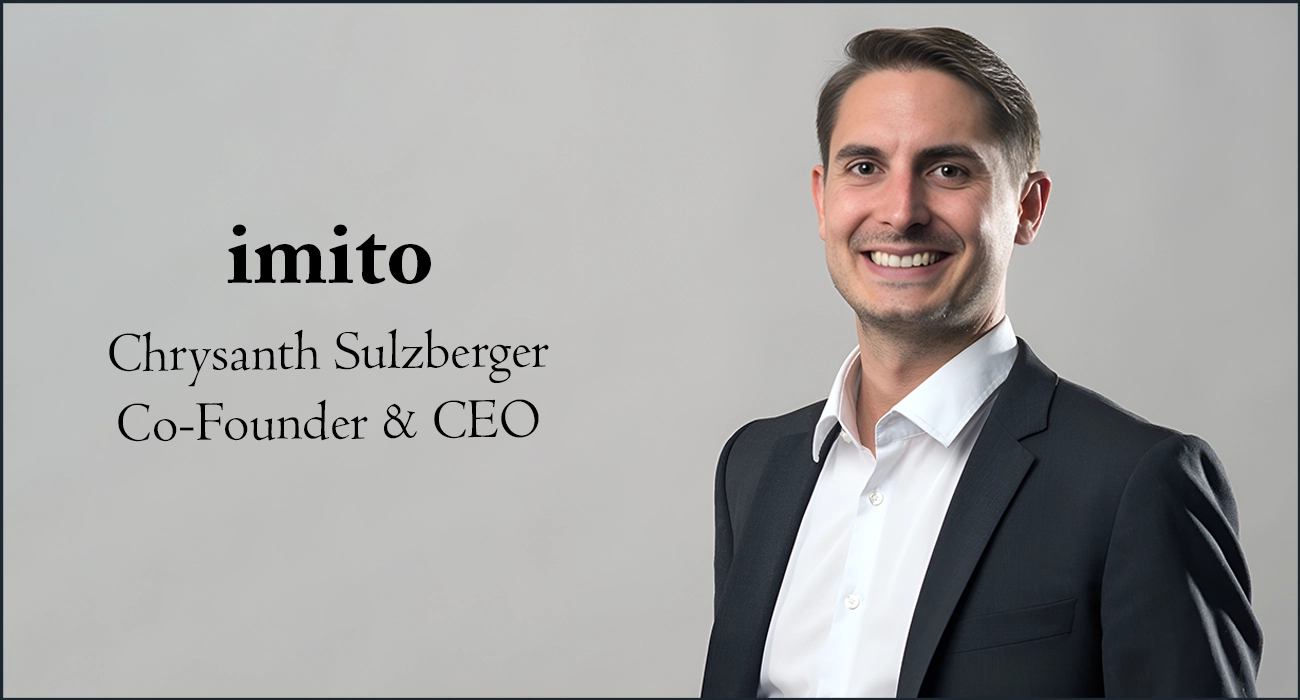
Chrysanth Sulzberger | Co-Founder and CEO
Chrysanth is passionate about radically simplifying clinical processes through smart apps. With over 14 years of experience in healthcare and a background as an IT engineer with an M.Sc., he has been active in the tech industry since 2005, including roles in IT security consulting.
As an OKR evangelist, Chrysanth helps the company’s team align goals and drive performance. In addition to leading business development, he enjoys sharing his expertise with other entrepreneurs. A father of two, he balances his professional life with a love for sailing, climbing, and long-distance running.












































 consultants ltd.jpg)


