
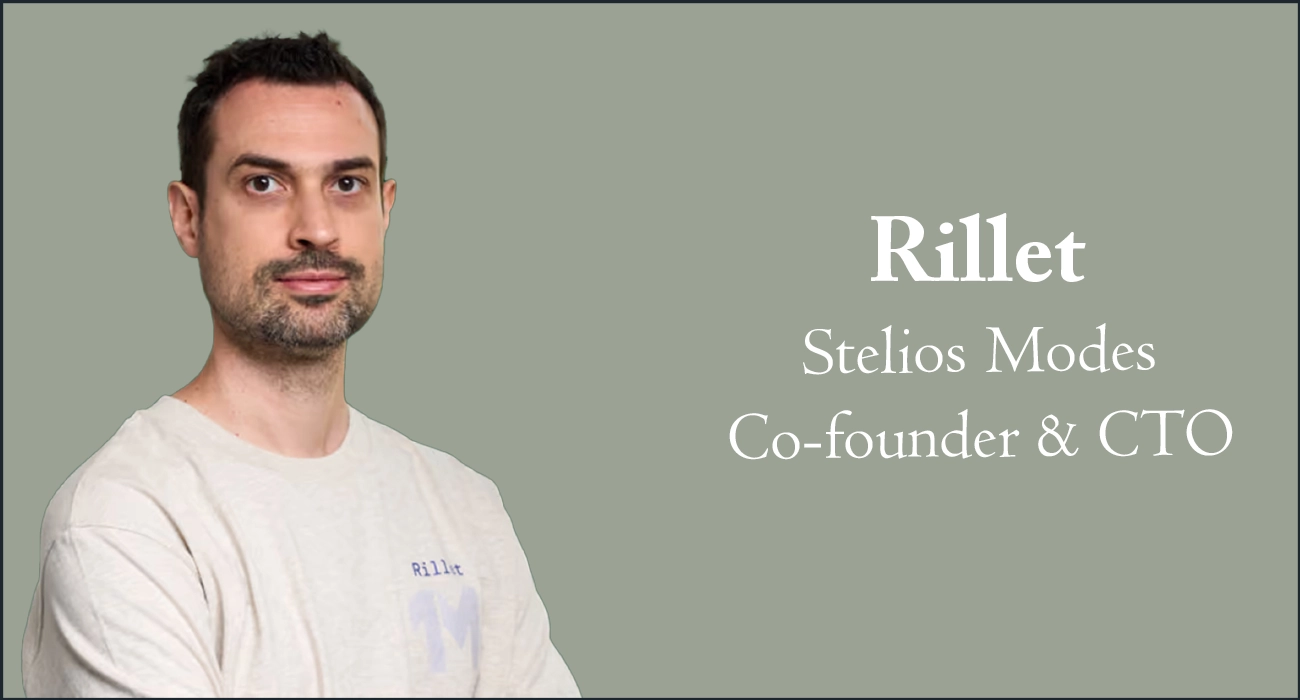
The leaders who will shape the next decade of business are those who refuse to accept outdated rhythms of work. In finance especially, the old pattern of waiting days or weeks after a quarter ends to understand what truly happened has become a silent drag on every decision. Companies that still operate on delayed numbers move slower, miss opportunities, and hand the advantage to faster competitors. The organizations that will pull ahead are the ones adopting technology that turns real-time data into immediate insight while keeping every figure fully accountable. That shift is already underway, and the companies driving it are setting a new standard for what modern finance can achieve.
Rillet stands at the center of this change. Founded by people who spent years inside the close process itself, the company built an AI-native ERP from the ground up rather than bolting intelligence onto aging systems. The team includes more than fifty CPAs drawn from the Big Four alongside operators who had lived through the limitations of legacy ERP platforms. Their shared frustration with manual reconciliation, endless migrations, and software that companies outgrew within a few years led them to create something different. Since emerging from stealth in 2024, Rillet has grown to serve more than eight hundred finance teams, including public companies with revenues exceeding two billion dollars. Backed by more than two hundred million dollars from Sequoia, a16z, and ICONIQ, and partnered with firms such as EY, KPMG, and RSM, the company has made its mission clear: make zero-day close a practical reality so leaders can act on current numbers instead of historical ones.
Built by Accountants Who Refused to Accept the Old Way
The people who designed Rillet had sat through too many month-ends that stretched into the following week. They knew the exhaustion of hunting for missing entries, the risk of numbers that could not be fully traced, and the quiet resignation that this was simply how finance worked. That experience shaped every decision. Accountants and engineers work side by side, and no feature ships unless it would survive the scrutiny of a year-end audit. Every transaction links back to its original source so that reviews begin with answers rather than excavation. AI agents handle the repetitive labor while humans retain final authority over every number. The result is a system measured not by how many features it offers but by how many days it removes from the close. Teams that once spent more than a hundred hours a week on manual work now reclaim that time for analysis and partnership with the rest of the business.
Aura AI: Specialized Agents That Work Inside the Ledger
At the heart of the platform sits Aura, a set of specialized agents embedded directly in accounting workflows. These agents are not generic chatbots. They operate against the live general ledger, trained on real accounting processes by people who understand the nuances of the close. They pull data, apply rules written in plain English, schedule tasks, and hand off work for review. Every proposal reaches a human for approval before anything posts. The agents remember how a particular company works, so their suggestions and reconciliations match the team’s own standards. Continuous monitoring keeps the system active between closes, while the same live numbers remain available wherever the finance team needs them. Control never leaves the organization. Full audit trails capture every query, proposal, approval, and rejection with timestamps and reasoning, giving teams confidence that automation strengthens rather than weakens oversight.
Trust That Meets the Highest Standards of Audit and Compliance
Finance leaders will not adopt AI that cannot stand up to scrutiny. Rillet was engineered with that reality in mind. The platform maintains SOC 1 and SOC 2 Type II certifications, employs AES-256 encryption at rest and TLS 1.2 or higher in transit, and runs continuous monitoring with regular penetration testing. Customer data remains logically segregated, every access is logged, and enterprise single sign-on options include Google, Microsoft, and Rippling. Role-based permissions, segregation of duties, configurable approval workflows, and period locking ensure that speed never compromises control.
Six core commitments govern every AI action: agents only propose, humans approve; every step is fully logged; each agent is scoped to a specific accounting workflow; materiality thresholds determine the level of human review; agents prepare while people authorize; and any model changes follow the same IT general controls expected under SOX. These are not after-the-fact policies. They form the architecture of the product itself.
The practical outcome is a continuous close that turns the ledger into a living source of truth. Data flows automatically from a company’s existing technology stack through more than twelve thousand integrations. Transactions post with a 99.7 percent automation rate. GAAP reporting and investor reporting draw from the same consistent numbers. Finance teams shift their energy from assembling the past to shaping the future, offering insights while the system handles the mechanical work of keeping the books current.
The Path Ahead
Rillet demonstrates what becomes possible when technology is built by people who have lived the problem. It replaces the old cycle of delayed reporting with a rhythm of continuous clarity. Companies that adopt this approach gain more than efficiency. They gain the ability to decide with confidence on the day numbers are generated rather than days later. In a business environment that rewards speed and accountability in equal measure, that advantage compounds. The organizations that move first will set the pace for everyone else, turning real-time financial intelligence into a durable competitive edge.










































 consultants ltd.jpg)


