
Home Technology EAM Can ServiceNow platform Adequa...
CIO Bulletin
,
22 June, 2026
Author:
Sambhrant Das
Global engineering teams combine cloud workflow automation with deep risk detection modules to prevent systemic data drift across distributed corporate networks
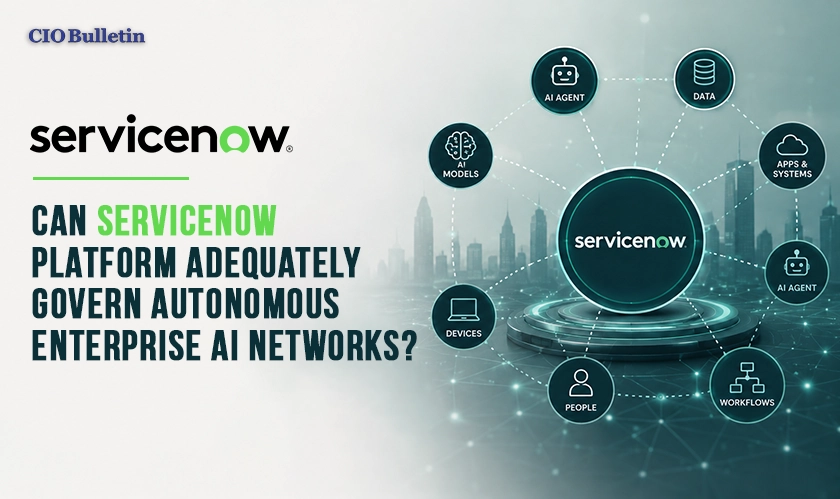
The corporate deployment of automated systems is facing sudden oversight complications as global technology teams rapidly launch independent software agents across separate departments. To maintain regulatory compliance, modern technology providers are constructing advanced observation layers capable of supervising deep machine activities simultaneously. Inspira Enterprise announced a global expansion of its systems delivery capabilities to implement the comprehensive ServiceNow platform architecture across diverse multinational corporations. This expanded operational framework addresses immediate transparency issues by joining automated corporate workflows directly with deep risk oversight platforms.
Managing distributed computational tools requires single, centralized oversight hubs rather than scattered software checkers that fail to track modern lateral asset access behaviors.
Holistic Lifecycle Tracking: Corporate administrators manage complex datasets, validation algorithms, unique prompts, and background digital skills from assessment through active deployment.
Production Velocity Gains: The real-world deployment of advanced governance tools helped internal engineering groups improve their basic operational productivity metrics by thirty-five percent.
The global rollout of automated administrative nodes allows enterprise networks to meet changing corporate data compliance standards without disrupting daily transactional volume. These structured implementations help security professionals isolate configuration errors instantly, ensuring that private system operations remain protected.
"Combining AI-powered ServiceNow workflows with deep cybersecurity expertise into a single operating layer enables real-time risk visibility." - Prakash Jain, founder and executive chairman of Inspira Enterprise
Transitioning away from multiple disconnected vendor tools toward an integrated administrative pipeline remains a core operational objective for firms handling high transaction volume.
Because contemporary industrial networks depend completely on continuous behavioral auditing to maintain structural safety during rapid growth periods, older supervisory methods are becoming obsolete. Transitioning past simple manual logging routines toward real-time structural control systems is turning into a vital commercial directive for major technology providers. Reorganizing underlying application layers ensures that modern corporate engines preserve peak efficiency while keeping complex computational investments structurally safe from unexpected data drift. CIO Bulletin views this development as a highly progressive corporate milestone that could redefine workplace ecosystems across legacy industries.














































 consultants ltd.jpg)


Comments