
Home Technology Artificial intelligence Samsung AI Chip Shortage Worse...
CIO Bulletin
,
29 October, 2026
Author:
Ravathi Sunil
Semiconductor titan signals deepening memory deficits across global markets while navigating intense capital expenditure demands and shifting shareholder payout expectations.
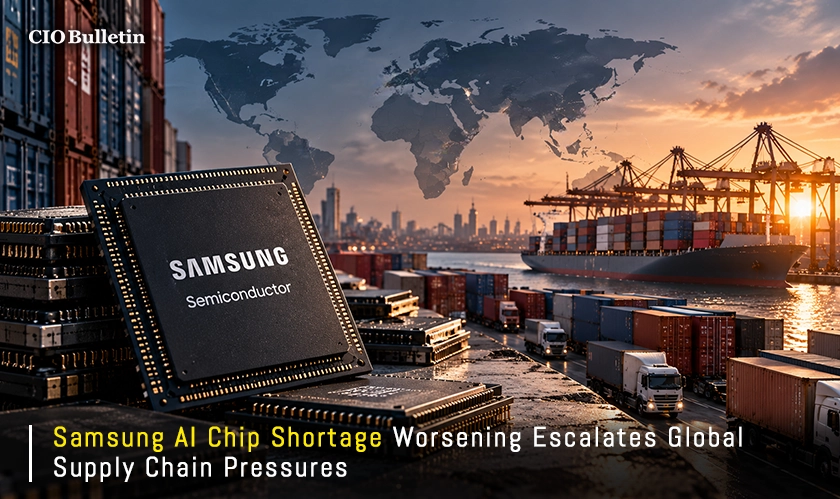
CIO Bulletin monitors major semiconductor market disruptions as the Samsung AI chip shortage expands across international technology infrastructure networks. Following record quarterly financial results driven by robust high-bandwidth memory demand, the South Korean electronics leader cautioned that manufacturing capacity will continue lagging behind surging global artificial intelligence orders. Although advanced processing units generate historic operating revenues, supply bottlenecks across high-density memory lines remain highly constrained. Addressing these market dynamics during recent financial briefings, Samsung Memory Business Executive Vice President Jaejune Kim observed, "Increasing AI-driven demand will far exceed the industry supply in comparison with previous operational years." This widening supply deficit highlights how deeply artificial intelligence infrastructure depends on specialized silicon manufacturing capabilities.
Reasons for this increased gap in supply can be found in the record-breaking levels of capital investment necessary for building facilities capable of producing semiconductors for the latest generation. In addition, amid the race between global cloud service providers and artificial intelligence hyperscalers to establish themselves in memory allocation contracts, traditional consumer hardware product lines are experiencing shortages of components. Moreover, the increasing price of silicon and yield problems at the most advanced nodes complicate operations even further. All of this results in enterprise customers having to make purchasing arrangements over several years to ensure the availability of components.
Can global semiconductor foundries expand cleanroom capacity fast enough to prevent severe technological bottlenecks across enterprise data centers? Supply chain managers evaluate the effect of entering into memory contract agreements on safeguarding their hardware operations from continuous price hikes.
How will international hardware developers balance rising component costs with consumer pricing strategies as global memory deficits persist?
Record Financial Performance: Robust demand for specialized artificial intelligence memory chips elevates quarterly semiconductor division revenues to unprecedented historic levels.
Widening Supply Deficit: Manufacturing capacity constraints across high-bandwidth memory nodes fail to keep pace with accelerating global cloud infrastructure buildouts.
Long-Term Contract Strategy: Major tech enterprises increasingly sign multi-year supply agreements to lock in crucial silicon allocations amid market scarcity.
Capital Allocation Balance: Semiconductor leadership balances aggressive infrastructure reinvestment costs against investor expectations regarding long-term shareholder returns.
In light of the growing acceptance of AI in enterprise settings, the continued existence of hardware shortcomings is bound to keep influencing the direction of global technology investments. Will multi-year supply agreements be enough to ensure hardware security in the long term? CIO Bulletin continues tracking key semiconductor developments as silicon manufacturers navigate global supply chain challenges.
News Source: Reuters, https://www.reuters.com/
Everything you need to know about this news
Exponential growth in artificial intelligence server deployments outpaces semiconductor manufacturing capacity, creating severe supply deficits across high-bandwidth memory product lines.
Enterprise buyers face elevated component prices, longer hardware delivery lead times, and the strategic necessity of signing multi-year supply allocation contracts.
The company expands advanced fabrication facilities, accelerates high-bandwidth memory production, and establishes long-term supply agreements with major global hyperscalers.
Building advanced node manufacturing facilities requires billions in capital investment to acquire cutting-edge lithography equipment and build cleanroom infrastructure.
As chipmakers prioritize high-margin AI memory components, consumer device manufacturers face potential component cost increases and restricted component availability.



















































 consultants ltd.jpg)


Comments