
Home Technology Artificial intelligence Can Unified AI Strategy Shield...
CIO Bulletin,
22 June, 2026
Author:
Sambhrant Das
Multinational financial groups expand automated processing channels and employee software access to secure long term administrative cost reductions
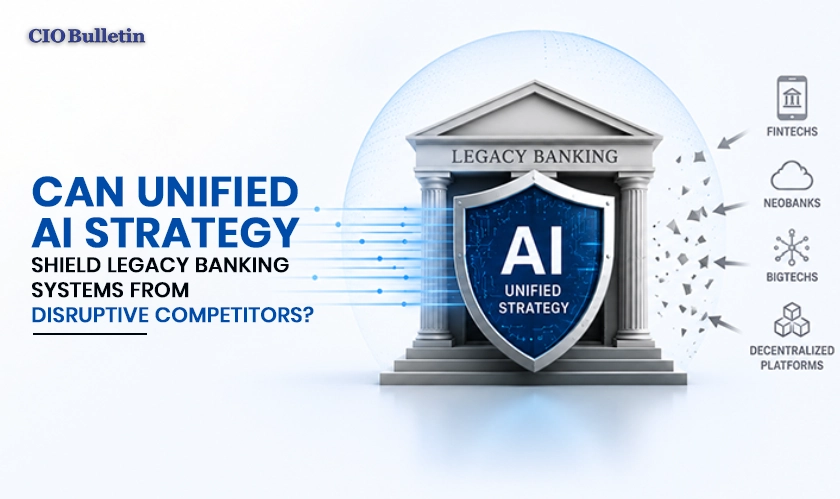
The internal operational architecture of global financial institutions is undergoing a fundamental realignment as corporate leaders transition from localized pilot programs toward unified computation models. Rather than managing machine intelligence as an isolated back-office testing mechanism, major banking groups are establishing interconnected software ecosystems to streamline daily transnational transactions. Banco Santander launched an expansive internal initiative to systematically integrate its proprietary AI Strategy across its entire international network. This comprehensive institutional deployment aims to establish quantifiable financial returns while modernizing standard workplace tools for a distributed corporate workforce.
The widespread rollout of unified data analysis tools highlights how modern financial conglomerates are systematically converting theoretical software capabilities into measurable fiscal returns. To achieve sustainable operational scalability, regional administrative divisions are equipping diverse functional teams with access to multi-provider generative software suites.
Workforce Optimization Scaling: Granting immediate processing access to all one hundred and eighty-five thousand corporate personnel across diverse international jurisdictions.
Targeted Value Realization: Securing over thirty-five million euros in business value during the initial financial quarter of the current fiscal year.
The real-world implementation of specialized automated agents allows commercial networks to process complex administrative tasks without creating significant operational friction or regulatory bottlenecks. These active digital assistants work continuously behind secure corporate firewalls to cross-reference extensive user transaction histories and flag suspicious accounting variances immediately.
"Santander is moving from AI ambition to execution." - Ricardo Martín Manjón, Chief Data and AI officer at Banco Santander.
Moving past basic data entry automation, cross-border banking institutions are embedding advanced language models directly into their core client-facing interaction mechanisms. This structural integration optimizes available labor resources by transferring high-volume, repetitive inquiries to automated diagnostic pipelines.
Voice channel systems manage over two hundred and forty thousand card queries annually to reduce consumer wait times.
Specialized engineering frameworks automate approximately forty percent of core internal software development processes.
Because contemporary retail banking environments rely completely on data integrity to preserve consumer trust during volatile economic transitions, outdated operational frameworks require immediate replacement. Shifting from fragmented data silos toward fully integrated, responsible machine learning systems is turning into an essential corporate milestone for global financial groups. Reorganizing underlying computational assets ensures that corporate networks maintain high productivity while securing distributed intellectual assets. CIO Bulletin views this development as a highly progressive corporate milestone that could redefine workplace ecosystems across legacy industries.
















 consultants ltd.jpg)


Comments