
Home Technology Automation Will India Brutally Slaughter ...
CIO Bulletin
,
06 July, 2026
Author:
Gayathri Sr
Two massive tech titans join forces to replace traditional assembly lines with self-thinking, automated robotic networks.
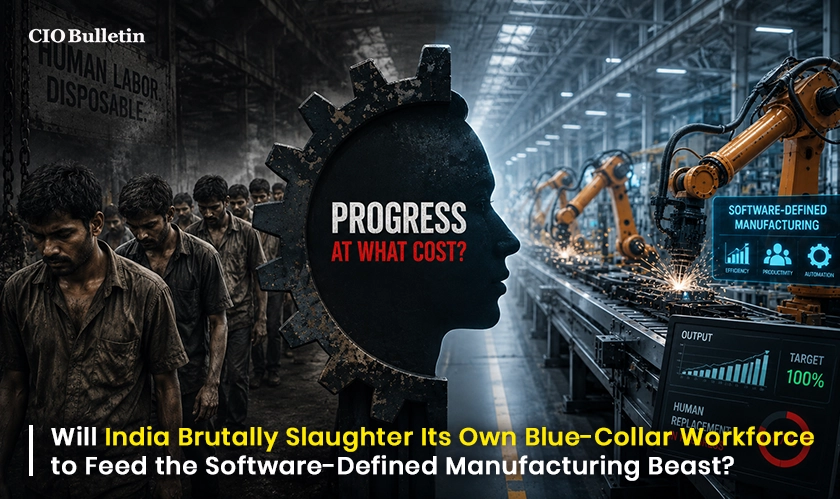
The global industrial sector is on the verge of a historic breakdown, forcing traditional factories to adapt or risk fading into obscurity. In a shocking move that has sent shockwaves through the industrial world, technology giants Cisco and Rockwell Automation have formed a powerful alliance to deploy software-defined manufacturing across rapidly expanding industrial zones. According to an exclusive market brief analyzed by CIO Bulletin, this massive collaboration aims to completely eliminate the rigid hardware limitations that have slowed factory floors down for decades, replacing them with flexible, cloud-managed code.
For generations, changing a factory's production line meant shutting down operations for weeks, rewiring massive machines, and manually reconfiguring individual computer boards. This clunky, expensive process caused massive delays and cost companies billions in lost revenue.
The trend is now shifting toward instant, remote modification. By combining advanced software-defined networking with automated control systems, plant managers can now reprogram entire assembly lines with a single click. This breakthrough allows factory operators to spot hidden machine errors, protect heavy infrastructure from cyberattacks, and deploy artificial intelligence to adjust assembly speeds instantly.
This massive shift is not just about making factories slightly faster; it is about building self-healing production networks. To prove the concept, the companies launched a dedicated live demonstration facility in Gurugram, India, allowing industrial leaders to co-create and test custom automated solutions.
“By unifying secure networking, automation, and AI-ready infrastructure, we are helping manufacturers move from automation to autonomy,” explained Kartika Prihadi, Vice President at Cisco APJC, during an exclusive launch event.
To ensure the workforce keeps up with this rapid transition, the alliance is simultaneously introducing a joint digital skills program designed to train thousands of technicians in cloud-managed production.
As CIO Bulletin keeps tracking the rapid evolution of global industrial tech, the ultimate question remains: how fast can traditional legacy plants transition to this code-first model? For corporations looking to survive rising labor shortages and intense global competition, the transition to software-defined manufacturing is no longer a luxury, it is a matter of pure survival.
Everything you need to know about this news
Traditional automation relies on fixed, permanent physical hardware that requires manual rewiring to change tasks. Software-defined manufacturing handles operations through flexible, cloud-based code, allowing an entire factory line to change products or update systems instantly.
They formed the alliance to bridge a massive gap in modern industry. Cisco provides the ultra-secure internet networking infrastructure, while Rockwell provides the heavy industrial machinery automation, creating an all-in-one smart ecosystem.
It moves human workers out of dangerous, repetitive manual labor roles and transitions them into high-paying technology positions, where they monitor data analytics, manage AI tools, and supervise automated operations remotely.
Yes! By integrating enterprise-grade software-defined security directly into the physical factory floor, the platform acts as an invisible shield, detecting digital threats and isolating infected machines before a cyberattack can stop production.
The facility serves as a real-world testing ground. Instead of wasting millions of dollars guessing if new automated software will work, manufacturing companies can thoroughly test, adjust, and validate their systems in a safe environment before deploying them at scale.


















































 consultants ltd.jpg)


Comments