
Home Industry Food and beverage Will the Massive FSSAI Old Mon...
CIO Bulletin
,
06 August, 2026
Author:
Ravathi Sunil
National food safety authorities halt sales of iconic spirits after laboratory tests uncover artificial flavours and misleading age declarations.
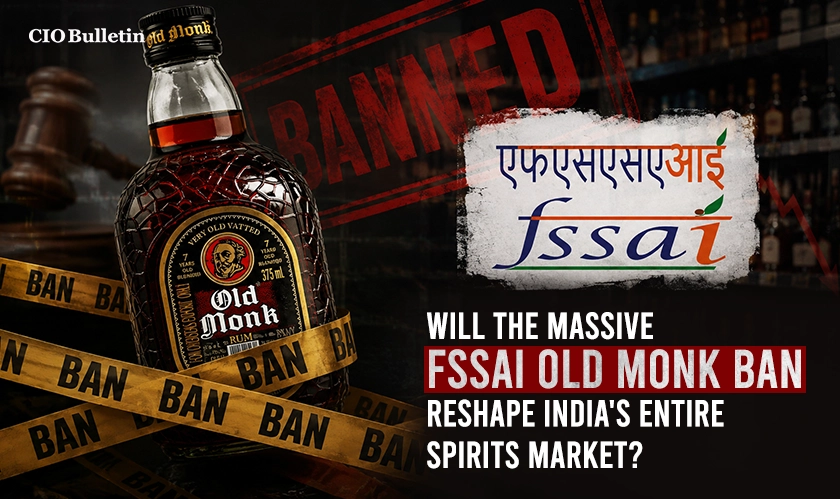
India's top food regulator has sent shockwaves across the beverage sector by ordering an immediate halt on select spirit variants across multiple major brands. The recent FSSAI Old Monk ban has drawn widespread attention from industry analysts at CIO Bulletin after government testing revealed alarming departures from standard distillation norms. A number of production facilities have been reported for utilizing artificial flavoring compounds rather than using the traditional methods of fermentation, barrel aging, and natural ingredients. This has been confirmed by laboratory findings showing that some batches had chemicals used to replicate the taste of distilled beverages.
Rather than letting liquor mature naturally inside wooden casks over years, certain facilities used unaged neutral spirit mixed with external essences. Regulators emphasized that adding artificial notes to recreate the core profile of a drink violates established food safety standards. In an official ruling, the Food Safety and Standards Authority of India stated, "There is no internationally recognized manufacturing practice whereby rum flavour is added to rum or whisky flavour is added to whisky". The regulatory crackdown also highlighted misleading age claims on product packaging, where bottles marketed as matured blends contained less than five percent aged spirit.
Synthetic Flavour Addition: Manufacturers added external spirit flavourings directly into extra neutral alcohol bases to shortcut traditional maturation.
Deceptive Label Claims: Popular blends claiming multi-year ageing contained under five percent actual aged spirit inside bottles.
Mandatory Reclassification: Non-compliant products must now bear explicit labels identifying them as flavoured spirits rather than standard liquors.
How do these huge efforts impact the compliance and reputation of the business firms and their customers within the consumer goods industry? This decision clearly indicates that there will be no tolerance for artificial ways of achieving compliance within the safety laws of the country. The move is a great wake-up call for the corporate management that monitors transparency among consumers in terms of strict auditing of supply chains and labeling of products
Everything you need to know about this news
Laboratory testing revealed that manufacturers were adding artificial spirit flavours to unaged alcohol base to mimic traditional barrel ageing.
No, the order applies strictly to specific variants manufactured at targeted facilities rather than entire brand product portfolios.
Inspectors found that certain products claiming multi-year maturation consisted of over ninety-five percent unaged neutral alcohol spirit.
Yes, but regulators mandate that products using artificial essences must be clearly front-labeled as flavoured spirits rather than standard liquors.
The regulatory action targets substandard production practices, misleading marketing, and synthetic flavor shortcuts rather than chemical contamination.



















































 consultants ltd.jpg)


Comments