
Home Leadership Review Cmo Could an Automated AI Branding...
CIO Bulletin
,
25 June, 2026
Author:
Gayathri Sr
A wake-up call from industry leaders warns that relying too heavily on automation could strip global brands of their unique emotional connection with consumers.
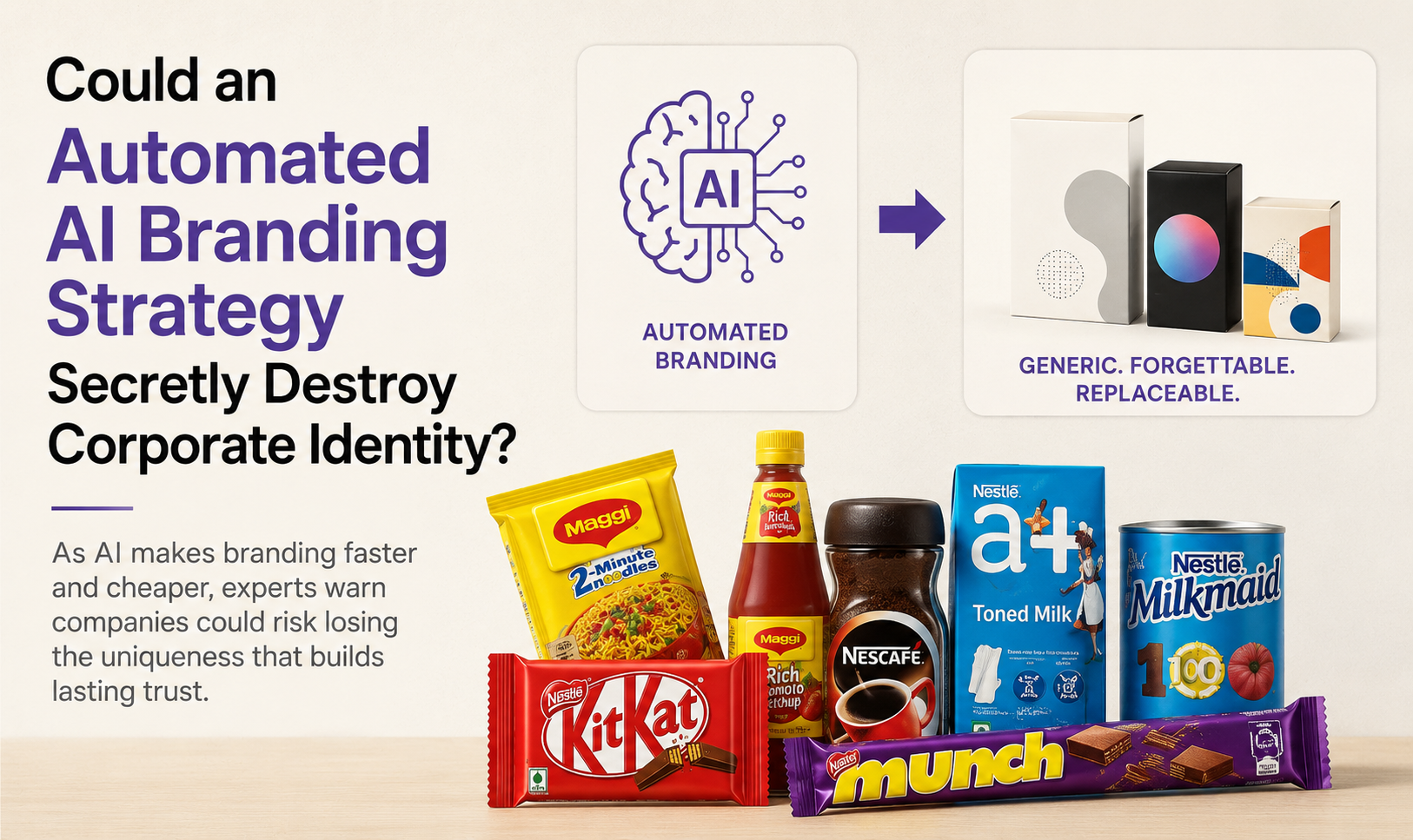
The global rush to automate marketing has hit a critical roadblock, raising a vital question for modern enterprises: Is a hyper-automated AI branding strategy quietly killing the very distinctiveness that makes a business successful? As companies rush to adopt automated tools to cut costs and speed up content production, industry experts are warning that the resulting output is rapidly deteriorating into a generic “sea of sameness.” The warning serves as a timely reminder reported by CIO Bulletin that while automation offers unparalleled scale, it risks flattening the emotional and aesthetic experiences that truly capture human attention.
During a recent industry gathering, Tracey Cooke, Chief Marketing Officer at Nestlé Canada, pointed out that the market is already seeing the side effects of over-reliance on algorithms, particularly on digital platforms where automated imagery feels visibly detached from authentic design.
When every organization trains its systems on similar data pools, distinctiveness is the first casualty. A truly competitive advantage requires a distinct point of view, yet current trends show a migration toward a homogenized baseline.
The Homogenization Trap: Automated systems naturally optimize for averages, stripping away the bold, risky ideas that define historic campaigns.
Loss of Cultural Nuance: Algorithms excel at pattern recognition but consistently miss the hyper-local traditions and emotional depths that human marketers navigate effortlessly.
The Shiny Toy Distraction: Corporate leaders frequently get sidetracked by technological novelty rather than focusing on core consumer needs.
“Ideas can come from AI, for sure, but it’s that discernment and judgment that will help us make sure that we do the right things for our business.” — Tracey Cooke, CMO of Nestlé Canada
The consensus among forward-thinking executives is clear: data must serve as the foundation for innovative thinking, not a replacement for critical thought. Legacy brands survive for decades not because they automate faster, but because they understand human behavior, adapt to cultural shifts, and respect the emotional connection consumers have with their products. For organizations aiming to thrive, the future lies not in replacing human instinct, but in balancing data-driven insights with genuine human emotional intelligence.
Everything you need to know about this news
Algorithms trained on similar data naturally optimize for generic statistical averages. This eliminates the bold, creative risks that make a business stand out, leading to highly repetitive content.
No. Machines easily track what people buy, but they lack the emotional intelligence and cultural empathy to understand why. Algorithms spot patterns; humans build connections.
Absolutely not. The goal is strategic integration, not elimination. Use data as a powerful launching pad for efficiency, but let human discernment act as the final creative filter.
By anchoring themselves to a timeless core identity while fluidly adapting to modern culture. They protect their historic brand assets so they remain instantly recognizable.
A diverse team naturally resists lazy, one-size-fits-all automation. Navigating different backgrounds forces companies to respect local nuances, ensuring campaigns resonate rather than fall flat.















































 consultants ltd.jpg)


Comments