
Home Other Blogs Beyond Public Infrastructure: ...
CIO Bulletin,
13 August, 2026
Author:
Ravathi Sunil
With the advent of the digital age, which has been marked by rapid digital transformation, artificial intelligence integration, and heightened regulatory scrutiny, the world’s leading businesses are reconsidering their infrastructure plans. As public cloud platforms offered unparalleled elasticity during the last decade, today most companies face the problem of increasing egress costs, data sovereignty mandates, and stringent performance requirements for mission-critical workloads. As highlighted by CIO Bulletin, industry analysts discussed how the leading private cloud companies have provided a balanced solution by merging the capabilities of cloud-native architecture with on-premises data centers’ security and governance.
Modern private clouds help businesses establish a dedicated single-tenant environment built entirely in line with the company’s specifications. No matter if these solutions utilize hyper-converged infrastructure, managed cloud, or bare-metal edge deployments, the advanced private cloud architectures guarantee the complete isolation of customers’ data and provide support for real-time processing of mission-critical applications.
Before examining specific players in this industry, it is essential to know what distinguishes regular virtualization from proper private cloud capabilities. Modern private cloud systems have to provide automation of resource management, container management, hybrid environment management, and predictable financial models. When evaluating any comprehensive list of private cloud companies, technology executives look for solutions that seamlessly integrate with existing DevOps toolchains while offering enterprise-grade security and compliance controls out of the box.
These platforms allow IT teams to deploy infrastructure as code, run microservices architectures, and execute analytics workloads without making vulnerable resources available in multi-tenant public environments.
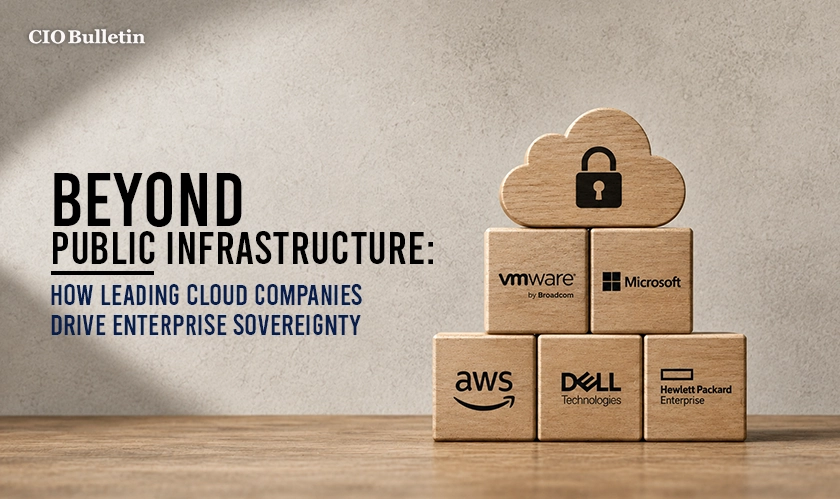
VMware continues to be a foundational cornerstone for enterprise data center virtualization. This is made possible through its core VMware Cloud Foundation software-defined data center platform, which includes features like vSphere for compute, vSAN for storage, NSX for networking, and comprehensive cloud management capabilities. For companies that wish to have full control over their entire IT infrastructure, VMware makes it easy for them to manage not only traditional VMs but also containers with the help of Tanzu.
Microsoft has managed to bring its dominance in public clouds directly into corporate data centers. With the help of Azure Stack HCI and Azure Arc, Microsoft is offering an infrastructure solution called a hyper-converged infrastructure, which brings the Azure approach of working right to the corporate world. It allows IT professionals to control their local servers, edge computing, and Kubernetes clusters through the same Azure portal. Such consistency in architecture helps make Microsoft the leader in the space of Windows Server and Microsoft Enterprise ecosystems.
AWS Outposts offer native infrastructure, services, APIs, and operations tools offered by AWS from an organization's own premises. The Outposts provide full management of 42U racks or server appliances in order to connect the local hardware with the larger AWS region. It is well suited for organizations that require low-latency connections to local manufacturing, healthcare equipment, or financial trading platforms because developers are able to create and operate applications with the same AWS APIs in both environments.
Dell Technologies' strategy for private cloud is based on their APEX portfolio of solutions. It provides enterprises with managed infrastructure that can be accessed as a flexible service. Dell APEX Private Cloud is a solution comprising pre-configured computing, storage, and networking hardware with automated lifecycle management. By transitioning from capex to opex and without dealing with the overhead of maintaining hardware and software, Dell makes it possible for organizations to use private cloud environments.
HPE GreenLake transforms conventional on-premises infrastructure into a fully managed cloud infrastructure. This includes compute, storage, data protection, and workload management services provided through a self-service portal where IT departments can request resources on demand. HPE handles the capacity planning, hardware monitoring, and system maintenance for its customers, thereby providing risk-averse organizations with the economic benefits of the public cloud paired with the security and governance of private hardware.
With the rise of distributed digital ecosystems, the distinction between private and public infrastructures has further eroded. The modern cloud companies deliver purpose-built machines, perimeter-less zero trust security, and predictable cost structures that guard against any unexpected financial surprises. Organizations have moved away from viewing the private cloud simply as an interim measure and have embraced it as permanent strategic bedrock of sovereignty computing, compliance, and high-performance computing workloads. As highlighted in recent coverage by CIO Bulletin, selecting the right platform partner requires aligning technical requirements with long-term business agility.
Private cloud deployment is a technically demanding process that necessitates both technical proficiency and good architectural thinking skills. Be it a transformation of the legacy data center into a modern one, optimization of hybrid processes, or an AI infrastructure implementation – the first important step would be to assess how well your workloads match the top offers of the market. Identify the current costs of your infrastructure, your data sovereignty requirements, and talk to cloud architects for a solution that would meet your business needs in the future.
Everything you need to know about this news
A private cloud refers to a cloud computing environment dedicated exclusively to a single company. It involves computing, storage, and networking facilities provided in isolation from other tenants in either an on-premises or dedicated co-location setting.
The reasons why businesses opt for a private cloud are enhanced security, regulatory compliance, predictable monthly costs, low-latency performance, and full control over data sovereignty and hardware configurations.
The hybrid cloud integrates a private cloud infrastructure with public cloud services through unified management platforms such as Azure Arc and AWS Outposts.
Although private clouds tend to be more capital-intensive initially, or through the use of managed services, they will often turn out to be a lot more cost-efficient due to the lack of egress costs on public clouds and unpredictable usage fees.
Yes, modern private cloud platforms support container orchestration systems such as Kubernetes, enabling developers to deploy both cloud native microservices and traditional virtual machines.




















 consultants ltd.jpg)


Comments