
Home Technology Cyber security Can the Surge in ASEAN Cyberse...
CIO Bulletin
,
14 July, 2026
Author:
Gayathri Sr
As digital borders dissolve across the Pacific, a massive research surge exposes critical gaps that could leave an entire economic bloc vulnerable.
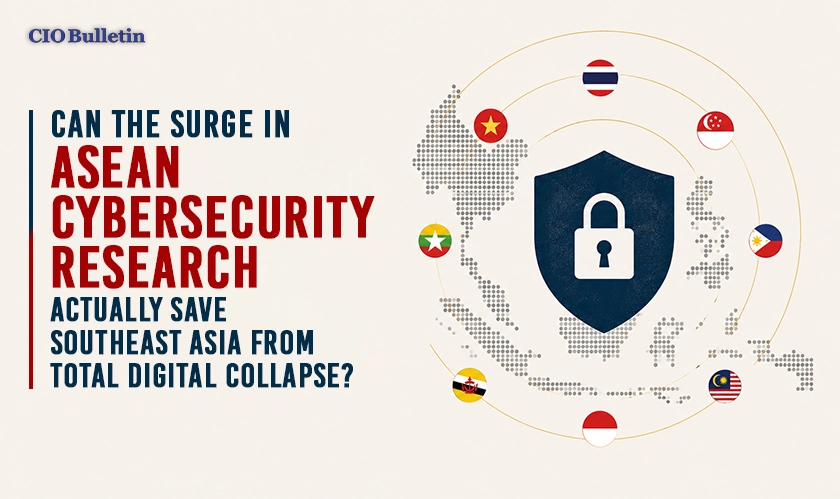
A silent, high-stakes crisis is unfolding across Southeast Asia as its booming digital economy faces a wave of complex network threats. In response to this rising danger, a major regional push for ASEAN cybersecurity research has taken off, revealing a frantic race to defend critical infrastructure from sophisticated cyber espionage and ransomware. According to an industry briefing published by CIO Bulletin, a deep bibliometric analysis of the region's scientific output shows that academic and technical research has dramatically intensified over the last decade to counter these vulnerabilities.
The nature of the digital battlefield in Asia has fundamentally changed. Early defenses that once focused on simple computer viruses have been rendered obsolete. Today, researchers are forced to pivot toward artificial intelligence, machine learning, and advanced identity verification to protect banking, healthcare, and government frameworks.
Despite this surge in intellectual output, independent benchmarks reveal a troubling reality. Data from the Global Cybersecurity Index indicates that the region still trails Western nations in overall security maturity. This resource gap has left under-protected networks highly exposed to both rogue syndicates and state-sponsored hacker groups.
To survive this digital onslaught, experts argue that individual national defenses are no longer enough. The latest data reveals an urgent need for unified, cross-border intelligence sharing and shared regulatory frameworks.
“With cyber risks growing in both scale and complexity, the ability to harness research and collaboration will be critical for shaping a resilient digital future,” noted analysts writing in the International Journal of Information Security.
As tech leaders gather globally to address these systemic risks, the findings tracked by CIO Bulletin serve as a stark reminder. For developing economies, investing in localized, advanced data defense isn't just an IT upgrade; it is a matter of national sovereignty and economic survival.
Everything you need to know about this news
Southeast Asia's rapid digital transformation has made its financial, healthcare, and state sectors prime targets for sophisticated international cyberattacks.
The analysis revealed that despite high growth, the region still lags behind Western countries in maturity, leaving critical infrastructure exposed.
Threats have shifted completely from basic malware and computer viruses to highly complex, AI-driven espionage and massive data breaches.
Experts are calling for a unified public-private model, cross-border threat intelligence sharing, and harmonized digital laws across all member nations.
The current research defense strategy relies heavily on implementing machine learning, advanced cryptography, and big data privacy management.




















































 consultants ltd.jpg)


Comments