
Home Platforms Others Catastrophic Nepal Flash Flood...
CIO Bulletin
,
28 August, 2026
Author:
Sambhrant Das
nepal flash flood triggers emergency search and rescue efforts across damaged mountain communities along himalayan border
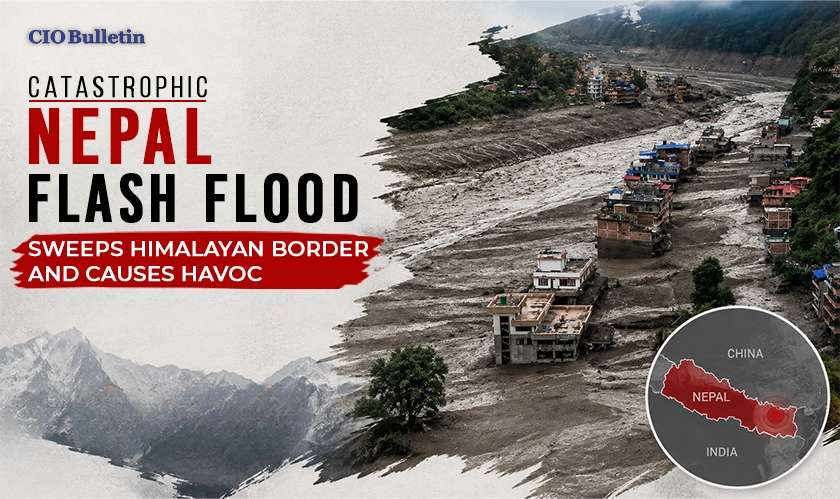
An unexpected avalanche of glacial ice in the vicinity of the Nepal-Tibet border led to the Nepal flash flood across the Lhende Khola River and Trishuli River corridors. The huge amounts of ice, mud, and water released resulted in a seismic event of magnitude 5.2, damaging livable human settlements in the area of Rasuwa. Local transportation facilities failed almost instantly, being carried away by high-speed mudflows, including crucial highways, repaired and unhitched bridges, and hydropower facilities.
The terrible tide caught residents of riverside towns totally unprepared and created problems for emergency responders and local medics, who were trying to locate people lost in the torrent.
“It was a huge gush of mud coming straight towards us. As it got closer, it kept rising higher and higher.” - Keshav Prasad Baral, survivor.
Disaster struck an important part of the infrastructure and ruined transport links necessary for carrying out emergency relief operations:
Highway devastation: An incredible 40 kilometers of the very important Betrawati-Rasuwagadhi highway have been washed away due to the muddy flood.
Bridges destroyed: At least 19 bridges have been broken down, which completely cut off the Himalayan valleys from the relief supplies.
Energy disruptions: As many as 8 hydroelectric power plants were severely damaged, leaving the nearby villages without electricity.
According to scientists, the rapid warming of the Himalayas has been causing the melting of the permafrost, which normally keeps the snow and the rocks together in the region because the glaciers were capable of resting on the permafrost. The melting of the permafrost may result in glaciers shearing off, thus releasing large pieces of ice.
Disasters of such magnitude highlight the urgent requirement for regular satellite monitoring, automatic sensor systems, and communications systems built to endure damage in high-altitude borders. The use of technologies that provide real-time data during a disaster may help people living downstream evacuate on time. CIO Bulletin views this development as a grim reminder for countries to use advanced technologies for monitoring and controlling climate-affected mountainous regions.


















































 consultants ltd.jpg)


Comments