
Home Technology Data analytics Why Are Smart Data Practitione...
CIO Bulletin
,
06 July, 2026
Author:
Gayathri Sr
A quiet revolution is happening right on local laptops, proving that bigger isn't always better for fast insights.
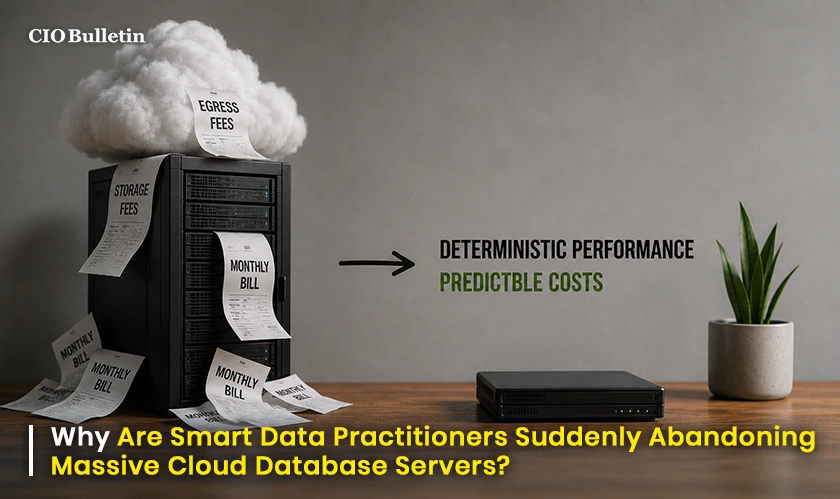
The modern data stack might be facing its biggest shakeup yet, and it is happening right under the noses of major cloud providers. For years, the standard operating procedure for handling data involved spinning up massive, expensive cloud database servers just to run relatively simple queries. However, a growing wave of data practitioners is actively shifting toward an surprisingly elegant alternative: doing heavy-duty analytics locally without the infrastructure headache. According to a recent technical deep dive featured by CIO Bulletin, the rise of in-process tools like DuckDB is fundamentally changing how teams interact with their data.
The traditional workflow has always felt a bit clunky. An analyst wants to check a few files, so they upload them to a remote cloud database, configure connections, and wait for processing. It is a slow, expensive loop.
Now, the trend is moving toward instant gratification. By running directly inside Python environments, new local database engines allow users to run complex SQL queries straight against raw CSV files, Parquet datasets, and Pandas DataFrames. There is no server to maintain, no cloud bill to fear, and absolutely no configuration lag.
This shift is less about replacing enterprise data warehouses and more about saving valuable time during daily exploration. Industry experts note that keeping data processing local keeps momentum alive.
By eliminating the file-loading and format-conversion steps, teams can validate data quality and build feature pipelines in seconds rather than hours.
As CIO Bulletin continues to track the evolution of enterprise tech, the big question remains: will this lean, local-first approach become the absolute standard for production notebooks? For companies looking to slash cloud costs and speed up developer workflows, the answer seems to be a resounding yes.
Everything you need to know about this news
It comes down to friction and cost. Spinning up cloud databases for small-scale exploration or initial data testing introduces unnecessary delays and high computing bills, whereas local tools give instant results.
Yes! Modern local engines are highly optimized for columnar data, meaning they can crunch through millions of rows in CSV or Parquet formats right on a standard laptop without breaking a sweat.
Not at all. Cloud warehouses are still vital for massive, company-wide storage and heavy enterprise workloads. Local tools simply handle the messy, everyday exploratory work before the data ever hits the cloud.
It is a massive win for efficiency and budgeting. When teams do their initial development and testing locally, cloud data costs plummet, and data teams deliver insights much faster.
The main guardrails are local memory limits and data security. Teams need to ensure their laptops have enough RAM for the datasets they are analyzing and that sensitive data remains compliant with company privacy policies.





















































 consultants ltd.jpg)


Comments