
Home Services & Solutions Document process management Sarpsborg AI innovation Enable...
CIO Bulletin
,
22 May, 2026
Author:
Sambhrant Das
Norwegian Local Government Streamlines Public Records Access and Minimizes Backoffice Burden by Deploying Intelligent Cloud Archiving Modules Across Departments
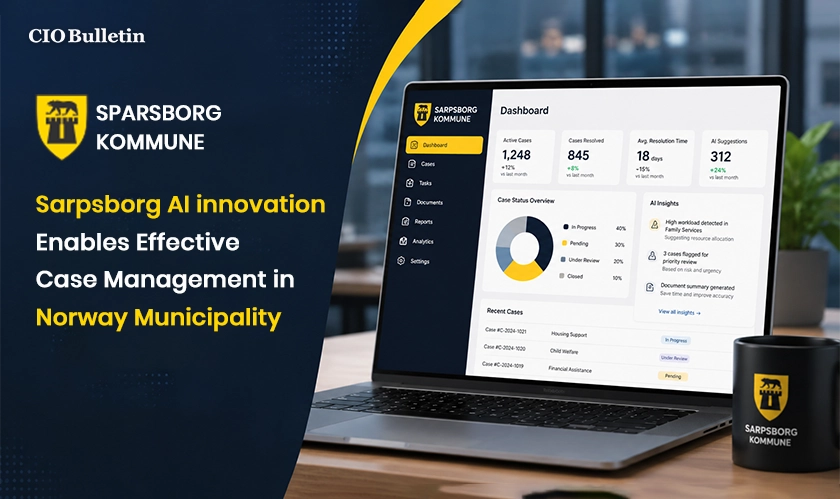
While many local governments are still nervously drafting theoretical policies around machine learning, a forward-thinking Norwegian municipality is already putting automated systems to work in its daily administrative offices. By aggressively modernizing its internal data infrastructure, the town of Sarpsborg has effectively built a clean, structured ecosystem where algorithms can handle repetitive public service workflows without error. This successful rollout of Sarpsborg AI innovation proves that cleaning up messy public archives is the absolute most critical first step toward unlocking the real power of modern municipal automation.
The true engine behind this digital transformation is the town's integration of Tietoevry's cloud-based Public 360° platform. Rather than forcing city workers to bounce between disconnected, clunky software setups, the administration used advanced API connections to bind specialized departmental tools into one unified, secure digital archive. This deep system integration allowed the local IT branch to deploy custom-built software robots that immediately took over several high-volume manual tasks, including:
Automated Press Freedom Requests: Software bots now independently crawl the city archives to fulfill media access requests, pulling data instantly without manual human sorting.
Streamlined Case Swapping: The system completely eliminates the annoying, manual process of copying and pasting document files from one field-specific database to another.
Open Government Portals: Public building and municipal planning applications are automatically scrubbed for sensitive data and published directly to an open web portal for citizens.
By letting autonomous software handle the tedious paperwork, the municipality has managed to reclaim hundreds of weekly working hours for its core staff. The strategy successfully shields human caseworkers from burnout while drastically lowering the processing times for everyday citizen inquiries. Commenting on the massive time and budget victories achieved through the automation push, Atle Johnsen, Head of Operations in Sarpsborg municipality, explained, “When we automate case processing so that cases move through the organization with minimal manual touchpoints, it results in direct gains in terms of time and money.”
Choosing a cloud-hosted framework instead of maintaining expensive, on-premises local servers has fundamentally changed how the town utilizes its technical personnel. In the past, the internal IT team spent the bulk of their weekly schedules troubleshooting physical hardware, running manual data backups, and patching local security gaps. Moving everything to a managed cloud environment completely offloads those tedious infrastructure chores, allowing local engineers to spend their energy designing cutting-edge AI scripts and smarter public services.
The sweeping success of the Norwegian rollout serves as an important lesson for neighboring districts that are trying to rush into machine learning without organizing their underlying data. Trying to deploy smart algorithms over messy, unverified files always leads to massive security flaws and broken workflows. CIO Bulletin views this development as a monumental blueprint for public sector modernization, proving that total data control and well-structured cloud archiving are the exact foundations needed to turn public administrations into highly efficient digital networks.




















































 consultants ltd.jpg)


