
Home Industry Art and music Should We Do More to Support M...
CIO Bulletin
,
15 June, 2026
Author:
Sambhrant Das
New York concert halls open their doors to aging patrons with tailored classical performances that soothe the mind and awaken fading memories
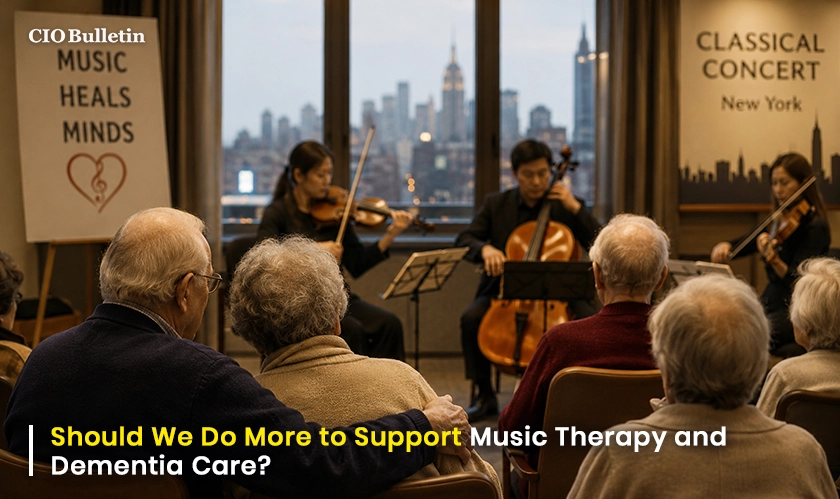
A beautiful, unique spring concert series in New York City is proving how crucial a mix of music therapy and dementia care is for vulnerable seniors. This is visible in real life because Lincoln Center noticed that some long-time patrons were slowly dropping out of the cultural scene, largely because of cognitive decline.
They designed a judgment-free concert series specifically tailored for families dealing with progressive memory loss. This program gives people a safe space to enjoy elite live performances together without feeling judged or out of place. It reclaims a sense of dignity for former concertgoers who spent decades supporting the arts.
What they are witnessing during these special sessions, the deep cognitive reactions, is nothing short of incredible. In a packed tenth-anniversary showcase with the Calidore String Quartet, the room held about one hundred people, and they seemed to connect in this personal, intimate way to what was happening on stage.
One woman, for example, gently shut her eyes and mimed conducting the live musicians, while the Mozart melodies kept flowing.
Another attendee rhythmically tapped her caregiver's arm like a row of piano keys, keeping perfect time with the violin chords.
The raw acoustic vibration of live strings noticeably lowered the typical restlessness and fear that advanced memory loss causes.
"Music therapy proved invaluable." - Ellen Kaufman, former studio musician dealing with severe short-term memory deficits
As cognitive illness slowly isolates people from their communities, these live concerts serve as an emotional lifeline. For caregivers and their partners, these moments can offer a rare, lighthearted breather from the constant daily strain of medical visits, and they also bring up ideas about how a person’s temperament can keep shifting over time. Experts often note that familiar music can pass right through the areas of the brain that are damaged and still light up those deep emotional hubs that ordinary speech cannot reach anymore.
Making a massive, traditional Manhattan performance space feel welcoming to individuals with advanced cognitive challenges requires deep empathy and thoughtful planning. Also, the venue loosens its hold on rigid classical-music etiquette, so there’s room for natural behavioral oddities.
Audience members are totally free to walk about, speak out, or even step out of the room if they start feeling overstimulated.
Hall lighting stays warm, fixed, and bright the whole time to prevent sudden confusion or spatial panic
Specially trained nonprofit staff greet families at every doorway so the entire experience stays smooth and low-stress
With modern populations aging at a historic rate, embedding creative therapies into traditional medical care has become completely necessary. Copious clinical data prove that live music cuts down the need for heavy sedatives, fights deep depression, and brings back long-lost memories. CIO Bulletin views this development as a wonderful blueprint for global cities looking to protect the emotional well-being of their aging citizens.
















































 consultants ltd.jpg)


