
Home Technology Gadgets Tech Giants Are Fooled If They...
CIO Bulletin
,
08 June, 2026
Author:
Gayathri Sr
Massive corporate investments and artificial intelligence features fail to address basic comfort and style requirements.
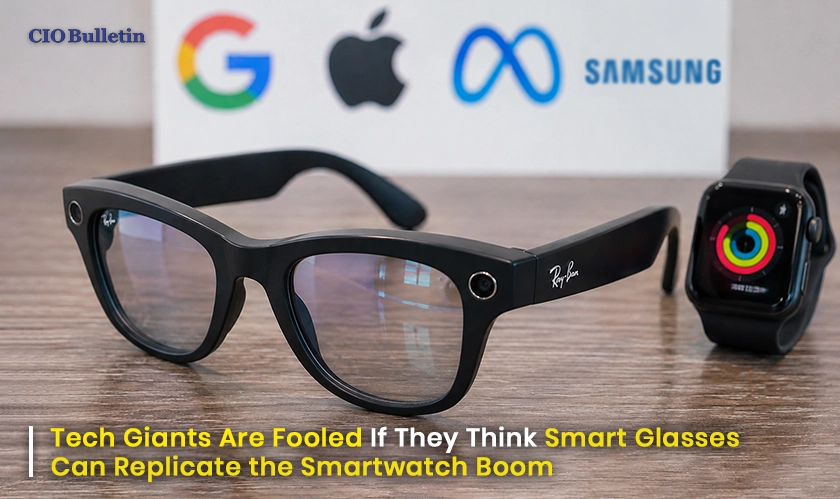
The tech world is buzzing with rumors that major players want to completely upend the eyewear market. Reports suggest that Apple aims to disrupt the traditional glasses industry just like its wearable wrist tech previously transformed classic timepieces. Companies like Google and Samsung are also eyeing this space, betting big on a future where everyone wears face-borne tech. However, treating the eyewear market like the watch industry is a fundamental miscalculation. The reality is that smart glasses face a completely different set of consumer behaviors, making mainstream adoption a massive uphill battle.
When the modern smartwatch boom began, traditional wristwear was in a slump. Many people had stopped wearing watches because smartphones easily told the time. This left millions of wrists available for a new, cool, and highly functional gadget.
Eyewear is entirely different. People who wear glasses do so out of necessity to see, carefully selecting frames that match their exact facial structure and personal style. Those with perfect vision have little interest in putting frames on their faces every single day.
“While it’s natural to use the Apple Watch as a comparison to smartglasses, in reality, it’s not the same thing at all, and Apple, along with Google and Samsung are setting themselves up for failure if they treat them as such,” notes seasoned technology journalist Andy Boxall.
Tech brands are heavily relying on artificial intelligence to make these devices appealing. Yet, critics argue that constant access to an AI assistant right in front of your eyes simply isn't a daily necessity for the average consumer. According to recent analysis featured on CIO Bulletin, the current market offering forces users into a compromise:
Limited Style Options: Unlike traditional opticians offering thousands of designs, tech frames come in very few shapes.
Prescription Complications: Constantly updating expensive lenses for a piece of tech that requires regular battery charging is impractical for daily users.
The Privacy Barrier: Built-in cameras continue to spark public hesitation and social awkwardness.
While tech enthusiasts eagerly anticipate future hardware updates, convincing the global public to adopt smart glasses as a daily essential remains a hurdle that clever marketing alone cannot clear.















































 consultants ltd.jpg)


