
Home Industry Law ethics and legal services What Injured Construction Work...
CIO Bulletin
,
09 September, 2026
Author:
CIO Bulletin Team
A construction site accident changes everything in an instant, for the worker and everyone who depends on them. In August 2026, a Nesconset road crew learned that the hard way when an impaired driver jumped the curb, killing one worker and seriously injuring two others before their shift even began. That tragedy fits a troubling statewide pattern. New York recorded 74 construction worker deaths in a recent year, a 48% jump from the year before, even as OSHA inspections across the state fell nearly 29% since 2019.
Numbers like these aren't abstract; they represent real families facing hospital bills, lost income, and long recoveries. For workers here on Long Island, knowing what to do right after an accident can shape everything that follows, from medical treatment to a potential claim. A construction accident lawyer on Long Island can help injured workers protect their rights while they focus on healing. Understanding the right first steps makes all the difference, so let’s begin.
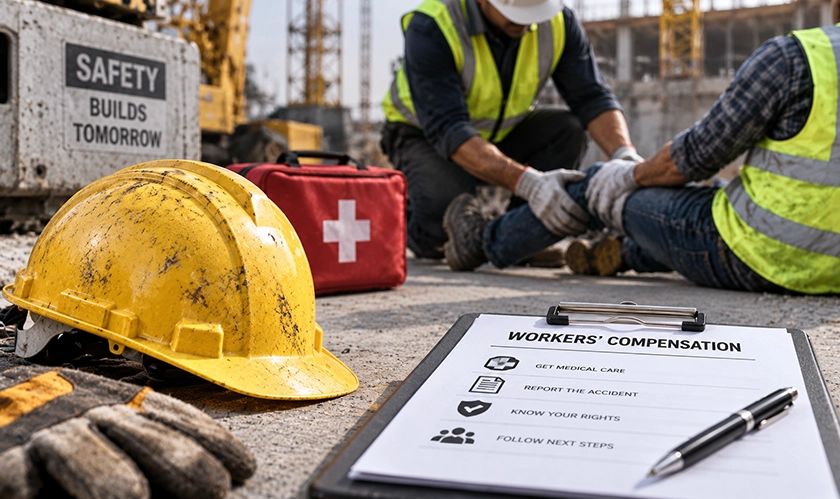
A construction site accident can cause pain, confusion, and pressure to return to work quickly. Still, an injured worker should focus first on emergency care, reporting the incident, and preserving facts about what happened. Prompt action protects health and creates records that support a workers’ compensation claim. New York construction workers also face special rules involving falls, equipment, and unsafe work conditions. The first steps after an accident shape every later decision.
The injured worker should report the accident to a supervisor as soon as possible, even if the injury seems minor. A written report should state the date, time, location, task, equipment involved, and observed injuries. Workers should request a copy and save messages, incident forms, and witness names. A construction accident lawyer can review these records and explain which claims fit the worker’s circumstances.
Emergency symptoms require immediate treatment, especially after a head impact, fall, crush injury, electric shock, or chemical exposure. A worker should tell the medical provider that the injury happened at work and describe every symptom, including pain that arose hours later.
Medical records should accurately identify the body parts affected and connect symptoms to the workplace incident. The worker should attend follow-up appointments, use prescribed restrictions, and report worsening symptoms. Missed appointments or incomplete information can create questions about the injury and recovery.
A construction site can change quickly after an accident. Equipment is typically moved, debris gets cleared, and witnesses leave the project site. If the worker can do so safely, photographs should capture the work area, damaged equipment, missing safeguards, warning signs, lighting, and visible injuries.
The worker should write a private account while the details remain fresh in their mind. The description should include the following:
The sequence of events
Protective equipment
Instructions received
Actions taken before the accident
Witness names, phone numbers, text messages, photographs, and pay records should remain in a secure personal location.
New York workers’ compensation law requires an injured employee to notify the employer in writing within 30 days of the accident. Reporting sooner reduces disputes about notice and gives the employer a chance to document the event.
A worker should not rely only on a verbal conversation with a foreperson. Emails, a written incident report, or another dated record creates proof of notification. The worker should save the original message and any response from the employer.
Workers’ compensation generally covers medical treatment and part of lost wages for job-related injuries, regardless of fault. A construction accident can also involve a third-party claim when someone outside the employer caused or contributed to the harm.
Potential third parties include property owners, general contractors, subcontractors, equipment manufacturers, or maintenance companies. The facts determine whether another claim exists, so the worker should avoid signing a settlement or release before receiving legal advice.
An employer, insurer, or claims administrator might request a recorded statement, medical authorization, or examination. The worker should read every document carefully and avoid sharing guesses about dates, symptoms, or prior medical conditions.
Social media posts can also affect a claim. Photos or comments that contradict reported restrictions can create unnecessary disputes. A worker should keep communications factual, attend scheduled medical care, and follow written work restrictions.
New York law protects employees who report workplace injuries and pursue lawful workers’ compensation benefits. A sudden termination, reduced hours, demotion, or disciplinary action after a report deserves careful documentation.
The worker should save schedules, pay statements, texts, emails, and disciplinary notices. Each record should include the date and a short description of what occurred. These details help establish a timeline if the employment relationship changes after the accident.
An injured construction worker should report the accident, seek medical care, preserve evidence, and track all communication after an accident. Written notice within 30 days supports the workers’ compensation process, while site photographs and witness details preserve facts that can disappear.
A separate claim may exist when another party caused the injury. Before signing documents or giving a recorded statement, the worker should gather records and discuss the accident with a qualified attorney.





















































 consultants ltd.jpg)


Comments