
Home Industry Law ethics and legal services Will States Passing Daylight S...
CIO Bulletin
,
23 September, 2026
Author:
Sambhrant Das
states passing daylight saving laws spark intense national debate as federal hurdles face pushback from outdoor recreation and ski resort industries
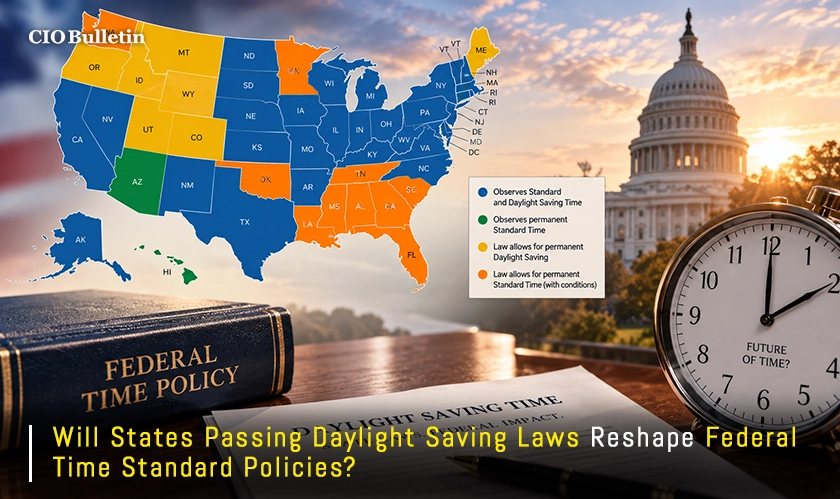
State legislatures across the United States are intensifying efforts to eliminate biannual clock adjustments, with numerous states passing daylight saving laws to establish permanent year-round time standards. Nineteen states have already approved measures to lock their clocks on daylight saving time, pending changes to federal legislation that currently restricts such statutory transitions. As momentum builds on Capitol Hill to repeal federal hurdles, opposition from outdoor recreation sectors and regional commerce coalitions highlights deep operational divisions over morning sunlight allocation.
Legislative initiatives aimed at ending seasonal clock shifts face a major federal bottleneck under the Uniform Time Act of 1966.
Nineteen state legislatures have enacted trigger laws requiring federal approval to enact permanent daylight saving time.
The existing law of the United States gives the states freedom to keep time according to their convenience; they cannot exercise this authority for daylight saving time.
Congress has tried to make some changes to give the states the right of remaining in daylight saving time indefinitely.
Although some people think that using the same time all year round is beneficial for evening consumer spending and mental health, outdoor industries warn that it could lead to major issues in their operations.
"Operating safely in alpine environments requires adequate morning sunlight," noted a coalition representing over one hundred ski areas in a formal appeal to U.S. senators opposing permanent daylight saving measures.
Outdoor operators warn that delayed winter sunrises past eight or nine in the morning jeopardize worker safety and disrupt early-morning avalanche mitigation routines.
The debate over permanent time standards reflects broader economic tensions between morning prep safety and afternoon retail activity.
People working in ski resorts say that working in darkness will not make it easy for workers engaged in taking care of the ski slopes and snow-making.
Business representatives inform that extra time in the evening could increase spending in retail outlets and restaurants.
Farmers and school safety organizations believe that darkness will be dangerous for school students in rural areas.
The federal authorities are faced with the necessity of developing legislation that will combine the interests of regional business development with worker protection. State trigger laws ensure that any shift at the federal level will immediately alter regional time zones across broad multi-state corridors. CIO Bulletin views this development as a pivotal regulatory test balancing corporate operational safety against broader consumer economic interests.




















































 consultants ltd.jpg)


Comments