
Home Industry Management consulting How Manufacturing Training Sys...
CIO Bulletin
,
09 April, 2026
Author:
CIO Bulletin Team
In order to maintain productivity, manufacturing industries now need a workforce that is more skilled than before. Training systems help employees to develop important skills that make them efficient in their roles. These systems increase confidence and competence in a wide range of activities simply by providing well-structured learning opportunities. Improved efficiency, safety, and higher performance eventually come to businesses.
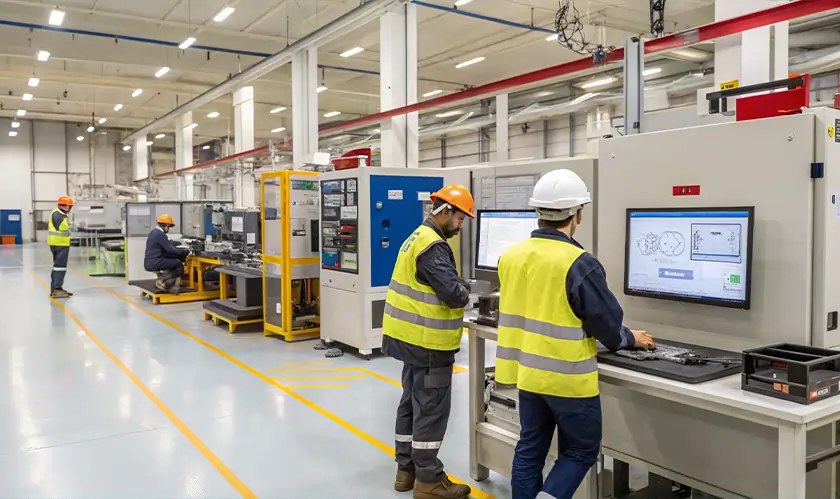
Manufacturing training systems concentrate on specific technical skills applicable to daily operations. Another thing is that workers are taught to understand machinery, read blueprints, and calculate production data carefully. Employees get hands-on with equipment, which helps to reduce errors and downtime. This allows staff to approach challenges with more confidence and, as a result, production increases.
Unexpected problems in a manufacturing environment require prompt and efficient resolution. These instructional systems train workers to address issues analytically and generate actionable solutions. The activities are realistic, simulating actual situations, which can assist workers in developing their critical thinking. With these responses rehearsed, teams are better prepared to handle complications immediately.
Manufacturing safety will always be a priority for companies. Training systems strengthen the need for protection and action in established and correct shop-floor measures. The lessons focus on the dangers, steps to prevent them, and actions to take if they happen. A safety-conscious workforce reduces workplace injuries, helping maintain a safe environment for all.
Manufacturing standardization involves uniform processes that lead to predictable and efficient, high-quality manufacturing. Training solutions bring standardization that allows you to align the ways in which the work is completed while minimizing variations in output. Employees who follow established processes are more consistent. It helps the organization and clients, and it also augments continual improvement endeavors.
Rapid change in technology and processes requires workers to adapt quickly. Updated tools, regulations, and production techniques are kept updated with the staff through training systems. Employees can adapt to change while minimizing the disruptions, as regular learning sessions ensure they remain agile in their approach. When workers are more adaptable, organizations can apply innovations more seamlessly.
Customer success and servicing requirements need collaboration across multiple departments and roles. Training programs often have teamwork and communication skills exercises. The group activities revolve around information sharing, overbooking slots, and clearing miscommunications. Less friction on the floor leads to improved collaboration.
Engaged employees are more motivated and productive. Well-designed training programs show workers that their professional growth matters to the organization. By investing in skill development, companies encourage loyalty and commitment from their teams. Higher engagement often translates into lower turnover and stronger performance over time.
A prepared workforce creates the next generation of supervisors and team leaders. Systems identify potential future leaders and work on management skills. Training involves work assignments, handling disagreements, and employing strategies to stay determined. Supervisors who are prepared to manage their teams more effectively, and their presence adds to a positive workplace environment.
Mistakes in manufacturing can result in costly delays and wasted materials. Training helps workers understand processes thoroughly, reducing the risk of errors during production. Refresher courses reinforce best practices and clarify any uncertainties. Lower error rates save resources and maintain customer satisfaction.
Quality assurance relies on the same knowledgeable employees at all levels of production. Training systems encompass inspection methods, quality standards, and achievable limits. Workers discover defects early and correct them before they become high-cost problems. With improvements in quality, the organizations tend to build a stronger reputation in their respective industries.
The manufacturing regulations change so regularly that if you want to be compliant, you need to keep on learning. Organized programs help workers understand regulations and laws that impact jobs and responsibilities. This way, firms ensure they are away from the penalties and certifications. Updates help clarify individual responsibility for compliance.
Training systems in the workplace for manufacturing give tremendous value to employees and organizations alike. They improve technical skills, encourage safety, and promote adaptation. Continually providing opportunities for learning keeps the mind engaged and growing, resulting in a safer and more productive work environment. Such industries invest in a long-term payoff by charting all-encompassing training.




















































 consultants ltd.jpg)


