
Home Industry Telecom Will US Restrictions On Chines...
CIO Bulletin
,
30 October, 2026
Author:
Sambhrant Das
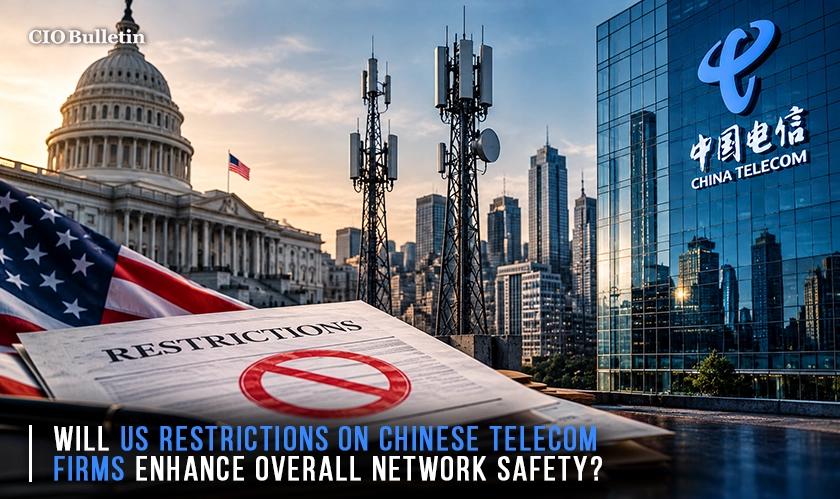
The Federal Communications Commission plans to ban state-owned Chinese telecom firms from accessing American telephone numbers directly to block automated robocalls and prevent foreign cyber espionage across domestic networks.
Federal communications regulators are advancing comprehensive national security measures targeting Chinese telecom firms, proposing a complete prohibition on their direct access to American telephone numbers. Scheduled for a formal vote on 19th November, the FCC measure is designed to stop fraudulent automated robocalls and to protect American domestic digital networks from foreign cyber espionage. The major state-owned carriers (China Mobile, China Telecom and China Unicom) will be subject to significant operational restrictions. For the overseas carriers who operate VoIP systems, the ability to have direct number access is a very cost-effective way of delivering digital calls, and so these new regulatory requirements will be a major commercial impediment.
To bolster domestic network resilience, federal regulators continue to expand technical controls across critical telecommunications infrastructure:
Prohibiting IP-enabled voice service providers from directly acquiring or managing domestic number blocks across state lines.
Restrict direct access for any communications vendor using network hardware from Huawei Technologies or ZTE.
Implement a phased policy that will prohibit overseas test houses based in China from certifying electronic products for the Chinese market by December 2028.
In response to public concerns about network vulnerability, the regulator has made it clear that we need to be taking a much more proactive approach to our digital defenses against cyber attack.
Explaining the strategic intent of the upcoming vote, FCC Chair Brendan Carr stated that the proposed rule changes would "strengthen the country's defenses against illegal robocallers."
Federal law enforcement agencies have on numerous occasions spoken about the very serious risks posed by foreign intrusion campaigns and have stressed that the requirements of sovereign security demand an immediate administrative response.
Whilst previous regulatory actions had already prohibited these state-owned carriers from providing international telecom links across the domestic market, direct number access was still an operational workaround. Recent federal intelligence assessments have shown state-sponsored threat actors gaining access to the domestic telecom infrastructure, with access to caller location and call detail records. Federal officials have stated that the continued existence of such vulnerabilities in the network means that number allocation permissions must be withdrawn from foreign-owned entities that are considered high risk.
Securing the critical communications infrastructure against sophisticated foreign intrusion is a key priority for CIOs and government agencies. As the regulatory regime around international routing channels becomes increasingly stringent, domestic enterprises will be under pressure to constantly assess the integrity of their network supply chains to protect their communications assets. According to CIO Bulletin, this is a very significant step in strengthening the global network infrastructure and in the protection of data privacy.
News Source: Reuters, https://www.reuters.com/
Everything you need to know about this news
The proposed restrictions specifically target major state-owned carriers including China Mobile, China Telecom, and China Unicom, alongside other IP-enabled service providers.
Federal regulators are looking to stop illegal robocalls, stop the use of the telecom infrastructure as a vector for cyber espionage and to prevent state-sponsored threat groups from getting at the domestic telecom infrastructure.
The FCC has set a formal vote on the proposed access restrictions for 19th November.
The rule prevents non-compliant voice-over-IP providers from directly purchasing or assigning domestic phone number blocks, raising operating costs for foreign carriers.
The plan includes barring Chinese testing laboratories from certifying US electronic equipment by December 2028 and revoking number authorizations for high-risk vendors.




















































 consultants ltd.jpg)


Comments