
Home Industry Marketing and advertising What Trade Show Models Add to ...
CIO Bulletin, 24 November, 2026
Author:
CIO Bulletin Team
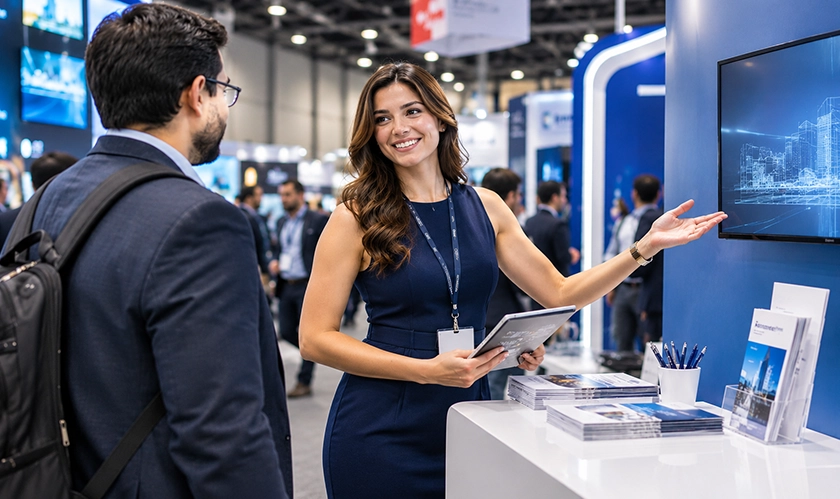
A busy convention floor puts several demands on an exhibitor's staff at once. Visitors need greetings, questions need answers, and demonstrations need to stay on schedule. Trade show models add capacity at the booth, but their contribution depends on clear assignments and preparation. With a defined role, a model gives visitors a point of contact while product specialists focus on detailed conversations. The visitor experience starts with a greeting at the booth entrance.
An exhibitor needs a plan for greeting people without crowding the aisle. With clear instructions, professional trade show models for busy convention floors can welcome visitors and direct them to the right activity. A brief opening question can establish whether someone wants a demonstration or a conversation with a specialist. Staff should also recognize when a passerby would rather keep moving.
The greeter's position matters. Standing inside the booth boundary leaves space for visitors to enter and keeps the aisle clear. Exhibitors should check the event's rules before assigning positions.
Once visitors stop at a booth, they need to know where to go. A model can point out a demonstration, explain where to wait, or introduce visitors to the right team member. Clear directions spare attendees from guessing.
The handoff takes preparation. Exhibitors can explain who handles pricing questions and who conducts demonstrations. If a specialist is busy, a model can explain the wait and suggest another activity. Visitors with limited time can decide whether to stay or come back later.
Product specialists need time to answer detailed questions without interruption. Models can handle greetings and routine directions, leaving specialists free to discuss technical details and prospective customers' needs. Everyone should know where the model's responsibilities end.
The briefing should cover the booth's main message and the questions a model should answer. When a question falls outside that briefing, the model should introduce a specialist rather than guess. Exhibitors should also name a backup contact for times when the usual specialist is unavailable.
Visitors need to know when a demonstration starts and where they should stand. Models can invite interested attendees to gather and explain what to expect. They can also direct late arrivals without interrupting the presenter and tell visitors when the next session is.
Presenters and models should rehearse transitions before the event. A shared cue helps the group settle before a demonstration, while a clear closing cue gives visitors time to ask questions. Staff should keep entrances accessible and follow the venue's crowd-flow instructions.
A useful follow-up starts with knowing what the visitor requested. With permission, a model can record contact details and a brief note about the conversation. A request for product information calls for a different response than a request to speak with a sales representative.
Exhibitors should explain what details to collect and where to record them. Staff should tell visitors how the exhibitor plans to use their information and avoid promising a response time without approval. The event's collection rules and the exhibitor's privacy practices should guide the process.
A written briefing gives models something to consult when the booth gets busy. It should name the booth lead, describe assignments, and explain how staff can signal for help. Include break arrangements in the briefing too, so the entrance isn't left unattended.
A quick check-in during the event gives the team time to adjust positions or clarify questions that keep coming up. Afterward, the exhibitor can ask which requests caused delays and where handoffs stalled. Those observations give the next staffing plan more context than a visitor count alone.
A useful staffing plan connects each model's assignment to a visitor's needs. Before the next event, an exhibitor can walk through the booth plan and trace what happens when someone arrives, asks a question, and requests follow-up. An unclear handoff is a reason to revise the briefing. A short rehearsal with the entire team gives models and specialists a chance to practice those transitions before the convention floor fills with people.












































 consultants ltd.jpg)


Comments