
Home Industry Politics Can Qatar-Iran War Mediation S...
CIO Bulletin
,
10 November, 2026
Author:
Sambhrant Das
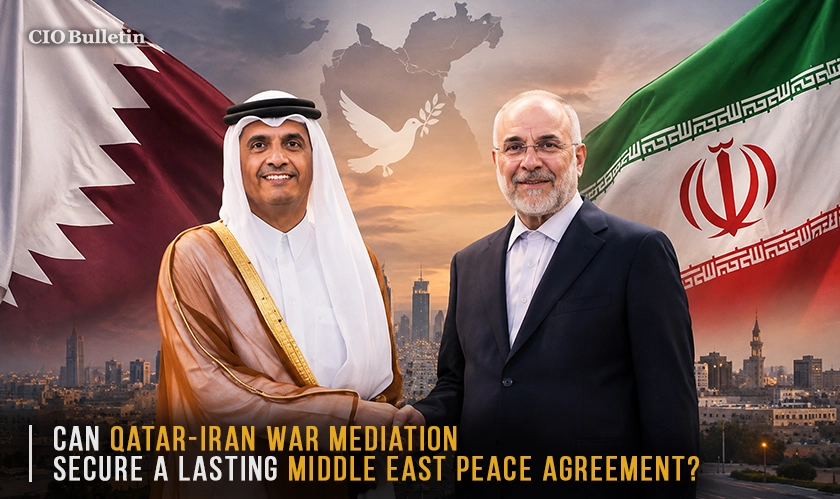
U.S. President Donald Trump hosts Qatari Prime Minister Sheikh Mohammed bin Abdulrahman Al Thani at the White House to advance Middle East de-escalation frameworks and resolve the ongoing Iran conflict
The Qatar-Iran war mediation via diplomatic channels was the subject of discussion at the White House as President Trump met with Qatari PM Sheikh Mohammed bin Abdulrahman Al Thani. The meeting was focused on the various diplomatic arrangements that could be put in place to resolve the military conflict in the region and restore stability in the Middle East. No bilateral agreement has been finalized yet, but both sides did acknowledge that there was real progress having had the direct talks with the various intermediaries in the region.
Strategic Scope of Qatari Diplomatic Intermediaries
The backchannel talks follow on from the initial discussions in Tehran and Doha and are clearly emerging as the key conduit between the Western powers and Tehran. The Qatari mediators have put forward fresh proposals aimed at de-escalating the situation, while at the same time securing the maritime shipping lanes. Key elements of the diplomatic exchange feature:
Qatari mediation was all about protecting commercial transit through the Strait of Hormuz.
Regional diplomatic frameworks incorporating the input of Gulf partners such as Saudi Arabia and Oman
U.S. national security advisers evaluating verification arrangements for potential security agreements.
Executive Assessment and Strategic Military Posture
In response to reporters after the bilateral meeting, President Trump was upbeat about the progress on the diplomacy, and also reasserted operational readiness.
"We discussed the situation in the region and ways to progress the U.S.-Iran talks. At this point, military action doesn't seem to be very necessary, but we're locked and loaded, ready to go for any reason that changes." - Donald Trump.
The President added that Gulf allies favor diplomatic resolution.
Complex Geopolitical Factors Impeding Immediate Consensus
Despite the positive signals from the international mediators, the complex geopolitical requirements continue to be a drag on the diplomatic timetable. The Iranian security side is still calling for structural guarantees, and Washington is, of course, insisting on the strictest possible compliance verification. Major factors influencing current discussions include:
A very strong regional emphasis on preventing any escalation of the conflict in order to protect the global energy supply chains.
High-level multilateral coordination between the regional security councils and the international allies.
Legislative oversight of military deployments and of executive security policy.
Global Market Implications and Strategic Governance
International conflict resolution is about governance of the executive, diplomacy, regional alliances, and global economic safeguards. With multilateral dialogue ongoing in the regional capitals, the need for strategic transparency is as important as ever in terms of maintaining stability in the global markets and in international security. CIO Bulletin views this development as a very positive example of diplomacy at work to de-escalate regional tensions and to establish channels of strategic security.
News Source: Reuters, https://www.reuters.com/
Everything you need to know about this news
The meeting was about looking at the diplomatic proposals put forward by Qatar in an attempt to de-escalate the military situation in the Middle East and move the negotiations between Washington and Tehran forward.
No formal agreement has been signed to date, though both sides have certainly acknowledged the constructive progress and the positive momentum in terms of reducing the level of active hostilities.
Qatar is the main diplomatic channel, having direct talks with the Iranian leadership in Tehran and transmitting the security arrangements to the US in Washington.
Ongoing military tensions have a direct bearing on shipping security in the Strait of Hormuz, and that is why the various international mediators are keen to see shipping security and the stability of the energy supply maintained.
The administration indicated that while defense capabilities remain prepared, diplomatic avenues are currently prioritized due to strong support for peaceful resolution from regional partners.

















































 consultants ltd.jpg)


Comments