
Home Platforms News Tata Group’s New Business Lo...

CIO Bulletin
,
27 May, 2026
Author:
Sambhrant Das
Holding Company Board Outlines Strategic Turnaround Targets to Overhaul Digital Retail Architectures and Stabilize Capital Intense Aviation Subsidies Across Mumbai Portfolio
India’s largest industrial conglomerate is navigating a major internal crossroads as its top leadership moves to fix heavy losses across its newest consumer-facing platforms. For deep-pocketed conglomerates, funding long-gestation infrastructure projects requires balancing consistent capital allocation with strict operational discipline. When newly launched digital and aviation experiments burn through funds far faster than originally projected, it naturally creates friction with institutional shareholders who prioritize immediate fiscal prudence. This internal tension has peaked at the group's Mumbai headquarters, forcing a major strategic course correction under the newly proposed Tata Group’s new business losses plan.
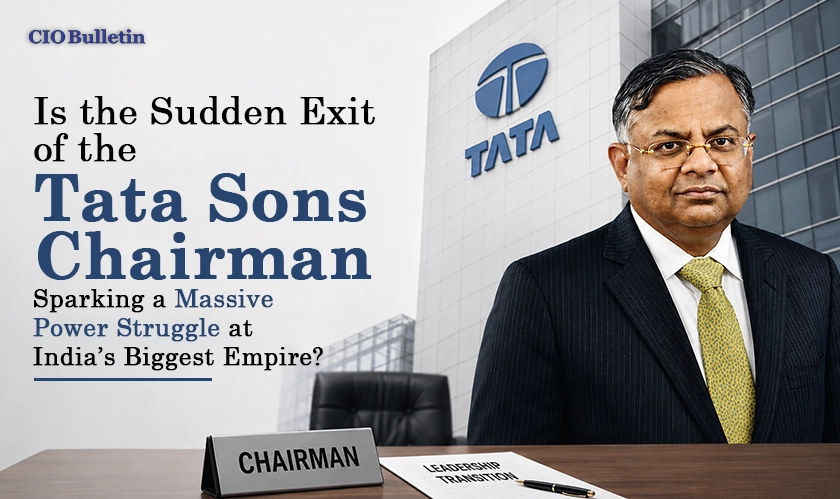
The recovery strategy laid out by Tata Sons Chairman N Chandrasekaran during a marathon six-and-a-half-hour board meeting is aimed at bringing down an aggregate venture loss that has swelled to more than 29,000 crore rupees for the fiscal year. Instead of dialing back the longer-term growth plans entirely, the leadership is pushing a more structured turnaround path over the next thirty-six months. The multi-year fiscal stabilization effort depends primarily on the following aspects:
• Aviation Cost Rationalization: Tackling the huge 26,800 crore rupee deficit at Air India by tightening fleet integration , sorting out foreign exchange exposures, and improving fuel hedging
• Digital Commerce Restructuring: Taking a close look at the expensive cost base and the narrow margins in retail platforms like BigBasket and Croma, to discard avoidable operational spending
• Manufacturing Capacity Scaling: Boosting higher margin revenue streams at Tata Electronics, which has already moved into break-even territory and whose consolidated revenue has crossed 1 lakh crore rupees.
This unusually intense financial review reflects a rare instance of genuine strategic back-and-forth between the group’s holding company and its major shareholder, Tata Trusts, led by Noel Tata. The intense boardroom questioning focused heavily on why the actual fiscal burn across these young platforms overshot initial baseline projections by nearly five times. Defending the long-term economic rationale behind these massive foundational bets, a senior executive close to the deliberations observed, “While full net profitability remains a longer-term milestone, he has a plan to narrow losses in the new businesses over the next three years.”
The core issue facing the corporate board is the challenge of funding massive, multi-industry transformations without reducing the dividend streams generated by established legacy operations. While capital-intensive ventures like semiconductor fabrication and commercial aviation require extensive runway periods to achieve market maturity, shareholders are increasingly demanding clear, near-term pathways to profitability. This friction has effectively shifted the group's focus away from unconstrained market acquisition toward immediate, measurable cost-efficiency targets.
Fixing wide-scale enterprise losses requires moving from aggressive, capital-heavy scaling models to lean, data-driven execution strategies. As the conglomerate prepares for its next high-stakes financial review on June 12, the implementation of automated expense controls and restructured vendor contracts will dictate how efficiently these new-age businesses stabilize. CIO Bulletin views this development as a profound master class in corporate financial discipline, demonstrating that enforcing rigid multi-year turnaround roadmaps is absolutely vital to protect parent entity stability during massive operational pivots.




















































 consultants ltd.jpg)


