
Home Technology Science and technology Can India’s Staggering ₹1....
CIO Bulletin
,
17 July, 2026
Author:
Gayathri Sr
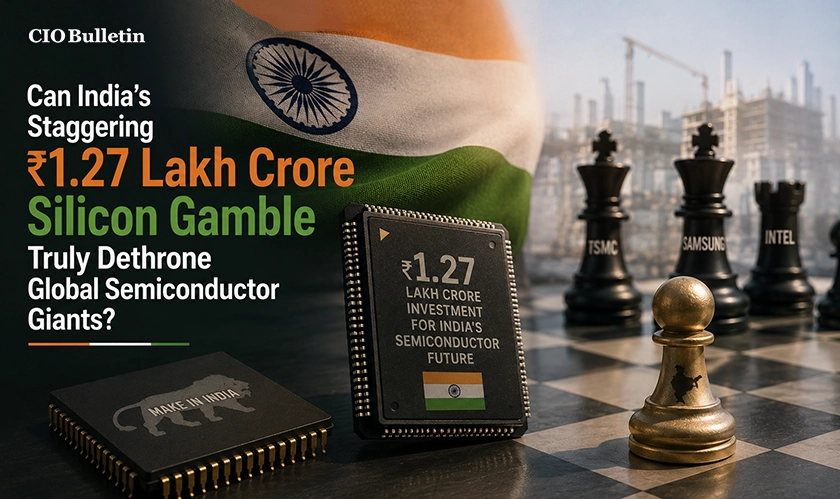
A staggering ₹1.27 lakh crore state injection aims to break China's grip on silicon, but can a country with no major active factories pull off the ultimate high-tech gamble?
The global race to control the silicon chip is heating up, and India is officially throwing down a massive, high-stakes gauntlet. The Union Cabinet, led by Prime Minister Narendra Modi, has formally approved a colossal ₹1,27,500 crore budget for its highly anticipated Semicon 2.0 mission. Designed to supercharge the domestic semiconductor ecosystem, this aggressive push seeks to transform the nation from a mere importer of foreign parts into an absolute, self-reliant tech titan.
According to an analysis by CIO Bulletin, this massive investment is not just about building factories, it is a calculated geopolitical move. The global supply chain has faced major disruptions over the past few years, proving that depending on foreign countries for microchips is a severe risk. India is trying to solve this vulnerability by securing everything from raw materials to advanced research under its own borders.
While the nation’s very first chip factory is not slated to open its doors until 2028, the government is betting big on long-term endurance. The official plan shifts the country's focus from older, larger tech to advanced, high-performance designs used in aerospace, drones, and AI systems.
The scheme isn't just about chips, it's meant to boost the wider economy, make India less dependent on other countries for critical technology, and help India lead in advanced tech sectors globally.
Despite the steep hill to climb, the foundation is already shifting. Early reports analyzed by CIO Bulletin confirm that twelve manufacturing units have already been approved, drawing in over ₹1.64 lakh crore in outside investments. As the world watches, India is building an army of over 68,000 highly trained students across hundreds of universities, preparing them to run the clean rooms of tomorrow.
Everything you need to know about this news
While the first phase successfully kicked off basic commercial production and packaging, Semicon 2.0 shifts the focus toward building high-tech manufacturing tools, local raw materials, and highly advanced research.
The country's very first fully functional commercial chip fabrication factory is scheduled to begin production by the year 2028.
Microchips are the brain of every modern device, from smartphones to military satellites. Controlling this supply chain prevents foreign dependency during political or economic crises.
No. The plan actively supports over 105 local startups that are creating original intellectual property (IP) and chip designs, aiming to make the nation a design powerhouse.
Global and local pioneers like Micron, Kaynes, and CG Semi have already successfully initiated commercial packaging and production operations within the country.



















































 consultants ltd.jpg)


Comments