
Home Technology Oracle Why Were Oracle Hybrid Workers...
CIO Bulletin
,
05 June, 2026
Author:
Sambhrant Das
Tech employees express intense frustration over quiet policy adjustments and rapid office mandate shifts ahead of major operational downsizings.
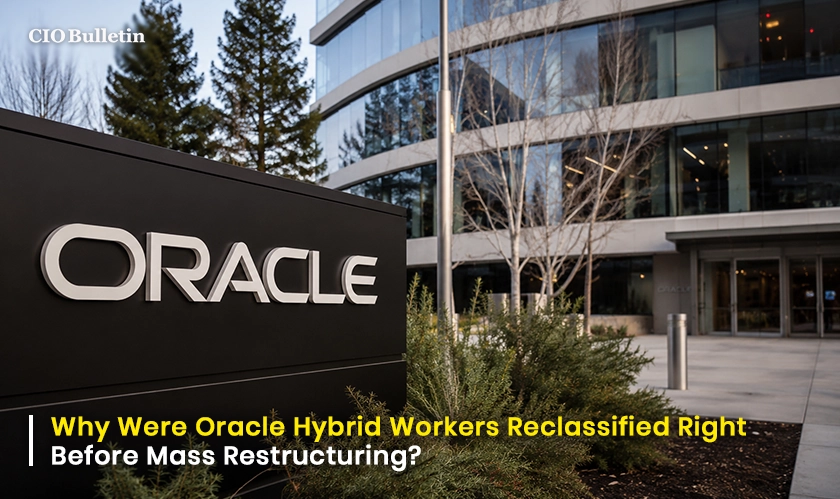
The fast-paced tech sector is currently facing a massive wave of restructuring that has thousands of everyday workers feeling deeply anxious about their future stability. While leadership teams often blame market shifts and overhead costs for staff reductions, a prominent cloud computing giant is facing serious heat over the specific methods used right before letting people go. In a highly debated move, many internal sources claim that Oracle hybrid workers reclassified as full-time in-office staff overnight were deliberately set up to fail right before the company rolled out sweeping global job cuts.
The main issue causing anger across corporate message boards involves claims that the company altered internal employment designations without warning. Employees state that Oracle management quietly shifted staff from hybrid statuses into full-time office assignments right before the restructuring began. This operational adjustment apparently left many workers in incredibly difficult positions:
Mismatched Travel Limits: Staff members living miles away from the nearest physical hub suddenly found themselves labeled as non-compliant with office rules.
Rapid Access Cutoffs: Multiple affected teams reported waking up to deactivated security badges and blocked internal networks before receiving official termination notices.
Global Impact Areas: The sudden workforce reductions hit engineering and data management teams across international branches, leaving thousands scrambling for alternative work.
People are focusing heavily on these internal shifts because they highlight a massive disconnect between corporate policies and daily work realities. For years, flexible scheduling has been promoted as a major benefit to keep top talent happy and productive. Yet, workers tracking the situation argue that changing definitions behind closed doors feels like an insincere way to handle a reduction.
"They changed our status on paper first, making it look like we weren't meeting the in-office requirements before they let us go."
This corporate dispute is spreading rapidly online because every day, office workers are tired of feeling vulnerable to sudden policy changes. With software firms investing heavily in automated tools and artificial intelligence infrastructure, old-school job descriptions are shifting constantly. Watching a major tech institution adjust worker classifications right before a layoff makes regular employees question whether traditional loyalty matters anymore when budgets get tight.
In the end, this corporate drama proves that manipulating internal policies to manage workforce sizes can quickly hurt a company's public reputation. When major organizations choose to communicate with total transparency, they build real, lasting trust with their global teams. According to CIO Bulletin, using tactical remote policy adjustments to accelerate workforce reductions damages employee morale and threatens the foundational trust required to maintain stable corporate growth.


















































 consultants ltd.jpg)


