
Home Industry Metals and mining Can the Landmark Yellowhead Co...
CIO Bulletin
,
18 July, 2026
Author:
Sambhrant Das
British Columbia and simpcw first nation establish a binding shared jurisdiction framework for new industrial mining
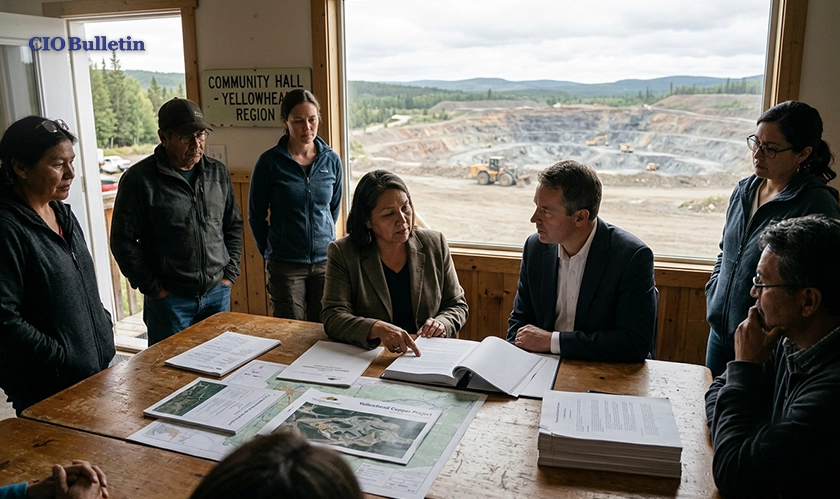
A profound legislative transformation is sweeping across western Canada’s mineral extraction sector as regional governments formally transition toward mandatory co-governance models. The official execution of the historic Yellowhead copper project agreement establishes a legally binding, consent-based decision-making framework between the province of British Columbia and the Simpcw First Nation. This unprecedented collaborative protocol completely redefines how major industrial resource proposals will be evaluated within ancestral territories going forward.
The newly ratified regulatory framework creates a unified environmental assessment mechanism designed to streamline capital deployment while protecting ecological integrity. The core institutional milestones introduced by this agreement are defined by:
Fully aligning separate provincial and Indigenous-led review bodies into a synchronized, single-window evaluation timeline to eliminate administrative redundancy.
Legally embedding the United Nations Declaration on the Rights of Indigenous Peoples Act directly into the project's final permitting requirements.
By stabilizing the underlying regulatory path for Trekor Metals' proposed open-pit mine, the pact safeguards a projected two-billion-dollar capital investment. The multi-decade industrial project is estimated to generate an average annual output of 178 million pounds of critical copper concentrate.
"This agreement is not just about one project — it is about establishing how decisions on new mining projects will be made in our territory going forward," - George Lampreau, Simpcw Chief.
However, local resource analysts say that putting in place this strict dual consent setup requires exceptional bureaucratic transparency from the corporate stakeholders. To obtain the last operational clearance, engineers have to carefully ensure long-term water quality protections, keep regional salmon habitat safe, and address facility safety requirements. The final regulatory determinations will formally set the absolute legal baseline for future hard-rock extraction across the Pacific Northwest.
Ultimately, this progressive framework serves as a vital blueprint for resolving historical conflicts between private capital infrastructure and Indigenous title rights. Guaranteeing equal decision-making authority from inception dramatically lowers litigation risks while offering a predictable roadmap for international mining infrastructure investments. CIO Bulletin views this development as a highly sophisticated governance evolution that will successfully stabilize global critical mineral supply chains while setting a new benchmark for corporate reconciliation.
Everything you need to know about this news
It sets up a legally binding, consent-based arrangement between B.C. and the Simpcw First Nation, set up to co-manage the environmental assessment connected to the Yellowhead copper mine.
The open-pit critical minerals project is being advanced by Trekor Metals Limited (though it was previously called Taseko Mines Limited)
If fully developed, the operation represents a $2 billion capital investment, creating 525 permanent direct jobs and adding over $900 million annually to B.C.’s GDP.
The current industrial infrastructure facility is designed to run for 25 years as the mine life, with production around 178 million pounds of copper each year depending on conditions.
The historic joint protocol was formally executed under Section 7 of British Columbia's Declaration on the Rights of Indigenous Peoples Act and the Environmental Assessment Act.





















































 consultants ltd.jpg)


Comments