
Home Services & Solutions Payment and card Is Australia's Card Surcharge ...
CIO Bulletin
,
15 October, 2026
Author:
Ravathi Sunil
Regulatory shifts down under spark widespread international discussions on checkout fees, processing transparency, and consumer protection.
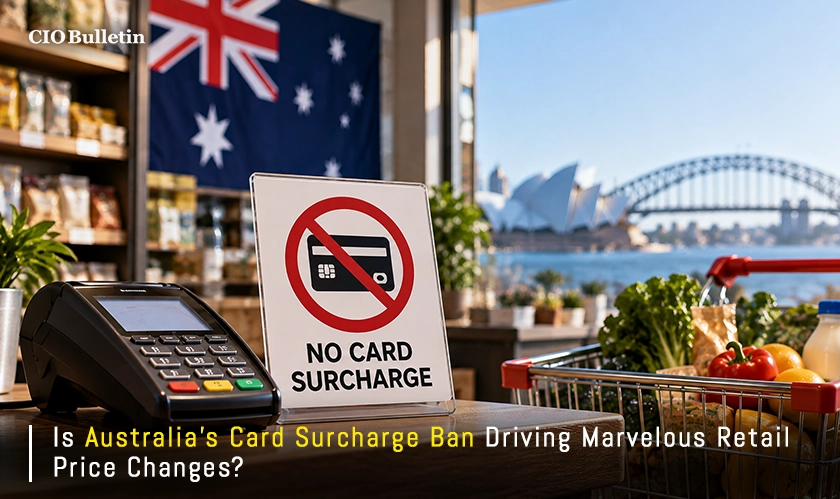
Australia's card surcharge ban has sent significant ripples through the global retail landscape as regulators mandate a full elimination of hidden checkout fees for credit card transactions. This landmark decision forces retail merchants to absorb processing costs rather than passing fees directly to end consumers. Market strategy specialists at CIO Bulletin observe that this major policy overhaul offers a compelling blueprint for international financial regulators watching consumer payment friction closely.
For many years now, processing surcharges have served as additional security margins for small enterprises, but what kind of economic changes await in the future with the processing structure under international investigation? With the growing digital payment system network all over the world, regulators claim that high processing fees are causing customers hardship and skewing true retail prices. Removing surcharges from processing costs will definitely increase the use of cards, but it will also require a change in pricing policies.
This sweeping regulatory shift highlights three key operational priorities for modern retail enterprises:
Adjusting digital point-of-sale systems to eliminate automated checkout surcharges instantly.
Restructuring internal product pricing models to absorb baseline merchant transaction fees seamlessly.
Leveraging collective merchant bargaining power to push card networks toward lower processing rates.
Adapting to transparent fee structures helps businesses maintain customer loyalty while navigating evolving financial compliance standards across multiple geographic markets. Commenting on the broader market implications, Financial Technology Analyst Zennon Kapron emphasized, "Regulators are sending a clear signal that hidden payment friction will no longer be tolerated at the consumer checkout."
As international merchants evaluate the potential ripple effects of this policy, global commerce observers watch closely to see whether Western markets will follow suit with similar payment protections.
Steering Toward a Frictionless Global Payment Standard
As global regulatory authorities and major financial institutions track the implementation of Australia's card surcharge ban, retail checkout workflows across international markets are preparing for a major structural transformation. Consistent coverage of these policy changes through the editorial team of CIO Bulletin enables enterprise executives to analyze the friction at the checkout point, the interchange negotiation on the card networks, and fee strategy for digital merchants. This is because this regulatory change will be a crucial milestone in moving towards price transparency in the future of commerce.
News Source: Forbes, https://www.forbes.com/
Everything you need to know about this news
The regulatory mandate aims to protect consumers from hidden checkout fees, ensuring price transparency and reducing friction during digital card transactions.
Merchants must absorb payment processing expenses directly or incorporate operating overhead seamlessly into total product shelf prices.
American retailers fear local regulators may adopt similar rules, forcing businesses to alter long-standing surcharge strategies and point-of-sale checkout workflows.
Yes, CIO Bulletin delivers strategic insights into international enterprise trends, tracking how policy shifts reshape financial technology and global logistics.
Eliminating surprise transaction fees builds consumer trust, encouraging higher card utilization across online and in-store retail environments globally.




















































 consultants ltd.jpg)


Comments