
Home Industry Defence technology Can Local Tech Innovation Secu...
CIO Bulletin
,
13 July, 2026
Author:
Sambhrant Das
Wellington realigns its sovereign industrial strategy to integrate local aerospace innovation with global security networks.
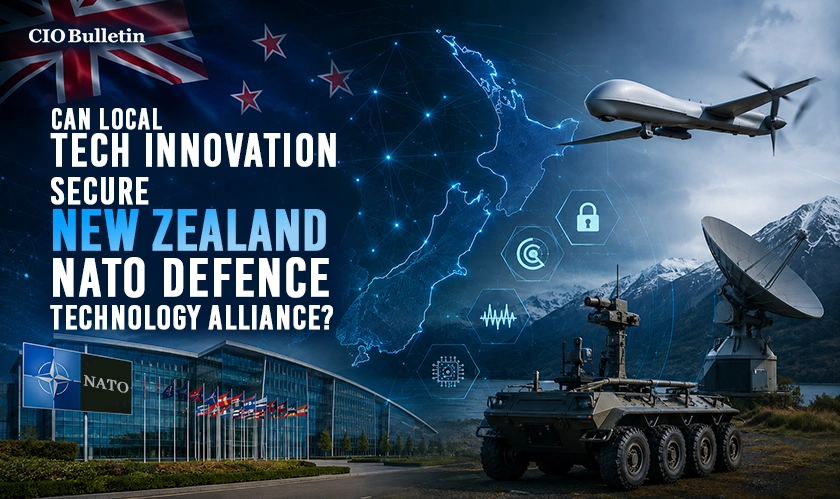
The geopolitical framework of the South Pacific is experiencing an unprecedented structural recalibration as regional leaders strengthen ties with Western security networks. Addressing shifting regional security challenges, government leaders are actively integrating domestic technical capabilities with broader international strategies. This defence alignment underpins the growing New Zealand NATO defence technology initiative, which connects the island nation with the Indo-Pacific Four partner group. The strategic pivot addresses escalating micro-fulfillment and logistical friction points across global supply lines.
Deploying specialized state resources into sovereign research systems requires a deliberate transition away from external procurement dependencies. To minimize operational overhead while fostering strict design authority, the New Zealand defense ministry has accelerated its multi-city corporate engineering framework:
Establishing dedicated space innovation programs to develop cutting-edge aerospace tracking systems.
Driving regional security contracts directly to local un-crewed vehicle innovators to guarantee autonomous production lines.
Integrating advanced corporate intelligence tools into tactical defense systems ensures that smaller nations can counter rising geopolitical pressures effectively. The current plan focuses on moving technical discoveries out of laboratory setups and onto active deployments.
The main part for New Zealand will be the small smart tech and the R&D center.
The country's unique capabilities are thus harnessed through this targeted approach, allowing the defense ecosystem to systematically modernize its baseline infrastructure.
Appealing to advanced industrial sectors requires a flexible approach where military research directly improves commercial consumer platforms. The framework actively shares software developments between civilian drone networks and advanced aerospace engineering ventures. This integrated technology model maximizes economic returns while accelerating local production cycles.
Sustaining interoperable data links across allied networks provides a crucial shield against unpredictable maritime volatility. By standardizing digital protocols alongside traditional partners, the nation stabilizes its regional tracking footprint. CIO Bulletin views this development as a clear masterclass in modern defense strategy, proving that small, specialized states can build significant deterrence by anchoring their core industrial innovation to robust global frameworks.
Everything you need to know about this news
It builds robust partnerships between local tech innovators and global alliances to develop deployable security solutions.
The rollout involves the North Atlantic Treaty Organization alongside the Indo-Pacific Four partner network.
The fund provides local tech entities with direct capital pathways to build exportable aerospace software.
The defense sector is focusing on automated un-crewed vehicles, advanced robotics, and specialized AI data modeling.
Developing dual-use platforms ensures that military software developments directly benefit commercial agriculture and civilian infrastructure.


















































 consultants ltd.jpg)


Comments