
Home Industry Defence technology Will the Deployment of US Subm...
CIO Bulletin
,
12 June, 2026
Author:
Sambhrant Das
The upcoming deployment of American nuclear-powered vessels to HMAS Stirling signals a major shift from paper blueprints to active deterrence in the Indo-Pacific.
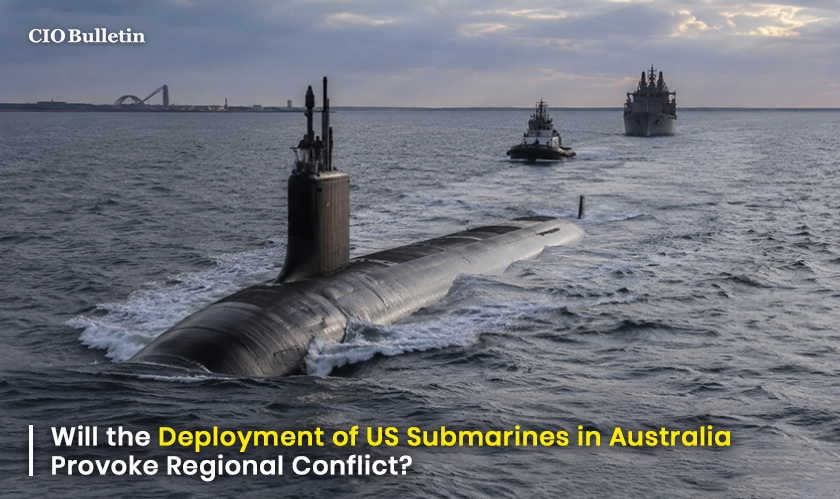
In a decisive reinforcement of Indo-Pacific security architecture, the United States Navy will officially dispatch a dedicated nuclear-powered submarine group to a strategic Australian port later this year. The deployment marks an aggressive execution phase of the trilateral AUKUS security pact between Washington, London, and Canberra. Under this operational matrix, multiple US submarines in Australia will be based out of a vital facility on the Western Australian coast. The initiative directly aims to establish a heightened maritime shield while countering expanding naval assertions within nearby choke points and competitive international shipping lanes.
The impending naval arrivals serve a dual logistical purpose, operating as a live training incubator for local personnel while anchoring forward-positioned allied strike power. Administrative bodies are funneling massive infrastructure investments into regional installations to comfortably accommodate the sophisticated requirements of nuclear propulsion systems.
Establishment of Support Commands: The US Navy has reactivated Submarine Squadron 3 and stood up Naval Support Activity Stirling to directly orchestrate local logistics and maintenance frameworks.
Workforce Integration Initiatives: Local engineers and naval technicians are currently embedding with American crews, learning real-time maintenance protocols through direct, hands-on interactions.
Rotational Force Milestones: The setup ensures that by next year, a permanent rotating presence of foreign nuclear-powered vessels will consistently operate directly out of Western Australian waters.
Moving frontline naval assets closer to the South China Sea places these elite vessels in close proximity to critical geographic flashpoints, notably the ongoing friction points surrounding Taiwan. Defense strategists argue that the physical presence of allied assets offers an indispensable counterweight to rapid military expansions in neighboring waters. However, critics suggest that placing such high-profile assets continuously on the frontline risks aggravating existing diplomatic divides. As the logistical footprint expands, the line between regional deterrence and active geopolitical provocation continues to blur significantly for regional policymakers.
The upcoming deployment comes amid key structural changes to how the underlying defense procurement deal is configured. Officials recently announced a major shift in Australia’s future fleet plan, saying they are pivoting exclusively to pre-owned, in-service Virginia-class vessels, instead of utilizing a complicated mix of newly produced ships plus used variants. The goal is to simplify the training pipeline, reduce supply chain friction, and keep the budget steady with changing international manufacturing schedules.
"AUKUS is on track, and it is happening now." - Richard Marles , Australian Defence Minister
Transitioning from hypothetical blueprints to concrete dockside operations signals a transformative era in how middle-tier powers manage security dependencies with global superpowers. By absorbing advanced operational knowledge directly from rotating crews, local forces rapidly accelerate their timeline toward autonomous maritime defense management. This integration ensures that, despite industrial challenges in overseas shipyards, the foundational pillars of the trilateral alliance stay intact. CIO Bulletin sees this as a defining geopolitical pivot, showing that building forward-deployed, and interoperable naval hubs can shift the regional balance much faster than waiting decades for conventional construction lines to deliver.
















































 consultants ltd.jpg)


