
Home Industry Politics Kim Jong Un's China Visit Sign...
CIO Bulletin
,
24 October, 2026
Author:
Ravathi Sunil
North Korean leadership crosses the historic border corridor as high-level diplomatic dialogues prepare to reshape regional trade relations and security dynamics.
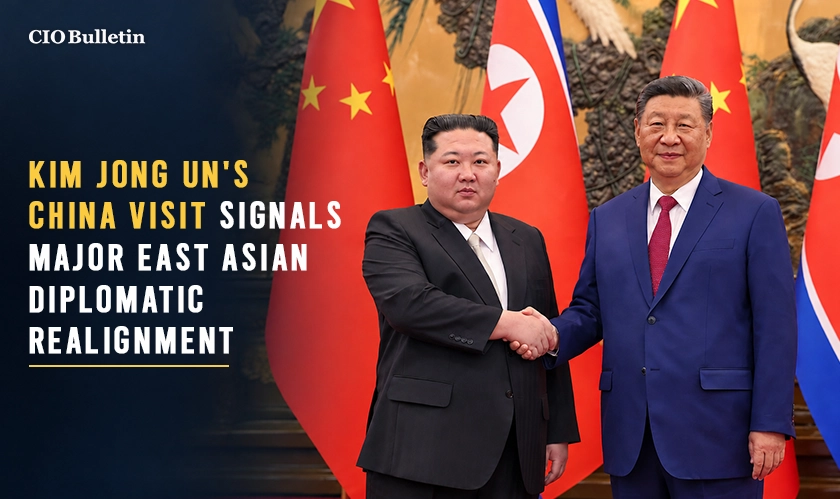
CIO Bulletin monitors shifting geopolitical dynamics across East Asia following confirmation that Kim Jong Un's China visit commenced via the strategic border city of Dandong. Korean intelligence agencies have authenticated the crossing of the armored train through the Yalu River as a vital diplomatic meeting in order to strengthen economic cooperation, stability in the region, and their respective security relationship. The important diplomatic crossing reflects economic discussions between Pyongyang and Beijing as both countries face different sanctions from around the globe.
The important diplomatic crossing reflects the growing commercial and strategic cooperation in northern border areas. Emphasizing the geopolitical weight of these bilateral discussions, South Korean Unification Ministry official Park Min-soo stated, "High-level diplomatic exchanges across the border corridor indicate a deliberate effort to strengthen bilateral economic ties and coordinate strategic policies across East Asia." As heavy border security measures were activated across key transit hubs, international observers noted the potential reopening of vital commercial trade routes connecting Chinese manufacturing hubs directly with North Korean markets.
Will the new economic collaboration across borders result in faster infrastructure construction without having to work around the Western trade restrictions? The diplomatic community is analyzing whether this top-level meeting will lead to dormant trade deals being activated along the Yalu River route.
Strategic Border Transit: North Korean leadership crossed into Dandong via armored train to initiate high-level diplomatic talks.
Economic Realignment: Talks focus on expanding bilateral trade, securing energy supplies, and restoring cross-border commercial shipments.
Security Coordination: Both nations aim to synchronize defense postures amid shifting international alliances across the Asia-Pacific.
Border Infrastructure: Transit activity signals potential reopening of critical logistics and freight networks along the Yalu River.
As dialogue between states takes place through Chinese foreign policy centers, global audiences watch out for changes in the security structures of the region. Would increased cooperation between countries change economic bargaining power in East Asia? The world watches keenly as security analysts in the region assess the new trends.
Strategic Outlook
In order to maneuver through the changing geopolitics, business leaders around the globe need to pay attention to the changes happening in trade policies and supply chains in new East Asian commercial centers. Knowledge about changing diplomatic relationships would help enterprise organizations foresee regulatiory changes and avoid risks in international logistics.
News Source: Reuters, https://www.reuters.com/
Everything you need to know about this news
North Korean leadership traveled by armored train across the historic New Yalu River Bridge connecting Sinuiju to the Chinese border city of Dandong.
Dandong serves as the primary commercial gateway between both nations, handling the majority of overland trade, freight transport, and economic exchanges.
The discussions focus on expanding bilateral trade, economic cooperation, regional security and stability, energy assistance, and joint border infrastructure projects.
Reopening border corridors facilitates smoother transport of industrial materials, consumer goods, and agricultural products across East Asian commercial networks.
Analysts view the visit as a strategic effort to solidify bilateral economic alliances and project unified regional diplomatic strength.


















































 consultants ltd.jpg)


Comments