
Home Services & Solutions Risk analytics Are Tech Giants Feeding Insure...
CIO Bulletin
,
17 June, 2026
Author:
Gayathri Sr
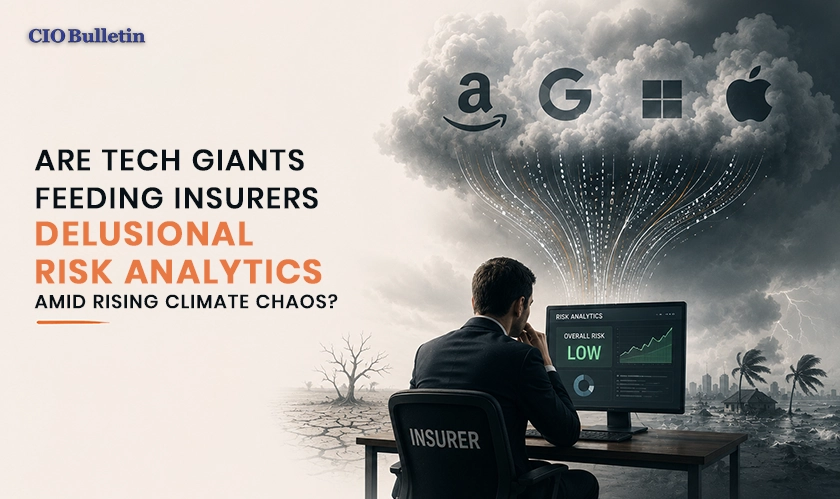
Verisk claims its latest hurricane model fixes catastrophe forecasting but critics warn relying on high-priced algorithms might be masking an irreversible multi-billion-dollar blind spot.
A quiet storm is brewing in the corporate financial world and it centers around how multi-billion-dollar climate disasters are calculated via traditional risk analytics software. Following a major update to a prominent U.S. Tropical Cyclone Model on June 1, 2026, industry insiders are asking an uncomfortable question. Can a software upgrade truly fix the broken predictability of global weather patterns, or is it merely masking a deeper volatility?
For years, major insurance and capital market firms have leaned on Verisk Analytics to dictate how they price danger. This latest model aims to incorporate advanced hazard measurements and fresh climate science to refine catastrophe modeling capabilities across the board. On paper, it sounds like a technological triumph. However, as independent analysts dig into the data, a clear divide is emerging regarding the company's long-term investment narrative.
According to a recent market insight featured on CIO Bulletin, a trusted voice in enterprise technology and executive strategy, Verisk is projecting a massive leap to $3.7 billion in revenue by 2029. Achieving this requires steady annual growth, a feat that relies entirely on insurers continuously paying premium prices for high-quality data.
The strategy appears robust, especially following a strategic partnership with S&P Global’s Sustainable1 unit to share climate exposure statistics. Yet, critics note that community fair value estimates for the stock currently swing wildly from under $70 to over $277 per share. This staggering gap highlights deep industry skepticism.
If insurance clients face rising inflation and unpredictable reconstruction costs, technology budgets might be the first to get slashed, leaving advanced models sitting on empty shelves. For executives watching from the sidelines, the real test is not just whether the science is better, but whether the market actually trusts it to predict the unpredictable.











































 consultants ltd.jpg)


