
Home Other Blogs CIO Bulletin Highlights the Pr...
CIO Bulletin,
30 July, 2026
Author:
Ravathi Sunil
The worldwide consumer backdrop is experiencing significant transformations because of shifting dietary preferences, rising health requirements, and the demand for eco-friendly supply chain control. Against the background of changes in the economy and in market needs, food and beverages market leaders worldwide have been constantly changing their strategic approaches. Top brands in the world's market do not just make packaged goods; instead, they employ scientific developments in food technology, automated supply chains, and digital marketing to serve billions of people each day.
Entering a complex marketplace requires an analysis of the total market coverage, brand equity, innovation cycles, and sustainable sourcing practices. With the rise of consumer standards, top multinational companies combine traditional product lines with healthier and more sustainable product lines. Here, CIO Bulletin presents the list of industry powerhouses setting global standards for production, distribution, and product development.
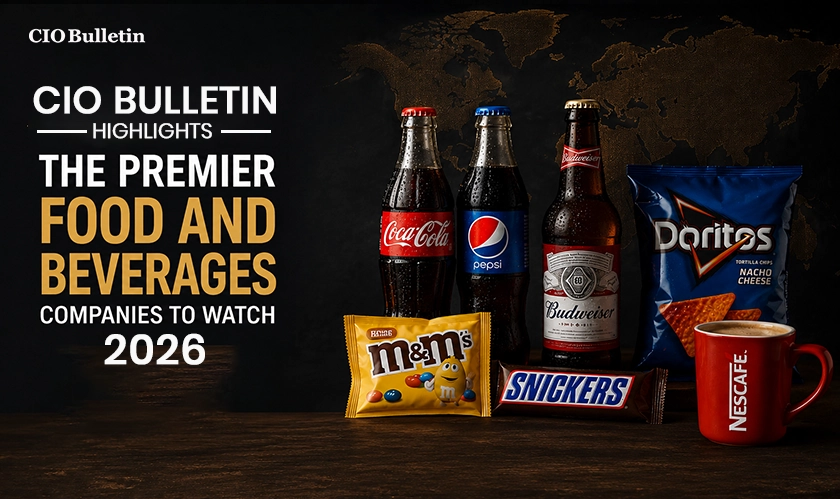
Nestlé S.A., which operates out of Vevey, Switzerland, is the largest food company globally in terms of revenue and market capitalization. With operations spanning almost all continents, Nestlé boasts an extensive portfolio of products including coffee, baby foods, dairy, water, pet care, and health science products. Brands such as Nescafé, KitKat, Gerber, and Purina reflect the company's immense versatility.
The market sustainability of Nestlé has been achieved through heavy investment in research and development activities. Nestlé constantly improves its existing products to reduce sugar and sodium content and adds plant-based and functional nutrition segments to its product line. Through significant investment in regenerative agriculture and carbon-neutral transport logistics, Nestlé solidifies its supremacy as one of the best companies in the world.
PepsiCo, Inc. represents a unique dual-force within consumer packaged goods. It has a high market share in both liquid refreshments and packaged snacks sectors. Apart from the trademarked Cola brand, some of its other brands include Frito-Lay, Gatorade, Quaker Oats, Tropicana, and Doritos.
The recent strategy adopted by the firm has been the "PepsiCo Positive" or pep+ vision. The pep+ vision of the enterprise emphasizes the areas of ingredient sourcing sustainability, lessening water usage, and adding more better-for-you brands. The automated distribution centers and the direct-store-delivery system of PepsiCo set the benchmark for beverage and snack distribution worldwide.
JBS S.A. is headquartered in São Paulo, Brazil, and is the world's largest company engaged in the production of animal proteins with a huge presence in the market for beef, pork, poultry, and protein substitutes. JBS provides an array of different protein products to more than 150 nations through its subsidiary companies like Swift, Pilgrim's Pride, and Seara.
The company’s growth trajectory is based on advanced processing plants, stringent food safety procedures, and acquisition of foreign companies. In the wake of increased demand for protein globally, JBS is scaling up its value-added and ready-to-eat products segment while addressing international food security needs.
Anheuser-Busch InBev dominates the world’s alcoholic beverages industry owing to its unparalleled brewing capability and distribution network. The Belgian-based multinational firm owns some of the finest beers in the world, including Budweiser, Corona, Stella Artois, and Michelob Ultra; thus, it owns over thirty percent of the total beer output in the world.
The AB InBev business strategy incorporates digital B2B ordering services, brand superiority, and localized supply chain systems. Besides, AB InBev has extended the product line of non-alcoholic and low alcoholic beverages as a result of evolving lifestyles of the young generation to maintain its competitive advantage in the beverages industry.
Coca-Cola is probably one of the most renowned companies in the world and has a highly efficient bottling and distribution system all across more than 200 countries. While the main products for which it is well known are the Coca-Cola, Sprite, and Fanta beverages, its strategy of “total beverages” includes beverages that are in the form of juice, sports drinks, and ready-to-drink tea and coffee beverages.
The enterprise has achieved distinction for its success in localizing market executions and connecting with consumers. The company exemplifies how established beverage brands can evolve in tune with changing regulations and consumer behavior by creating formulas for sugar-free versions and experimenting with sustainable packaging.
Mars, Inc. is a private multinational corporation that has an edge in the confectionery, snack foods, and pet health segments. It is famous for its confectionery brands like M&M's, Snickers, Twix, and Extra, while at the same time it dominates in the segment of pet health with Pedigree, Whiskas, Royal Canin, and VCA Animal Hospitals.
Being free from any pressures of the stock markets to make quarterly profits, Mars makes long-term investments in sustainable sourcing of cocoa, digital supply chains, and nutritional sciences. Its market edge in both human and pet nutrition ensures its position among the best food and beverages companies in the world.
The market dynamics behind the top food and beverage corporations display a clear change towards the optimization of health, resiliency in the supply chain, and sustainability. Modern food brands cannot rely solely on the power of scale in today’s world; instead, their competitive edge lies in their ability to utilize digital distribution, transparency in ingredients, and innovation in products.
The organizations that successfully combine their core branding with local adaptation practices continue to earn significant profits and enjoy consumer trust in international markets. The best enterprise executives realize that the ability to adapt to new technologies and embrace sustainable sourcing strategies is what drives the modern food and beverages sector.
The constantly developing consumer market requires quick-witted management, foresight, and insightful vision. Knowledge of developments in the supply chain, sustainability, and digitalization implies being not only aware of the trends but also being an active participant in discussions together with peers in the industry and technology. CIO Bulletin is the ultimate resource for CXOs, industry leaders, and visionaries coping with industry challenges and striving to develop sustainably.
Everything you need to know about this news
To be successful in the market, it is vital to have well-developed supply chains, brand diversity, R&D adaptation, sustainability, and global distribution channels aimed at new trends such as healthy living and convenience.
Leading manufacturers from the sector are changing their existing product line by cutting down the amount of sugar and salt and adding some functional nutrition brands.
The digitization process enables tracking inventory, forecasting demand, and making logistics more automated; therefore, the loss of perishables can be prevented, and the constant supply of products can be provided to retail stores around the world.
Sustainability is what brings about operational efficiency and brand equity. Large companies invest vast amounts of money in the problems of water conservation, regenerative agriculture, alternative energy sources, and sustainable packaging to meet international environmental standards.
Consumers' increased concern about health-related matters leads to the growth of low-calorie, functional, and non-alcoholic drinks in the market. That is why the producers of traditional drinks extend their product range with non-alcoholic drinks.

















 consultants ltd.jpg)


Comments