
Home Industry Market analysis Will Rising US Mortgage Refina...
CIO Bulletin
,
30 July, 2026
Author:
Sambhrant Das
US Mortgage Refinance Rates Surge to One-Year High Following Volatile Treasury Yield Spikes
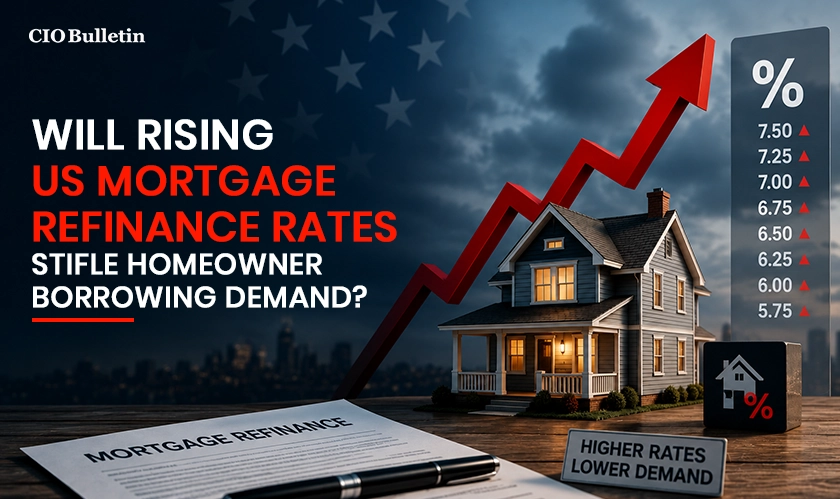
Costs associated with American home financing have again started to increase, causing mortgage refinance rates and long-term mortgages to fluctuate in their prices, reaching unprecedented levels for around a year already. According to new market indicators provided by the Mortgage Bankers Association, the average interest rate for a typical thirty-year fixed-rate mortgage increased seven basis points, to 6.76%, during the week ending on July 24. This increase in rates comes immediately after the fluctuations in international oil prices and after the growth of Treasury yields sensitive to inflation, which creates problems for homeowners who need to tackle refinancing issues.
The increase in interest rates can be traced in both fixed and adjustable mortgage products, which reflects the pressure caused by the changes in the macroeconomic environment. In response to changing markets, lenders changed pricing simultaneously.
The average interest rate for a fifteen-year-term mortgage increased by 11 basis points up to 6.15%, which makes it a one-year record-breaking number.
The average interest rate for five-year ARMs grew slightly, reaching 5.98%, which is an indicator of the decline in the difference between short-term variable and long-term fixed rates.
Overall loan application volume has decreased as both potential buyers and homeowners remain less active in secondary finance.
In an official statement tracking the weekly statistical release, market analysts noted that home financing metrics remain tightly bound to underlying economic pressures:
According to the Mortgage Bankers Association, "The contract rate on a 30-year, fixed mortgage — the most widely used home loan in the United States — increased by 7 bps to 6.76% during the week ending July 24, which is close to a yearly high."
As financial institutions prepare for the Federal Reserve's new monetary policies, aspiring buyers now struggle to get financing. Financial markets are anticipating changes in interest rates in the near future in order to counter the effects of inflation. Although the yields are high, residential real estate operations face obstacles from many sides, creating a situation where the consumer rates increase significantly with each passing day.
The persistent upward climb in borrowing costs continues to alter broader housing market liquidity and mortgage origination volume. As bond yields stay firm, consumer purchasing power remains constrained, forcing commercial lenders to recalibrate their growth strategies. CIO Bulletin views this development as a clear indicator that persistent economic volatility will keep mortgage borrowing costs elevated well into the coming financial quarters.
Everything you need to know about this news
Growing government bond yields and fluctuations in world energy prices lead to higher long-term borrowing costs for home loans.
The average 30-year fixed mortgage rate was at 6.76%, the highest it has been in a year.
The average rate on the 15-year fixed mortgage rose by 11 bps to a new yearly high of 6.15%.
Five-year adjustable-rate mortgages increased to 5.98%, which diminishes their advantage in pricing compared to fixed-rate loans.
Given that the Fed's rate-setting expectations are mostly indicative of stable or higher interest rates, it is improbable that mortgage costs will go down any time soon.





















































 consultants ltd.jpg)


Comments