
Home Services & Solutions Smart infrastructure Can Modern Smart-City Infrastr...
CIO Bulletin
,
08 October, 2026
Author:
Ravathi Sunil
Connected sensors and integrated artificial intelligence enable Malaysian municipalities to transform digital monitoring into instant life-saving action.
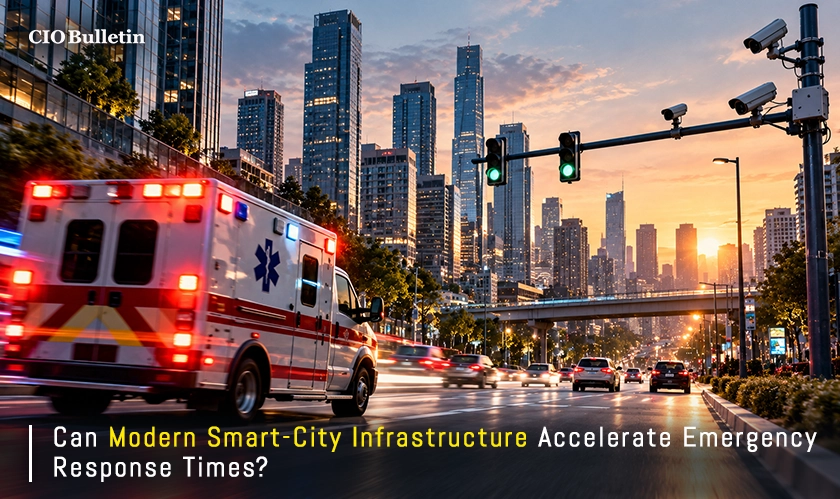
Modern urban centers are shifting from basic data monitoring to automated real-time intervention across public infrastructure networks. In a technological report published by CIO Bulletin, telecommunications analysts highlight how Malaysia's Communications and Multimedia Commission works alongside municipal authorities to upgrade connected smart-city infrastructure. By linking internet-of-things sensors directly with emergency dispatch protocols, urban centers can address severe road hazards, sudden flash floods, and vehicular collisions long before human operators receive emergency calls.
Quick connection points, traffic monitoring cameras, and environmental sensors have traditionally acted as mere observation tools. Utilizing a digital platform, the flow of data automatically switches traffic lights for emergency vehicles like ambulances, sends immediate warnings for floods, and alerts maintenance crews of possible road dangers. Is integration within cities capable of protecting citizens without compromising their privacy? Through dismantling information barriers between transportation, police departments, and rescue services, city officials are converting telemetry into civic protection.
Emphasizing the true purpose behind connected municipal upgrades, Industry Strategist Fong stated:
"The smartest city is not necessarily the city with the most technology. It is the city that uses technology, planning, and good governance together to protect people and improve everyday life."
As cities continue to grow across the nation, proper communication infrastructure guarantees that any important messages get to the emergency personnel in record time. Although everyday commuters may not be aware of how the AI algorithms are controlling the traffic or monitoring the water levels, it is the end result that counts.
The evolutionary transition from mere monitoring to real-time actions is the crucial tipping point in contemporary city management. CIO Bulletin keeps emphasizing that the combination of digital technologies and the ability to forecast emergencies is what enables municipal authorities to ensure the safety of their cities. In the face of urban growth, it is the successful fusion of governance and technology that will set the standard for smart cities.
News Source: The Sun Malaysia, https://thesun.my/
Everything you need to know about this news
Connected sensors detect accidents or hazards automatically, instantly alerting emergency dispatchers and adjusting traffic signals for approaching first responders.
Artificial intelligence analyzes live video feeds and telemetry streams to spot traffic jams, rising floodwaters, and road hazards without requiring manual human oversight.
Passive monitoring merely records incidents, whereas real-time action enables automated alerts, dynamic traffic adjustments, and immediate emergency deployments.
Environmental sensors detect rising water levels early, giving authorities time to issue warnings and close vulnerable roadways before flooding creates danger.
Success depends on unifying isolated technologies into shared platforms that allow different municipal agencies to coordinate and share data seamlessly.

















































 consultants ltd.jpg)


Comments