
Home Industry Law ethics and legal services World Court Poised to Deliver ...
CIO Bulletin, 19 November, 2026
Author:
Ravathi Sunil
After seven years of waiting, judges in The Hague are ready to answer a question the world has asked since 2017.
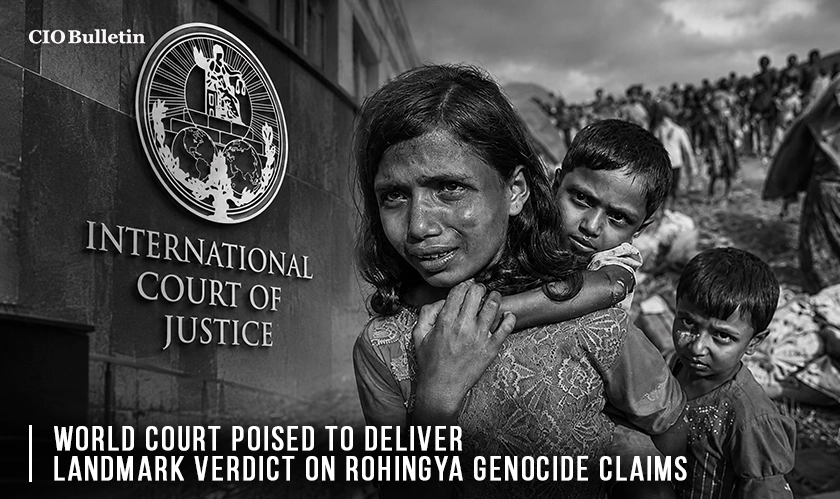
The world’s top United Nations court is about to decide whether Myanmar committed genocide against its Rohingya minority. The International Court of Justice will deliver its verdict in The Hague on Thursday, November 19, ending a legal battle that has dragged on for seven years.
The small African nation of The Gambia filed the case in November 2019 with the backing of the Organisation of Islamic Cooperation. It says Myanmar broke the 1948 Genocide Convention during a military crackdown in 2017 that forced at least 730,000 Rohingya from their homes. Myanmar rejects the claim. It says its troops were chasing armed fighters from the Arakan Rohingya Salvation Army, not targeting a whole community.
Why would a country with no direct link to Myanmar bring such a case? The court has already tackled that. In 2022, judges ruled that every country that signed the convention shares a duty to stop genocide.
In 2020, the court ordered Myanmar to “take all measures within its power to prevent the commission of all acts” covered by the convention, according to the International Court of Justice’s own order. That was only an emergency step. The new ruling is the real test.
The ruling is final and cannot be appealed.
Myanmar is legally bound to follow it, yet the court has no police force to make it happen.
The Gambia can ask the UN Security Council to act if Myanmar ignores the decision.
Any of the five permanent members can veto action, and China and Russia have shielded Myanmar before.
The Gambia wants those responsible prosecuted and a safe return for the Rohingya.
So what if the court finds that genocide did take place? Will a ruling without enforcement still matter? Many observers believe it would add heavy pressure on Myanmar’s military rulers and bring a sense of justice to survivors who have waited for years.
CIO Bulletin will keep tracking this story because rulings at The Hague often shape how leaders judge global risk.
News Source: Reuters, https://www.reuters.com/
Everything you need to know about this news
The Gambia says Myanmar broke the 1948 Genocide Convention during its 2017 military crackdown. Myanmar denies the charge.
No individuals are on trial. This is a dispute between two countries, so the case is against the state of Myanmar and not against army officers or leaders.
No. The ruling is final and cannot be appealed. Myanmar is legally bound to follow it, but the court has no way to enforce it.
It can ask the UN Security Council to act, but a veto from a permanent member could block any action.
Yes. In 2020, it ordered Myanmar to protect the Rohingya, and in 2022, it rejected Myanmar’s objections so the case could continue.




















































 consultants ltd.jpg)


Comments