
Home Industry Supply chain management Will a Historic Super El Niño...
CIO Bulletin
,
15 July, 2026
Author:
Ravathi Sunil
With climate scientists warning of an unprecedented meteorological event, logistics networks must brace for severe disruptions or face devastating operational bottlenecks.
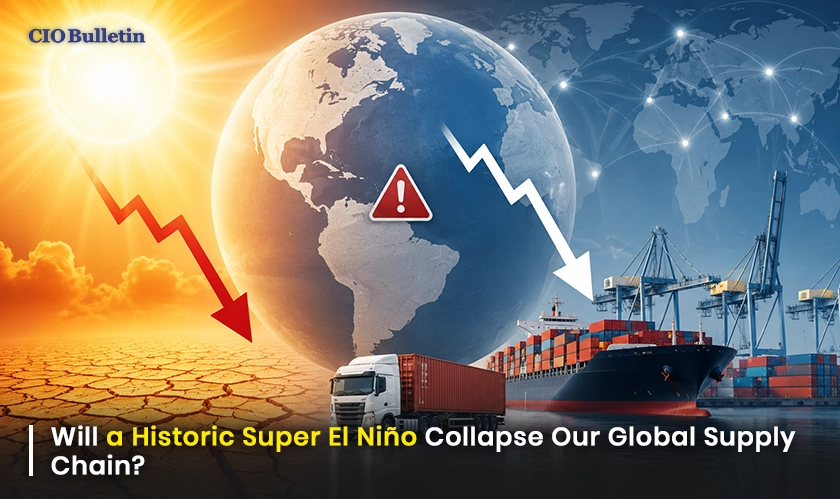
Global trading routes have become targets for a new form of silent yet swiftly growing danger. As recent climate warnings report, a new Super El Niño phenomenon in the Pacific region is gaining momentum and is expected to continue until early 2027 with an astounding probability of 97%. Leading logistics specialist TT Club warns that corporate leaders must urgently prepare their operations for a highly disruptive period, a reality currently being actively monitored by global business analysts at CIO Bulletin.
"Those with greater supply chain visibility diversified sourcing strategies and robust crisis management frameworks will be far better positioned to weather what could be a very challenging period." - Neil Dalus, Risk Assessment Manager, TT Club.
The effects of this super-El Niño on the natural environment are beginning to become evident in important maritime trade routes. The most important is that the Panama Canal Authority has already been compelled to limit the draft of ships passing through its Neopanamax locks owing to reduced precipitation in the canal catchment area. This reminds us painfully of last year’s El Niño season, which reduced canal capacity by up to 40%.
Industry experts indicate that the impending crisis will trigger deep disruptions:
Severe Transit Delays: Draft restrictions force cargo ships to carry lighter loads, raising freight costs and slowing delivery timelines.
Energy Market Volatility: Extreme heat waves will trigger massive electricity demand spikes, straining power grids and disrupting factory operations.
Second-Order Financial Pressures: Disrupted supplier schedules will ultimately lead to working-capital pressures and severe price inflation across consumer goods.
To mitigate such problems, management is recommended to incorporate climate information seasonally in their operations. Businesses that have mapped out their suppliers well and have geographically diversified sourcing will sail through this volatile period with little damage.
Everything you need to know about this news
A Super El Niño is characterized by exceptionally warm sea-surface temperatures in the Pacific. Meteorologists anticipate this specific event could be historic and potentially unprecedented, with impacts extending well into 2027.
The warming pattern alters global rainfall, causing severe droughts in crucial transit areas like the Panama Canal. When water levels drop, large cargo ships cannot carry full loads, resulting in shipping backlogs and higher transport fees worldwide.
Companies should actively diversify their supplier bases across different geographic regions, run detailed scenario simulations, and utilize real-time climate tracking to reroute cargo before bottlenecks form.
Yes. The extreme heat associated with this pattern typically surges energy consumption for cooling. This strains power grids, spikes electricity costs, and occasionally causes localized blackouts that halt manufacturing.
Insurers are struggling to price these risks accurately because standard catastrophe models often fail to account for how El Niño simultaneously impacts agriculture, property, and marine transit lines.

















































 consultants ltd.jpg)


Comments