
Home Technology EV and Concept cars Can China Electric Vehicles Fu...
CIO Bulletin
,
15 July, 2026
Author:
Sambhrant Das
China turns to electric taxis to soften the impact of global oil supply shocks driven by international tensions in the Strait of Hormuz
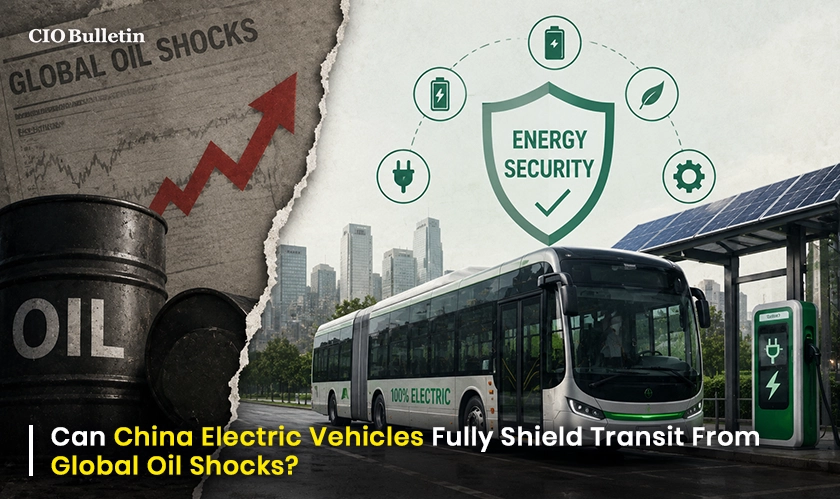
The ongoing military blockade in the Strait of Hormuz has sent global energy markets into a tailspin, yet Beijing is keeping its urban transit moving smoothly. With China electric vehicles embedded in the country’s public transportation networks, the nation has successfully built a solid firewall against international fuel price volatility. Rather than relying on panic-induced state conservation campaigns, the country is reaping the rewards of its long-term battery-powered strategy.
City transport and ridesharing apps have completely eased the everyday struggle of millions of people living in cities. In May alone, commuters racked up more than 3.05 billion passenger trips, which kind of proves that daily routines can keep going even during global energy emergencies.
Urban transit rides increased around 6% since the start of regional hostilities.
Electric taxis plus ride-hailing services now cover most local routes.
This transformation is not the result of direct government intervention; it is a pragmatic financial decision by everyday citizens. Faced with rising fuel prices, drivers and passengers are simply abandoning traditional internal combustion engines.
Faced with higher gasoline, diesel and airfare, many seem to have shifted away from oil-based transportation toward cheaper, lower-carbon alternatives.
The current geopolitical crisis highlights a major divide in Asian energy security. While neighboring countries struggle to subsidize fuel costs or watch their fleets sit idle, Beijing's power grid operates independently from volatile global supply routes.
Over 80% of urban commercial fleets are fully electrified in top-tier cities.
Localized power generation relies on domestic coal and renewable energy.
While the rest of the world remains vulnerable to Middle Eastern maritime chokepoints, this transition showcases how a domestic grid protects against foreign disruptions. Commuters are keeping their wallets intact while avoiding the pain of expensive foreign crude. CIO Bulletin views this development as a blueprint for global energy security.
Everything you need to know about this news
By shifting urban transit, taxis, and ridesharing to domestic electric grids, the country avoids importing high-priced foreign crude.
No, the transition is consumer-driven, as commuters opt for cheaper electric rides over expensive fossil fuels.
Taxis and ride-hailing services now see over three billion trips monthly, powered largely by the electrified grid.
Many countries do not have China’s deep EV charging infrastructure, leaving their transportation fleets exposed to sudden fuel spikes around the world.
The EV fleet is run by the domestic grid, which in turn relies on local coal, hydro, and solar energy.















































 consultants ltd.jpg)


Comments