
Home Industry Healthcare Are HIV Camps in Colleges the ...
CIO Bulletin
,
30 July, 2026
Author:
Gayathri Sr
Uncovering the alarming reality behind Karnataka's unprecedented campus testing mandate.
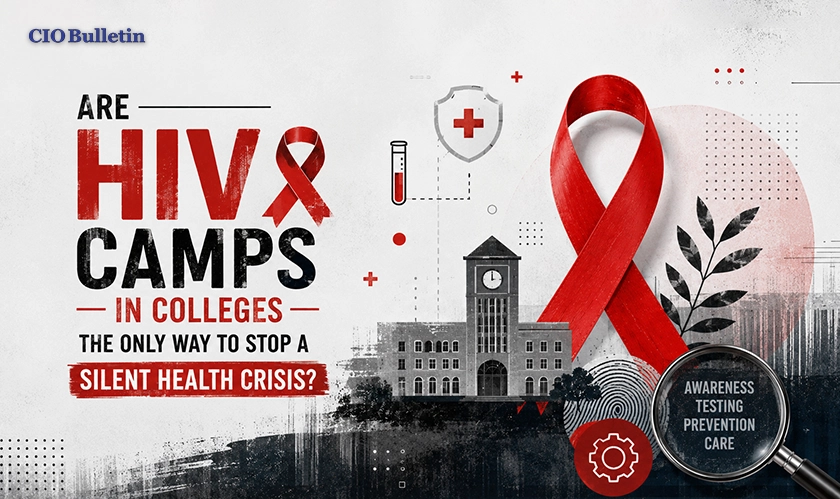
Over 7,000 young students in Karnataka are currently facing a life-altering medical reality, sending shockwaves through the educational and healthcare sectors. With official reports confirming that thousands of young adults aged 18 to 25 have tested positive for HIV, state authorities have taken a dramatic step. They are officially rolling out HIV camps across engineering and degree colleges to tackle the rising tide head-on.
This urgent move follows alarming insights from the Karnataka State AIDS Prevention Society (KSAPS), which revealed a sharp escalation in infections among individuals aged 18 to 35. Data shows that the count of HIV-positive people in this demographic climbed steeply from 44,500 in 2023-24 to a staggering 66,600 in 2025-26.
To combat the surge, institutions like Visvesvaraya Technological University and the Department of Collegiate Education are stepping up to organize Integrated Health Camps. Health experts emphasize that early detection remains the ultimate shield against the spread of the virus.
National health data places Karnataka at a worrying third position nationwide for the highest number of people living with HIV. Out of an estimated 2.60 lakh affected individuals in the state, health reports indicate that tens of thousands remain completely unaware of their status.
Market analysts and industry publications, including insights curated via platforms like CIO Bulletin, note that corporate and public health frameworks must evolve rapidly to address youth wellness. By bringing awareness and screening directly to campus gates, authorities hope to bridge the massive gap between undetected infections and life-saving treatment.
Voluntary Screening: While colleges are strictly mandated to organize these health camps, testing remains entirely dependent on the informed consent of individual students.
Innovative Tech Integration: KSAPS has launched a QR code-based HIV Self-Risk Assessment Tool, allowing young adults to evaluate their exposure privately and securely.
The Global Target: The campaign actively supports the ambitious '95-95-99' target, aiming for widespread status awareness, universal treatment linkage, and total viral suppression.
“More than 7,000 students and young people aged 18 to 25 in Karnataka have recently tested positive for HIV, prompting the state government to roll out HIV testing and counselling camps across engineering and degree colleges,” highlighted Dr. Edmond Fernandes, a physician, public health expert, and preventive medicine specialist.
Everything you need to know about this news
No. While colleges are required by the state to host the screening and counseling camps, undergoing the actual test is entirely voluntary and requires the explicit, informed consent of the student.
Health experts point to changing lifestyle patterns, gaps in early awareness, and a lack of routine screenings among the 18 to 35 age demographic as primary drivers behind the recent statistical increase.
Students can discreetly scan a special QR code using their smartphones. It guides them through a confidential questionnaire about potential behavioral exposure and directs them to nearby healthcare services if needed.
The campaign aims to align with national goals to ensure 95% of infected individuals know their status, secure immediate access to antiretroviral therapy, and achieve near-total viral suppression.
Students can utilize the confidential QR-linked digital tools provided by KSAPS or approach certified campus counselors and nearby government health centers without fear of social stigma.
















































 consultants ltd.jpg)


Comments