
Home Technology Adtech Is the New Google Ads AI discl...
CIO Bulletin
,
15 July, 2026
Author:
Gayathri Sr
Transparency takes center stage as tech giants force brands to label machine-made creatives across the digital landscape.
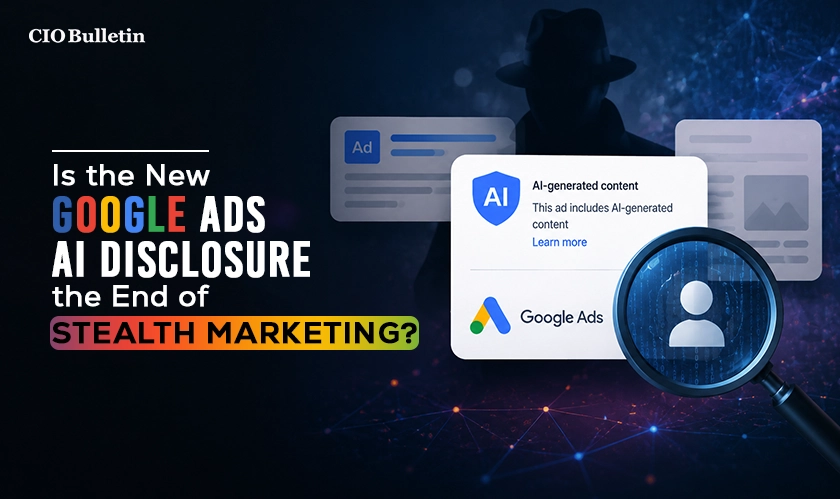
The digital advertising realm is facing a massive shake-up as transparency becomes the law of the land. In a bold move to champion authenticity, tech platforms are pulling back the curtain on machine-generated marketing. The newly implemented Google Ads AI disclosure mandate forces brands to explicitly state when automation software has been used to create or tweak their promotional assets. This policy applies across Search, YouTube, and Discover, sending a clear message to the industry: the era of stealthy automated campaigns is officially over. According to an industry report published by CIO Bulletin, this update marks a pivotal shift in how businesses must approach their creative workflows and regulatory compliance.
The mechanism behind this initiative relies on user-facing transparency tools. Audiences can now access a dedicated “How this ad was made” section within their ad preference panels. While internal platform tools apply these tags automatically, companies utilizing outside software must manually declare their usage. In regions like the European Union, India, and New York State, these labels will be slapped directly onto the consumer-facing ad itself.
This change presents immediate operational hurdles for marketing departments and external agencies. Organizations must now meticulously track every piece of copy and image modification to ensure compliance. As Brooke Osmundson, a digital marketing expert, noted in a recent industry evaluation:
“Advertisers are ultimately responsible for determining when AI use requires a disclosure and for ensuring their campaigns comply with applicable local laws.”
Ultimately, the long-term impact on consumer behavior remains a wild card. Brands are left wondering if a permanent “machine-made” label will deter clicks or foster deeper consumer trust. As compliance deadlines roll out, businesses must rapidly adapt their review pipelines or risk facing severe policy penalties.
Everything you need to know about this news
Not everywhere. While the information will be tucked inside user preference panels globally, prominent, front-facing labels on the actual ad are currently restricted to specific legal jurisdictions like the EU, India, and New York.
Absolutely not. The policy mandates that advertisers manually self-report any outside machine assistance. Failing to do so violates platform compliance, risking complete campaign suspension.
Agencies must establish airtight tracking systems. Because creative teams and media buyers often operate separately, every image, headline, and asset must be strictly tagged as "human" or "assisted" before launch.
Yes. The transparency rules extend to third-party partner websites using standard network distribution, accessible via the familiar information icons on the creative.
The industry is divided. While some fear consumers will actively avoid automated content, early analysts suggest that radical honesty might actually boost brand authenticity and long-term loyalty.





















































 consultants ltd.jpg)


Comments