
Home Industry Art and music Can Events Like World Music Da...
CIO Bulletin
,
23 June, 2026
Author:
Sambhrant Das
Public transit networks open up dedicated creative stages to bring diverse regional genres directly to daily commuters and elevate grassroots independent performers
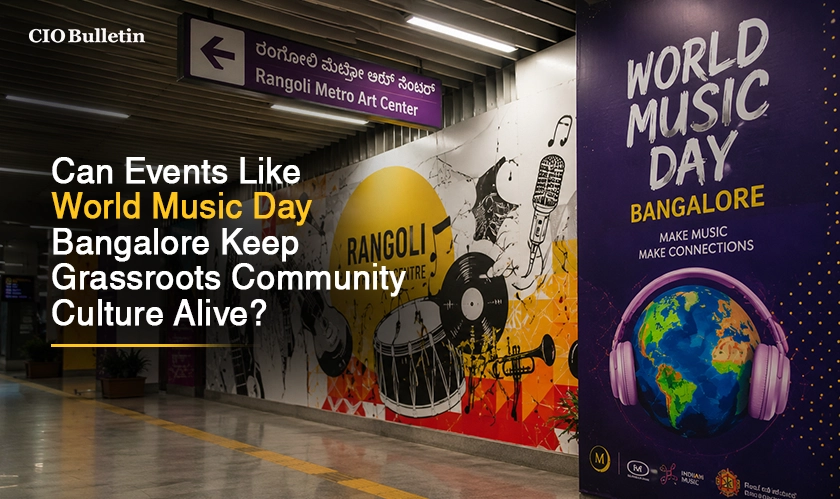
The geographic mapping of contemporary civic infrastructure is undergoing an essential transformation as public authorities look to integrate accessible creative hubs directly into transit corridors. Instead of giving premium commercial space just to corporate real estate developers, local transport oversight groups are also keeping some key public places for shared artistic moments, akin to a side activity not fully marketed. The Bangalore Metro Rail Corporation Limited managed to stage this big multi-style performance run to celebrate World Music Day Bangalore, right inside the busy corridors of the Rangoli Metro Art Centre. This public gathering re-establishes basic community access limits within highly dense transit hubs, turning everyday transit lines into real tools for local cultural interaction.
The physical conversion of standard transport architecture provides a welcoming space for both amateur and professional musicians to display their craft to passersby. Operating across five distinct stages simultaneously, the gathering allowed various musical traditions to blend seamlessly throughout the day.
Over one hundred and thirty nearby vocalists, little collectives, and acoustic players got free performance slots without hassles.
Commuters and visitors interacted with the music up close, so they could actually listen and react to a range of regional sounds from classical ragas and folk tunes to modern indie rock.
Sustaining deep neighborhood engagement requires open public platforms where diverse groups can connect directly without facing rigid commercial or social restrictions. The day-long festival concluded with the popular Community Drum Jam, a collaborative rhythm workshop designed to foster immediate social connection among strangers.
"The purpose of these sessions is to allow people to experience shared music-making and collaborative activities that enable them to communicate without words.” - Vasundhara Das, event co-founder and playback singer.
Moving far past traditional ticketed concert spaces, grassroots performing ensembles are actively leveraging highly traveled pedestrian centers to build organic connections with broader audiences. These open-access settings give emerging independent bands an invaluable platform to build early confidence while introducing distinct artistic traditions to a distracted public.
Budding music groups experienced significant audience growth, often scaling from ten initial listeners to vibrant crowds of seventy onlookers within a single session.
Public performance opportunities help non-professional creative collectives expose their unique artistic catalog directly to the outside world.
Because contemporary tech hubs depend completely on inclusive public areas to preserve local heritage during rapid infrastructure expansions, older municipal development models need modern updates. Shifting from sterile, purely commercial transit spaces toward interactive, citizen-led art circles is turning into a vital goal for forward-thinking urban planners. Reorganizing underlying structural layouts ensures that expanding commercial centers preserve their cultural roots while shielding local talent from complete economic invisibility. CIO Bulletin views this development as an innovative blueprint for how rapidly expanding tech hubs can successfully transform cold urban spaces into active centers of community unity.
Everything you need to know about this news
The whole initiative is about changing high-density commuting areas into open creative commons, not just spaces for commercial checkout-style retail. Once live performances are welcomed into the transit network, urban planners are quietly reshaping daily travel into something closer to community bonding and cultural safeguarding.
Organizers set up five distinct stages running at the same time throughout the public concourse. This multi-genre layout allowed over one hundred and thirty local musicians, ensembles, and acoustic players to secure free performance slots, presenting everything from classical ragas to modern indie rock.
The day-long musical gathering concluded with an interactive workshop designed to break down urban social barriers. By giving everyday passersby and strangers a shared rhythmic platform, the session allowed participants to connect and communicate collaboratively without needing verbal introductions.
Ticketed music halls usually depend on an already solid fan base, but pedestrian transit hubs carry a huge, already present audience. Since people are already there, indie performances can catch the attention of casual passersby, and their audience can grow fast, from a few listeners to real, colorful crowds in just minutes.
Sterile corporate development often sidelines regional heritage and leaves local talent economically isolated. Introducing citizen-led art circles directly into public transit layouts ensures expanding urban hubs retain their unique cultural identity while keeping community networks strong.










































 consultants ltd.jpg)


Comments