
Home Technology Artificial intelligence US Trade Restrictions Slow Chi...
Artificial Intelligence
CIO Bulletin,
16 July, 2024
Author:
CIO Bulletin Team
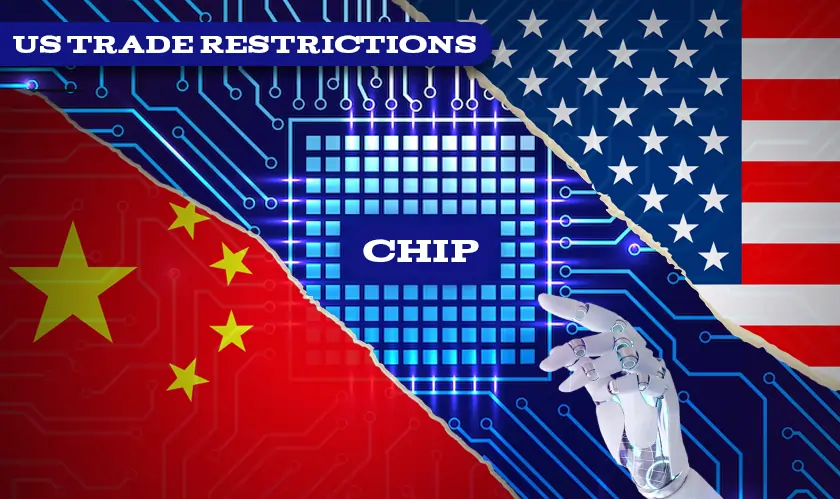
Experts warn of widening disparity as US chip controls hinder China's AI progress, impacting global tech competitiveness.
Experts have highlighted concerns over the widening gap in artificial intelligence (AI) development between the United States and China, attributing it to stringent U.S. trade restrictions on advanced semiconductor chips. According to analysts from Jeffries, these restrictions are significantly impeding China's efforts to enhance its large language models (LLMs), crucial for AI applications like ChatGPT.
Despite strong demand for Nvidia's H20 chip, exempt from export licenses, Chinese companies face hurdles due to limitations on more powerful Nvidia chips used by U.S. firms. This setback, analysts warn, could perpetuate or even widen the technology gap between the two nations.
Chinese companies are increasingly turning to Huawei's Ascend chip as an alternative, though challenges in production scalability persist. Meanwhile, U.S. officials underscored the effectiveness of export controls, asserting American semiconductor superiority. However, they acknowledged a need to ramp up federal research and development amidst China's increased investment in AI innovation.
Amidst these developments, experts caution that China's AI sector may face consolidation pressures due to resource scarcity, potentially impacting its global competitiveness. As demand for computing power surges, optimizing AI models becomes crucial, but initial developmental stages necessitate substantial computing resources.





















 consultants ltd.jpg)


